





Indian Association for the Cultivation of Science 150 Years milestone highlights its history, founder Dr. Mahendralal Sircar, C V Raman’s Raman Effect discovery, achievements, and important facts for UPSC, PSC, SSC, Banking, Railways and other government exams.
IACS Celebrates a Historic Milestone
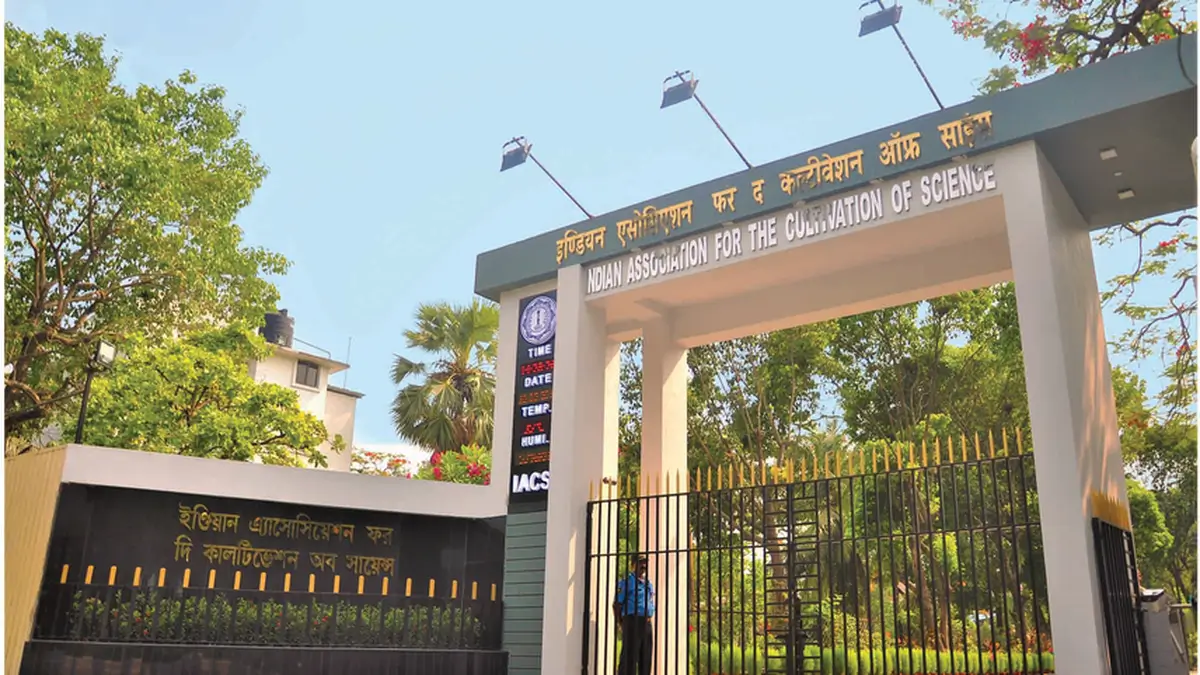
The Indian Association for the Cultivation of Science (IACS) has completed 150 years of pioneering scientific research, marking a historic milestone in India’s scientific and academic history. Established in 1876 in Kolkata, IACS is widely recognized as Asia’s first research institution founded by Indians for the promotion of modern scientific research. The 150th anniversary celebrations highlighted the institution’s remarkable contribution to science, innovation, and nation-building over one and a half centuries.
Foundation of India’s Scientific Research Culture
IACS was founded by Dr. Mahendralal Sircar, a visionary physician who believed that India required indigenous institutions dedicated to scientific research rather than merely teaching science. At a time when India was under British colonial rule, establishing such an institution was a bold step toward promoting scientific temper and self-reliance.
The institute’s founding received support from eminent personalities including Pandit Iswar Chandra Vidyasagar and Kesab Chandra Sen, who served on its early trustee board. Over time, IACS became a symbol of India’s scientific aspirations.
Contributions to Global Scientific Discoveries
IACS has been associated with some of the greatest names in Indian science. Scientists such as Jagadish Chandra Bose, Meghnad Saha, Satyendra Nath Bose, and Sir C. V. Raman conducted significant research linked with the institution.
One of its greatest achievements came when Sir C. V. Raman carried out his groundbreaking research on the Raman Effect at IACS. This discovery earned him the 1930 Nobel Prize in Physics, making him the first Asian scientist to receive a Nobel Prize in the sciences. The Raman Effect remains one of the most important discoveries in modern physics.
Modern Research and Innovation
Today, IACS functions as an autonomous institution under the Department of Science and Technology (DST), Government of India, and is also a deemed university. The institute conducts advanced research in physics, chemistry, biological sciences, materials science, and interdisciplinary fields.
During the 150th anniversary celebrations, the government inaugurated India’s first indigenous Plasma Enhanced Chemical Vapor Deposition (PECVD) system for manufacturing amorphous silicon solar cells. Additionally, RETINA (Research Entrepreneurship for Translation, Innovation and Navigation) was launched to bridge fundamental research with innovation, startups, and industrial applications.
Vision for the Future
The celebrations emphasized strengthening India’s scientific ecosystem through greater investment in research infrastructure, innovation, and entrepreneurship. IACS is also expanding its research capacity with plans for a second campus, reflecting its commitment to nurturing future generations of scientists.
Importance for Competitive Examinations
For UPSC, State PSC, SSC, Banking, Railways, Defence, and Teaching examinations, candidates should remember that:
- IACS was established in 1876.
- Founder: Dr. Mahendralal Sircar.
- Location: Kolkata, West Bengal.
- It is Asia’s first research institution established by Indians for modern scientific research.
- Sir C. V. Raman conducted his Nobel Prize-winning research on the Raman Effect at IACS.
- The institution functions under the Department of Science and Technology.

B) Why This News is Important
Significance for Competitive Examinations
The completion of 150 years of IACS is important because questions related to India’s premier scientific institutions frequently appear in UPSC, State PSC, SSC, Banking, Railways, Defence, and teaching examinations. Aspirants are expected to know important scientific organizations, their founders, historical contributions, and achievements.
Promoting Scientific Research in India
The anniversary highlights India’s long-standing commitment to scientific research and innovation. Institutions such as IACS have played a crucial role in developing indigenous scientific capabilities, producing internationally recognized discoveries, and training generations of scientists. Understanding such institutions helps students connect India’s scientific history with present-day technological advancement.
Link with Nobel Prize and National Development
IACS is directly associated with the discovery of the Raman Effect, which earned Sir C. V. Raman the Nobel Prize in Physics in 1930. The launch of advanced research infrastructure like the PECVD system and RETINA demonstrates India’s continued investment in scientific excellence, renewable energy research, and innovation-driven economic growth. These developments are highly relevant from the perspective of Science & Technology sections of competitive examinations.
C) Historical Context
Birth of Modern Scientific Research in Colonial India
The Indian Association for the Cultivation of Science was founded on 29 July 1876 by Dr. Mahendralal Sircar during British rule. At that time, India lacked institutions dedicated to original scientific research. Dr. Sircar envisioned an organization where Indians could independently pursue scientific inquiry and experimentation.
Growth into a Premier Scientific Institution
Over the decades, IACS became one of India’s most respected research institutions. It nurtured several distinguished scientists and played a central role in advancing physics, chemistry, and other branches of science. The institute achieved global recognition after Sir C. V. Raman’s Nobel Prize-winning work on the Raman Effect. Today, it continues to contribute to frontier research while promoting innovation and entrepreneurship through modern scientific facilities.
D) Key Takeaways from This News
| S. No. | Key Takeaway |
|---|---|
| 1 | Indian Association for the Cultivation of Science (IACS) has completed 150 years since its establishment in 1876. |
| 2 | IACS was founded by Dr. Mahendralal Sircar in Kolkata. |
| 3 | It is regarded as Asia’s first research institution established by Indians for modern scientific research. |
| 4 | Sir C. V. Raman conducted his Nobel Prize-winning research on the Raman Effect at IACS. |
| 5 | During the 150th anniversary celebrations, India inaugurated the indigenous PECVD system and launched RETINA to promote research, innovation, and entrepreneurship. |
Frequently Asked Questions (FAQs)
FAQs Related to Indian Association for the Cultivation of Science (IACS) Completing 150 Years
1. What is the Indian Association for the Cultivation of Science (IACS)?
The Indian Association for the Cultivation of Science (IACS) is one of India’s oldest scientific research institutions. It was established to promote original scientific research and encourage scientific development in India.
2. When was the Indian Association for the Cultivation of Science established?
The Indian Association for the Cultivation of Science was established in 1876 in Kolkata, West Bengal.
3. Who founded the Indian Association for the Cultivation of Science (IACS)?
IACS was founded by Dr. Mahendralal Sircar, a renowned Indian physician and science advocate, in 1876.
4. Where is the headquarters of IACS located?
The headquarters of the Indian Association for the Cultivation of Science is located in Kolkata, West Bengal.
5. Why is IACS considered an important institution in India’s scientific history?
IACS is considered significant because it was among the earliest institutions established by Indians for conducting modern scientific research. It played a major role in developing India’s scientific research culture.
6. Which famous Indian scientist conducted research on the Raman Effect at IACS?
Sir C. V. Raman conducted his groundbreaking research on the Raman Effect at IACS. His discovery earned him the Nobel Prize in Physics in 1930.
7. Who received the Nobel Prize in Physics for discovering the Raman Effect?
Sir Chandrasekhara Venkata Raman (C. V. Raman) received the Nobel Prize in Physics in 1930 for discovering the Raman Effect.
8. Which government department supervises IACS?
The Indian Association for the Cultivation of Science functions under the Department of Science and Technology (DST), Ministry of Science and Technology, Government of India.
9. What is the Raman Effect?
The Raman Effect is a phenomenon in which light changes its wavelength and energy when it interacts with molecules of a material. It has applications in chemistry, physics, medicine, and material science.
10. What was launched during the 150th anniversary celebrations of IACS?
During the 150th anniversary celebrations, initiatives including an indigenous Plasma Enhanced Chemical Vapor Deposition (PECVD) system and RETINA (Research Entrepreneurship for Translation, Innovation and Navigation) were highlighted to promote scientific innovation and entrepreneurship.
Some Important Current Affairs Links