





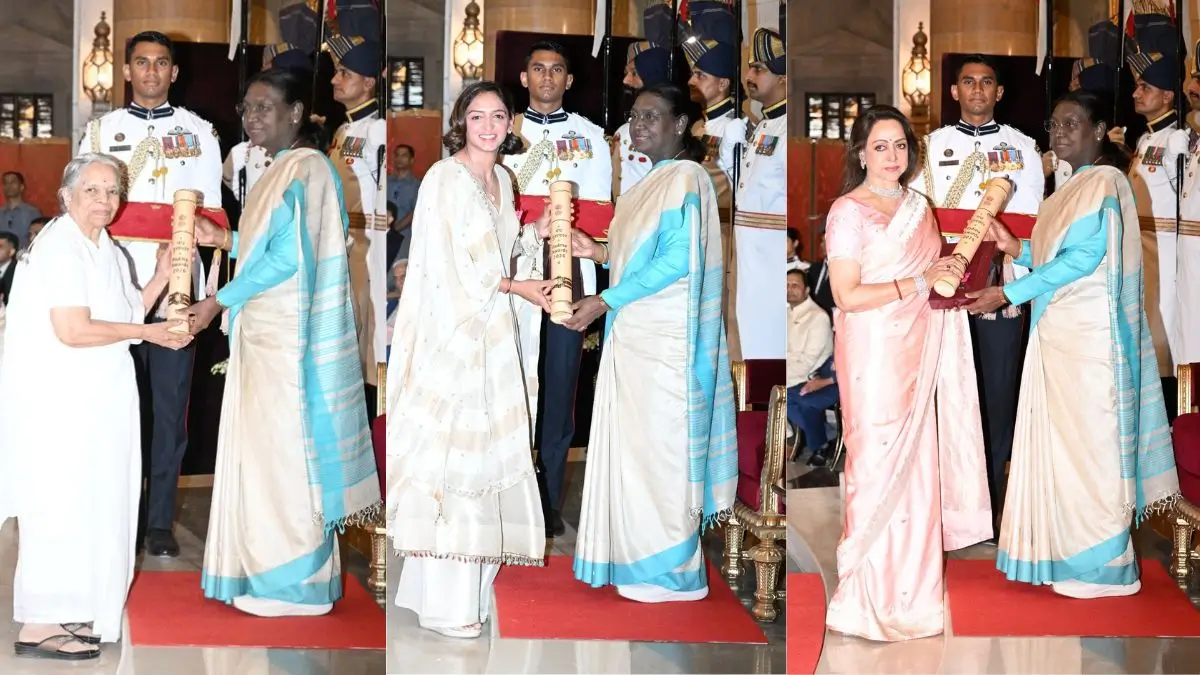
Padma Awards 2026 ceremony highlights as President Droupadi Murmu honours 66 distinguished personalities at Rashtrapati Bhavan. Read important current affairs, historical background, MCQs, FAQs, and key takeaways for UPSC, SSC, Banking, Railway, Defence, and PSC exams.
Padma Awards 2026: President Droupadi Murmu Honours 66 Distinguished Personalities at Rashtrapati Bhavan
The Government of India’s prestigious Padma Awards ceremony for 2026 was held at Rashtrapati Bhavan in New Delhi, where President Droupadi Murmu conferred civilian honours on 66 eminent personalities from different fields. The awards recognised exceptional contributions in arts, literature, sports, social work, public affairs, medicine, science, and public service.
Grand Civil Investiture Ceremony Held in New Delhi
The first Civil Investiture Ceremony for Padma Awards 2026 took place in the Ganatantra Mandap of Rashtrapati Bhavan. Senior leaders including Prime Minister Narendra Modi, Vice President C. P. Radhakrishnan, and Union Home Minister Amit Shah attended the prestigious event.
During the ceremony, the President presented 2 Padma Vibhushan, 6 Padma Bhushan, and 58 Padma Shri awards. The remaining awardees will receive their honours in another ceremony scheduled later by the government.
Importance of Padma Awards in India
Padma Awards are among the highest civilian honours in India. These awards are presented every year on the occasion of Republic Day to individuals who have made distinguished contributions in their respective fields. The awards are divided into three categories:
- Padma Vibhushan – Exceptional and distinguished service
- Padma Bhushan – Distinguished service of high order
- Padma Shri – Distinguished service in any field
The awards cover sectors such as art, education, literature, sports, science, social work, public affairs, medicine, and trade.
Prominent Awardees of Padma Awards 2026
Several well-known personalities from cinema, business, music, and public life were honoured during the ceremony. Veteran actor Dharmendra received the Padma Vibhushan posthumously for his immense contribution to Indian cinema. Hema Malini accepted the award on his behalf.
Renowned Malayalam actor Mammootty was honoured with the Padma Bhushan, while celebrated singer Alka Yagnik also received national recognition for her contribution to music. R. Madhavan and Prosenjit Chatterjee were awarded the Padma Shri.
Prominent banker Uday Kotak and noted violinist N. Rajam were among the major awardees recognised for their distinguished contributions.
Recognition of Unsung Heroes
One of the major highlights of Padma Awards 2026 was the recognition of grassroots achievers and unsung heroes from remote regions of India. The government stated that many awardees were selected for their extraordinary service to society despite limited public recognition.
Traditional artists, social reformers, educationists, and tribal welfare workers were also honoured. Rajasthan’s folk music artist Taga Ram Bheel received the Padma Shri for preserving the traditional Algoza folk music of the desert region.
Government’s Vision Behind the Awards
The Padma Awards reflect the government’s vision of recognising excellence beyond politics and celebrity culture. By honouring individuals from villages, tribal communities, and lesser-known professions, the awards promote inclusiveness and national integration.
The awards also inspire young citizens and students preparing for competitive examinations by highlighting the importance of dedication, innovation, and public service. The recognition of people from diverse backgrounds demonstrates that contribution to society is valued irrespective of social status or profession.

Why This News is Important
Important for Government Exam Preparation
The Padma Awards 2026 ceremony is highly important for students preparing for UPSC, SSC, Banking, Railway, Defence, State PSC, and teaching examinations because questions related to national awards frequently appear in current affairs sections.
Candidates should remember the categories of Padma Awards, the names of major awardees, the venue of the ceremony, and the constitutional role of the President in conferring civilian honours. Questions may also be asked about notable personalities who received Padma awards posthumously.
Reflection of India’s Cultural Diversity
The ceremony highlighted India’s cultural and social diversity by honouring artists, musicians, social workers, and scientists from different states and communities. It showcased the government’s effort to encourage local traditions, folk arts, and social service.
For exam aspirants, this news is important because it connects with topics related to Indian culture, awards and honours, governance, and social inclusion. The recognition of unsung heroes also reflects the importance of grassroots development in India’s democratic framework.
Significance in National Recognition System
The Padma Awards are considered one of the highest forms of civilian recognition in India after the Bharat Ratna. Questions related to the hierarchy of civilian awards and their significance are commonly asked in competitive examinations.
Students should also understand that these awards are announced every year on Republic Day and are presented later during Civil Investiture Ceremonies at Rashtrapati Bhavan.
Historical Context of Padma Awards
Origin of Padma Awards
The Padma Awards were instituted in 1954 by the Government of India to honour individuals who made exceptional contributions to society in different fields. Since their inception, the awards have become one of the most respected civilian honours in the country.
Initially, posthumous awards were not permitted, but later amendments allowed the government to honour personalities after their death for their extraordinary contribution to the nation. Over the decades, the awards have recognised scientists, artists, sportspersons, politicians, industrialists, and social reformers.
Evolution of the Award System
Over time, the Padma Awards evolved to include ordinary citizens who performed extraordinary service in remote and rural areas. In recent years, the government has increasingly focused on honouring grassroots innovators and social workers instead of limiting recognition to famous personalities.
This shift has strengthened the credibility and inclusiveness of the awards system. The 2026 awards continued this trend by recognising folk artists, tribal leaders, educationists, and social activists from across India.
Key Takeaways from Padma Awards 2026
| S.No. | Key Takeaway |
|---|---|
| 1 | President Droupadi Murmu conferred 66 Padma Awards at Rashtrapati Bhavan in New Delhi. |
| 2 | The ceremony included 2 Padma Vibhushan, 6 Padma Bhushan, and 58 Padma Shri awards. |
| 3 | Veteran actor Dharmendra received the Padma Vibhushan posthumously. |
| 4 | The Padma Awards are among India’s highest civilian honours instituted in 1954. |
| 5 | The awards recognised both famous personalities and grassroots “unsung heroes” from across India. |
FAQs on Padma Awards 2026
1. What are the Padma Awards?
The Padma Awards are among the highest civilian honours in India. They are given to individuals for exceptional contributions in fields such as arts, literature, science, sports, medicine, social work, and public affairs.
2. Who presented the Padma Awards 2026?
The Padma Awards 2026 were presented by President Droupadi Murmu at Rashtrapati Bhavan in New Delhi.
3. How many Padma Awards were presented in the first ceremony of 2026?
A total of 66 Padma Awards were presented during the first Civil Investiture Ceremony of 2026.
4. What are the three categories of Padma Awards?
The three categories are:
- Padma Vibhushan
- Padma Bhushan
- Padma Shri
5. Which is the highest Padma Award?
Padma Vibhushan is the highest among the three Padma Awards categories.
6. In which year were the Padma Awards instituted?
The Padma Awards were instituted in 1954 by the Government of India.
7. Where are Padma Awards ceremonies usually held?
The ceremonies are generally held at Rashtrapati Bhavan in New Delhi.
8. Which ministry administers the Padma Awards?
The Ministry of Home Affairs administers the Padma Awards.
9. When are Padma Award winners announced?
The names of Padma Award recipients are announced every year on the occasion of Republic Day.
10. Why are Padma Awards important for competitive exams?
Questions related to awards, honours, important personalities, and national events are frequently asked in UPSC, SSC, Banking, Railway, Defence, and State PSC examinations.
Some Important Current Affairs Links