








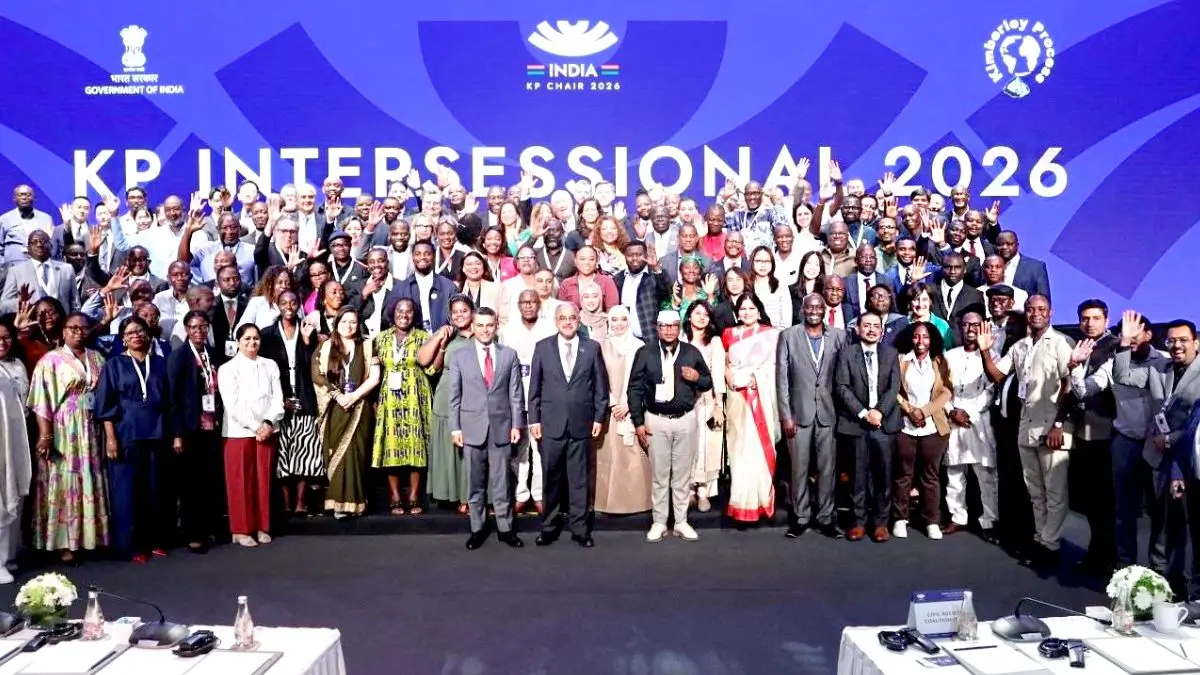
Kimberley Process Intersessional Meeting 2026 concluded in Mumbai under India’s chairship, focusing on ethical diamond trade, conflict diamonds certification, transparency, and global governance reforms.
India Concludes Kimberley Process Intersessional 2026 in Mumbai Under Its Chairship
India Strengthens Global Leadership in Ethical Diamond Trade
India successfully concluded the Kimberley Process (KP) Intersessional Meeting 2026 in Mumbai under its chairship, reinforcing its growing influence in the global diamond industry. The four-day meeting brought together representatives from participating countries, industry stakeholders, civil society organizations, and international observers to discuss the future of ethical and transparent diamond trade. India assumed the chairship of the Kimberley Process on January 1, 2026, and has focused on strengthening global cooperation in preventing the trade of conflict diamonds.
Focus on Transparency and Responsible Sourcing
The meeting concentrated on improving monitoring systems, compliance frameworks, and transparency mechanisms in the global natural diamond value chain. Delegates discussed the implementation of the Kimberley Process Certification Scheme (KPCS), which aims to ensure that rough diamonds sold in international markets are conflict-free. India emphasized the importance of responsible sourcing and sustainable trade practices to maintain trust among consumers and participating nations.
India’s “3Cs” Agenda Gains Global Attention
India’s chairship theme for 2026 is based on the “3Cs” — Credibility, Compliance, and Consumer Confidence. Through this framework, India aims to modernize the Kimberley Process and make it more effective in addressing emerging geopolitical and market challenges. Discussions at the Mumbai meeting highlighted the need to increase trust in the certification process and improve international coordination.
Significance of India in the Global Diamond Industry
India plays a major role in the global diamond sector as it processes nearly 90% of the world’s diamonds through cutting and polishing industries mainly located in Surat and Mumbai. Although India is not a major producer of rough diamonds, it is a leading center for value addition and exports in the diamond trade. The successful hosting of the KP meeting has strengthened India’s image as a responsible stakeholder in the international diamond ecosystem.
Discussions on Expanding the Definition of Conflict Diamonds
One of the major topics discussed during the meeting was the proposal to widen the definition of “conflict diamonds.” Traditionally, conflict diamonds referred to rough diamonds used by rebel groups to finance wars against legitimate governments. However, several nations are now advocating for a broader definition that also includes diamonds linked to state-level conflicts. This debate gained importance in the context of ongoing geopolitical tensions and concerns regarding transparency in global trade.
Participation of International Stakeholders
The Kimberley Process currently includes 60 participants representing 86 countries, with the European Union participating as a single bloc. Representatives from the World Diamond Council, Civil Society Coalition, and various governments participated in the Mumbai discussions. The meeting also focused on artisanal and alluvial diamond mining, statistical reporting systems, and measures to improve governance in the diamond supply chain.
India’s Commitment Towards Sustainable Diamond Trade
Indian officials stressed that natural diamonds support millions of livelihoods across producing and processing countries. India reiterated its commitment to strengthening the Kimberley Process framework and ensuring that the natural diamond industry remains sustainable, transparent, and consumer-friendly. The deliberations held in Mumbai are expected to continue during the KP Plenary Meeting scheduled to be held in New Delhi later this year.

Why This News is Important
Important for International Relations and Trade
The conclusion of the Kimberley Process Intersessional Meeting 2026 is important because it highlights India’s growing role in international trade governance and ethical business practices. As chair of the Kimberley Process, India is leading global discussions on transparency and accountability in the diamond trade. This enhances India’s diplomatic image and strengthens its position in multilateral economic forums.
Relevant for Economy and Commerce Exams
This development is highly relevant for competitive examinations because India is one of the world’s largest diamond processing hubs. Questions related to the diamond industry, export sector, ethical sourcing, and international certification mechanisms are frequently asked in UPSC, SSC, Banking, Railway, and State PSC examinations. Understanding the Kimberley Process helps students connect international trade with India’s economy.
Significance in Global Governance
The meeting also reflects the importance of global governance mechanisms in preventing illegal trade and financing of conflicts. The Kimberley Process is an example of international cooperation involving governments, industries, and civil society groups working together to maintain ethical trade standards. This topic is useful for General Studies papers related to international organizations and global institutions.
Emerging Debate on Conflict Diamonds
The proposal to expand the definition of conflict diamonds adds a new dimension to international trade discussions. It shows how geopolitical conflicts can influence global commodity markets and trade regulations. This issue is important from the perspective of international relations, ethics in trade, and economic diplomacy.
Historical Context
Origin of the Kimberley Process
The Kimberley Process was launched in 2000 by Southern African countries to prevent the trade of “blood diamonds” or conflict diamonds. These diamonds were often used by rebel groups to finance armed conflicts and civil wars, especially in African nations such as Sierra Leone and Angola. The issue attracted global concern due to widespread human rights violations associated with illegal diamond mining.
Establishment of the Kimberley Process Certification Scheme
The Kimberley Process Certification Scheme (KPCS) was established under United Nations General Assembly Resolution 55/56 in 2000. The scheme requires participating countries to certify that shipments of rough diamonds are conflict-free before they enter international markets. Over time, the KP became one of the world’s major certification systems for ethical trade.
India’s Role in the Kimberley Process
India is one of the founding members of the Kimberley Process and has been actively involved in promoting transparency in the diamond sector. Due to its dominance in diamond cutting and polishing, India plays a strategic role in maintaining global supply chain integrity. India has chaired the Kimberley Process multiple times and continues to advocate responsible sourcing and sustainable trade practices.
Key Takeaways from This News
| S.No. | Key Takeaway |
|---|---|
| 1 | India concluded the Kimberley Process Intersessional Meeting 2026 in Mumbai under its chairship. |
| 2 | The Kimberley Process aims to prevent conflict diamonds from entering global markets through certification mechanisms. |
| 3 | India’s 2026 chairship theme is based on the “3Cs” — Credibility, Compliance, and Consumer Confidence. |
| 4 | India processes nearly 90% of the world’s diamonds, making it a key player in the global diamond industry. |
| 5 | Discussions included expanding the definition of conflict diamonds and improving transparency in global diamond trade. |
FAQs Related to Kimberley Process Intersessional 2026
1. What is the Kimberley Process?
The Kimberley Process (KP) is an international certification initiative established to prevent conflict diamonds from entering the global diamond trade. It ensures that rough diamonds are sourced ethically and are conflict-free.
2. When was the Kimberley Process established?
The Kimberley Process was launched in 2000, while the Kimberley Process Certification Scheme (KPCS) became operational in 2003.
3. What are conflict diamonds?
Conflict diamonds, also known as blood diamonds, are rough diamonds used by rebel groups or armed organizations to finance conflicts against legitimate governments.
4. Which country chaired the Kimberley Process in 2026?
India chaired the Kimberley Process in 2026 and hosted the Intersessional Meeting in Mumbai.
5. What was the main theme of India’s Kimberley Process chairship?
India’s chairship theme was based on the “3Cs” — Credibility, Compliance, and Consumer Confidence.
6. Why is India important in the global diamond industry?
India is the world’s leading diamond cutting and polishing center, processing nearly 90% of the world’s diamonds, especially in Surat and Mumbai.
7. Which Indian city hosted the Kimberley Process Intersessional Meeting 2026?
The meeting was hosted in Mumbai, Maharashtra.
8. Under which UN resolution was the Kimberley Process Certification Scheme created?
The KPCS was established under United Nations General Assembly Resolution 55/56.
9. Which sectors can ask questions related to Kimberley Process in exams?
Questions related to the Kimberley Process can appear in UPSC, State PSC, SSC, Banking, Railway, Defence, Teaching, and other competitive examinations.
10. Why is the Kimberley Process important for global governance?
The Kimberley Process promotes ethical trade, transparency, international cooperation, and prevents illegal financing through the diamond trade.
Some Important Current Affairs Links




