









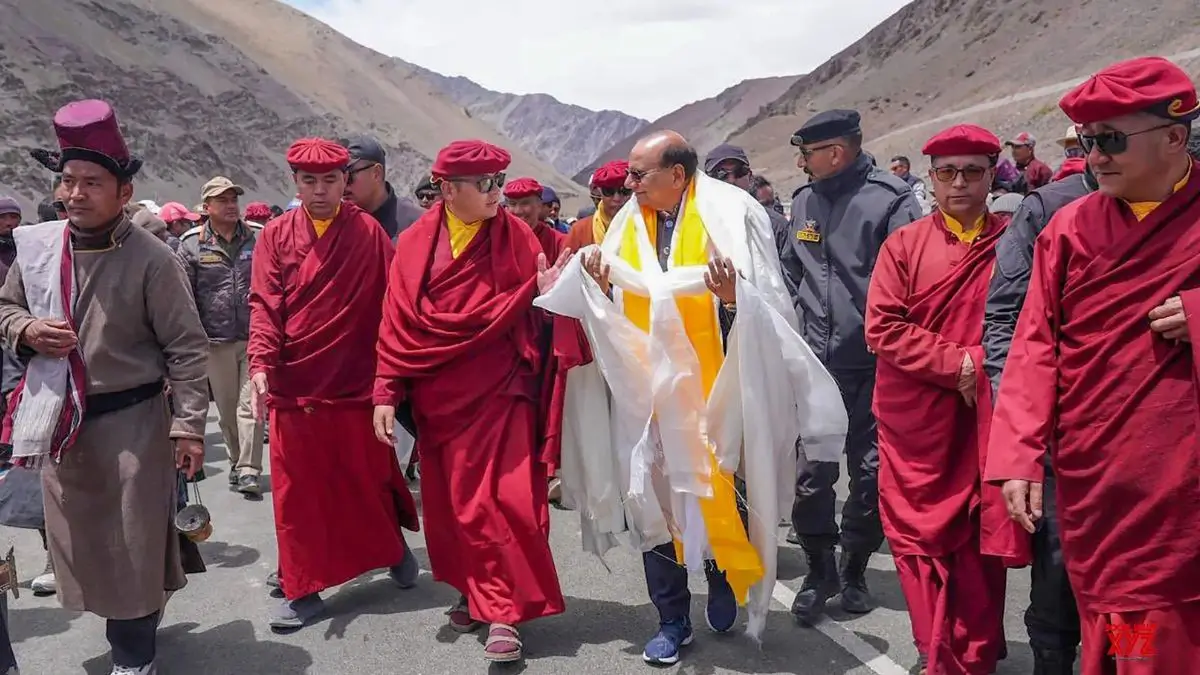
Ladakh irrigation canal project inaugurated by Vinai Kumar Saxena at 14,000 feet in Changthang region boosts irrigation, agriculture, and sustainability in high-altitude areas. Read key current affairs updates for UPSC, SSC, Banking, Railways, and defence exams.
Vinai Kumar Saxena Inaugurates High-Altitude Irrigation Canal at 14,000 Feet in Ladakh – Key Current Affairs Update
🏔️ High-Altitude Irrigation Canal Inaugurated in Ladakh
Lieutenant Governor of Ladakh, Vinai Kumar Saxena, has inaugurated a major infrastructure milestone in the Changthang region of Ladakh, where a 2.10 km long irrigation canal has been constructed at an extraordinary altitude of over 14,000 feet. The canal, built from Mahey Tokpo to Raldho, is considered an engineering achievement due to the extreme geographical and climatic conditions of the Himalayan cold desert.
The project is part of efforts to strengthen water security and agricultural sustainability in one of India’s most remote and high-altitude regions. The canal draws water from Yaya Lake and is expected to provide reliable irrigation support to nearly 100 acres of farmland, benefiting local farmers and pastoral communities who previously depended on seasonal glacier melt and irregular water sources.
The construction of the canal began in 2022–23, but progress was slow, with only 1,250 meters completed by March 2026. After administrative intervention and review by the LG, the remaining portion of the canal was completed rapidly within two months, demonstrating accelerated infrastructure execution in the region.
Alongside the inauguration, a tree plantation drive of 15,000 trees was launched to promote soil conservation, ecological balance, and slope stabilization in the fragile ecosystem of Ladakh.
This project highlights the government’s focus on sustainable development, climate-resilient infrastructure, and rural livelihood enhancement in high-altitude border regions.

📌 Why this News is Important
🌍 Strategic Importance for India
This development is important because Ladakh is a sensitive border region sharing boundaries with China and Pakistan. Strengthening infrastructure such as irrigation systems enhances civilian settlement stability and strategic presence in remote areas.
💧 Water Security and Climate Resilience
The canal ensures year-round irrigation support, reducing dependency on glacier melt, which is increasingly uncertain due to climate change and glacial retreat in the Himalayas.
🌾 Agricultural and Rural Livelihood Impact
The project directly supports farmers and pastoral communities in Changthang by improving agricultural productivity and food security in a harsh desert environment.
🏗️ Engineering and Infrastructure Significance
Constructing a canal at 14,000 feet altitude demonstrates India’s growing capability in high-altitude engineering and infrastructure development.
📚 Exam Relevance
This topic is important for UPSC, SSC, Banking, Railways, Defence, and State PCS exams, as it covers infrastructure, geography of Ladakh, and government development schemes.
📜 Historical Context
Ladakh has historically been a cold desert region with limited irrigation facilities, where agriculture depended heavily on glacial meltwater and traditional water channels.
Over time, several irrigation projects have been introduced to improve water access, including the Igoo-Phey canal system, which supports agriculture in multiple villages along the Indus basin.
However, the extreme terrain and climatic conditions have always limited large-scale irrigation development. In recent years, the government has focused on modern water management projects, including storage ponds and glacier-fed systems, to address water scarcity.
The current Mahey Tokpo–Raldho canal is part of this broader shift toward sustainable high-altitude water infrastructure development in Ladakh, aligning with national priorities on climate adaptation and rural development.
📊 Key Takeaways from “Ladakh High-Altitude Canal Inauguration”
| S.No. | Key Takeaway |
|---|---|
| 1 | Vinai Kumar Saxena inaugurated a 2.10 km irrigation canal in Ladakh’s Changthang region |
| 2 | The canal is located at an altitude of over 14,000 feet, making it a high-altitude engineering project |
| 3 | It connects Mahey Tokpo to Raldho and draws water from Yaya Lake |
| 4 | The project supports irrigation for nearly 100 acres of farmland in Ladakh |
| 5 | A parallel initiative includes plantation of 15,000 trees for ecological sustainability |
Frequently Asked Questions (FAQs)
1. What is the significance of the Ladakh irrigation canal project?
The irrigation canal improves water availability in the Changthang region of Ladakh, supporting agriculture and livestock-based livelihoods in a high-altitude cold desert environment.
2. Who inaugurated the high-altitude irrigation canal in Ladakh?
The canal was inaugurated by Lieutenant Governor of Ladakh, Vinai Kumar Saxena.
3. At what altitude is the irrigation canal constructed?
The canal has been constructed at an altitude of over 14,000 feet, making it one of the highest irrigation infrastructure projects in India.
4. Which areas are connected by the irrigation canal?
The canal connects Mahey Tokpo to Raldho in the Changthang region of Ladakh.
5. What is the source of water for the canal?
The canal draws water from Yaya Lake, ensuring irrigation supply for nearby agricultural land.
6. How much agricultural land will benefit from this project?
Approximately 100 acres of farmland will benefit from the irrigation canal.
7. What environmental initiative was launched along with the project?
A tree plantation drive of 15,000 trees was launched to support ecological balance and soil conservation.
8. Why is this project important for national security?
Improving infrastructure in border areas like Ladakh strengthens strategic presence and civilian settlement stability.
Some Important Current Affairs Links