









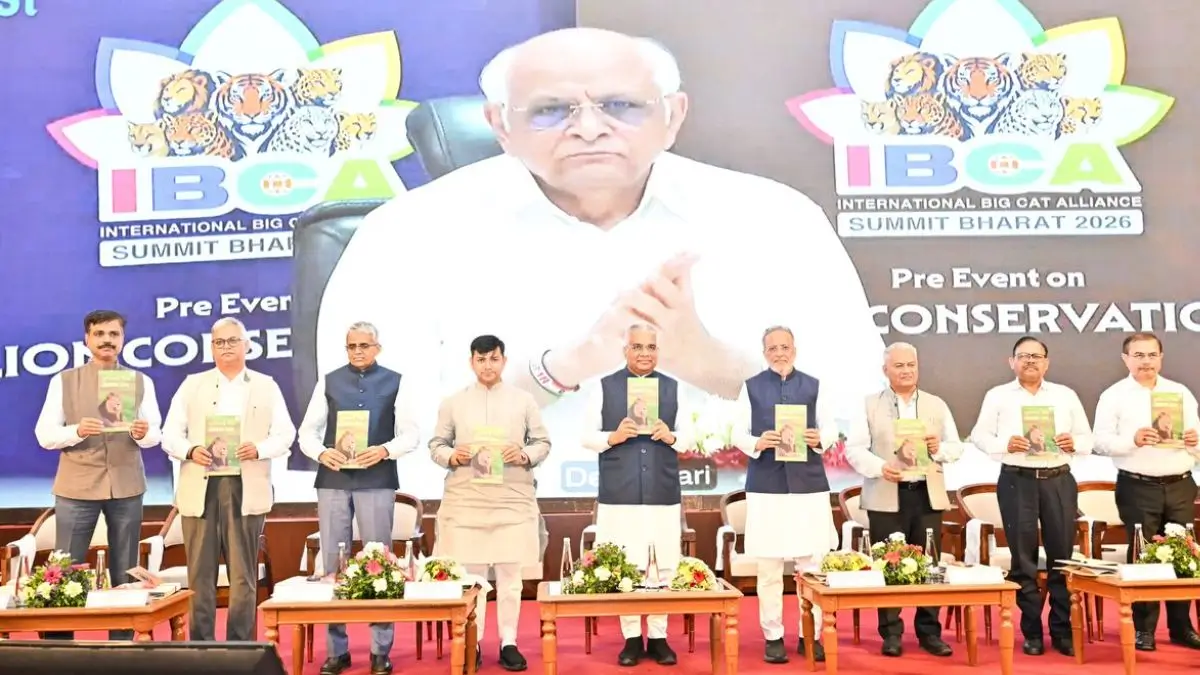
Lion Species Spotlight Programme Sasan Gir launched by Bhupender Yadav highlights Asiatic lion conservation, IBCA Summit 2026, Project Lion initiative, and India’s wildlife protection efforts for UPSC and exams.
Bhupender Yadav Inaugurates Lion Species Spotlight Programme at Sasan Gir
🟢 Introduction: Major Conservation Initiative at Sasan Gir
Union Minister for Environment, Forest and Climate Change, Bhupender Yadav, inaugurated the “Lion Species Spotlight Programme” at Sasan Gir, Gujarat. The event was organized as part of the pre-summit activities of the International Big Cat Alliance (IBCA) Summit 2026, aimed at strengthening global cooperation for big cat conservation.
The programme highlights India’s success in conserving the Asiatic lion, which is found only in the Gir landscape, making it a global conservation priority.
🟢 Focus on Asiatic Lion Conservation in Gir Landscape
Sasan Gir, home to the last surviving population of Asiatic lions, has become a symbol of India’s wildlife conservation success. The programme showcased how scientific management, habitat protection, and community participation have contributed to increasing lion numbers in the region.
Officials emphasized that Project Lion, launched by the Government of India, is ensuring long-term protection of the species through habitat expansion, health monitoring, and ecological balance.
🟢 IBCA Summit 2026 and Global Collaboration
The event is closely linked with the upcoming International Big Cat Alliance (IBCA) Summit 2026, which will be hosted in New Delhi. The summit will bring together nearly 95 countries, including wildlife experts, policymakers, and conservation agencies.
The goal of IBCA is to protect seven major big cat species:
- Lion
- Tiger
- Leopard
- Snow Leopard
- Cheetah
- Jaguar
- Puma
This global platform aims to promote scientific cooperation and conservation funding worldwide.
🟢 India’s Progress in Lion Population Growth
A major highlight of the event was the announcement of significant growth in the Asiatic lion population. The Gir landscape has recorded around 891 lions in 2025, reflecting a strong increase compared to previous years.
This growth is attributed to:
- Strict protection laws under Wildlife Protection Act, 1972
- Community participation
- Advanced wildlife monitoring systems
- Expansion of protected habitats
India’s conservation model is now considered a global example of successful species recovery.
🟢 Conservation Challenges and Future Strategy
Experts at the programme highlighted challenges such as:
- Habitat fragmentation
- Climate change impacts
- Human-wildlife conflict
To address these issues, India is expanding lion habitats to areas like Barda Wildlife Sanctuary, ensuring genetic diversity and long-term sustainability of the species.

🎯 Why This News is Important
🟡 National and International Significance
The inauguration of the Lion Species Spotlight Programme is important because it highlights India’s leadership in global wildlife conservation. The Asiatic lion exists only in India, making its protection a matter of international ecological responsibility.
🟡 Exam Relevance for Government Aspirants
For competitive exams such as UPSC, SSC, Banking, Railways, and State PSCs, this news is important due to:
- IBCA Summit 2026 preparations
- Project Lion initiative
- Wildlife conservation policies
- Biodiversity protection strategies
🟡 Environmental and Policy Importance
The programme aligns with India’s environmental goals under SDG-15 (Life on Land). It strengthens cooperation between countries for protecting endangered species.
🟡 Strategic Conservation Model
India’s Gir model shows how technology, community involvement, and policy support can revive endangered species populations. This model is now being studied globally.
🟡 Future Global Impact
With IBCA bringing together 95 countries, India is positioning itself as a global leader in wildlife diplomacy and conservation innovation.
📚 Historical Context
🟢 Background of Asiatic Lion Conservation in India
Historically, Asiatic lions once roamed across West Asia and India. However, due to hunting and habitat loss, their population declined drastically.
By the early 20th century, lions were nearly extinct in India, surviving only in the Gir Forest of Gujarat. Since independence, India has implemented strict protection measures.
Key milestones include:
- Establishment of Gir National Park in 1965
- Wildlife Protection Act, 1972
- Project Lion (launched in 2020)
- Population recovery to nearly 891 lions by 2025
Today, Gir remains the only natural habitat of Asiatic lions in the world.
📊 Key Takeaways from “Lion Species Spotlight Programme”
| S. No. | Key Takeaway |
|---|---|
| 1 | Bhupender Yadav inaugurated Lion Species Spotlight Programme at Sasan Gir. |
| 2 | Programme is part of pre-events for IBCA Summit 2026. |
| 3 | IBCA Summit will focus on 7 big cat species conservation globally. |
| 4 | Asiatic lion population in Gir has reached around 891 (2025 estimate). |
| 5 | Project Lion aims at long-term conservation and habitat expansion of lions. |
FAQs: Lion Species Spotlight Programme & Sasan Gir Conservation
Q1. What is the Lion Species Spotlight Programme?
The Lion Species Spotlight Programme is a conservation initiative launched to highlight the importance of Asiatic lion protection, research, and global cooperation under big cat conservation efforts.
Q2. Where was the programme launched?
It was launched at Sasan Gir, Gujarat, which is the only natural habitat of the Asiatic lion in the world.
Q3. Who launched the Lion Species Spotlight Programme?
The programme was launched by Union Environment Minister Bhupender Yadav.
Q4. What is the International Big Cat Alliance (IBCA)?
The IBCA is a global initiative aimed at conserving seven major big cat species including lions, tigers, leopards, snow leopards, cheetahs, jaguars, and pumas through international cooperation.
Q5. What is the significance of Project Lion?
Project Lion is a Government of India initiative aimed at ensuring long-term conservation, habitat expansion, and genetic diversity of Asiatic lions in India.
Q6. Why is Gir Forest important globally?
Gir Forest is the only remaining natural habitat of Asiatic lions, making it one of the most critical wildlife conservation areas in the world.
Q7. What is the current Asiatic lion population in India?
As per recent estimates mentioned in the news, the population is around 891 lions (2025) in the Gir landscape.
Some Important Current Affairs Links