









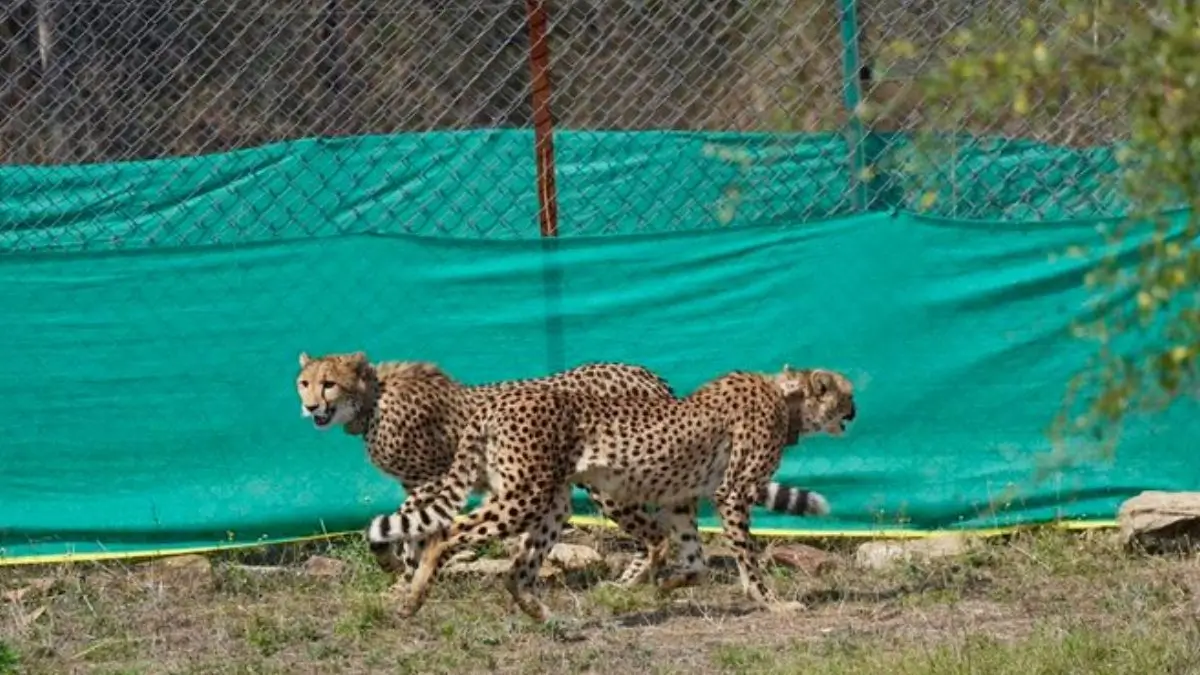
Cheetahs in India are back! Nine cheetahs from Botswana arrive at Kuno National Park under Project Cheetah, boosting India’s wildlife conservation efforts and restoring biodiversity.
India Welcomes 9 Cheetahs from Botswana to Kuno National Park: A Major Conservation Milestone
India has taken a significant leap in wildlife conservation by welcoming nine cheetahs from Botswana to Kuno National Park in Madhya Pradesh on February 28, 2026. The arrival of these majestic big cats marks a new chapter in the country’s efforts to restore a species that became extinct in the wild in India over seven decades ago.
Union Environment, Forest and Climate Change Minister Bhupender Yadav personally released the cheetahs into specially prepared quarantine enclosures within Kuno National Park. This step is part of Project Cheetah India, a flagship wildlife restoration program aimed at reintroducing cheetahs to Indian grasslands and building a sustainable population outside Africa.
The newly arrived cheetahs — six females and three males — were transported from Botswana after careful planning and collaboration between Indian and Botswana wildlife authorities. The translocation involved meticulous health checks and veterinary supervision, ensuring minimum stress for the animals during the long journey. Upon arrival in India, the cheetahs were flown by Indian Air Force aircraft to Gwalior and then moved to Kuno via helicopters.
Once in quarantine, the cheetahs will undergo a period of health monitoring and acclimatization before being gradually released into the broader landscape of Kuno National Park. This process ensures that they adapt well to the Indian environment, improving their chances of thriving in the wild.
With this batch of cheetahs, India’s total cheetah population now stands at 48, including 28 cubs born within the country under Project Cheetah. These figures reflect the progress of the conservation initiative and provide hope for establishing a self‑sustaining cheetah population in India.

Why This News Is Important for Competitive Exam Aspirants
Significance for Environment & Ecology Section
This development is highly relevant for the Environment and Ecology syllabus of competitive exams. India’s cheetah reintroduction project represents one of the largest wildlife restoration efforts globally. It demonstrates how international cooperation, scientific planning, and government policy combine to bring an extinct species back to its native habitat.
The arrival of these nine cheetahs also strengthens India’s commitment to biodiversity conservation, which is a major topic in exams like UPSC Prelims, SSC CGL, State PSCs, and others. Questions may focus on Project Cheetah, its objectives, milestones, and significance for protected areas and wildlife corridors in India.
Relevance to Geography & Biodiversity
Understanding the geographical distribution of wildlife, protected areas like Kuno National Park, and the challenges of reintroducing species can help students answer questions related to ecosystems, wildlife protection acts, human‑animal conflict mitigation, and ecological balance.
Link to Government Policies & International Cooperation
Project Cheetah is also linked with international wildlife agreements and collaborative conservation efforts. These are often asked under General Awareness for banking and insurance exams, making this news a useful study reference.
Historical Context: Revival of the Cheetah in India
India once had a thriving cheetah population, but it became extinct in the wild by 1952 due to extensive hunting and habitat loss. For decades, efforts were made to restore this iconic species, culminating in the launch of Project Cheetah in September 2022 at Kuno National Park.
The first phase of the project involved bringing cheetahs from Namibia and South Africa, followed by their release and careful monitoring in designated grassland habitats. Over time, cheetah cubs were born on Indian soil — a major scientific achievement.
The current addition of cheetahs from Botswana demonstrates the global effort to ensure long‑term species survival and diversify the genetic pool, thereby reducing the risk of disease and boosting adaptation success in Indian ecosystems.
Key Takeaways from “India Welcomes 9 Cheetahs from Botswana to Kuno National Park”
| S.No. | Key Takeaway |
|---|---|
| 1 | Nine cheetahs (6 females, 3 males) arrived from Botswana to Kuno National Park, Madhya Pradesh. |
| 2 | India’s cheetah population now stands at 48, including 28 India‑born cubs under Project Cheetah. |
| 3 | The cheetahs were airlifted to India via Indian Air Force aircraft and moved to Kuno Park. |
| 4 | The animals will be quarantined and monitored before release into the wild. |
| 5 | Project Cheetah aims to revive extinct cheetah populations in India through global cooperation. |
FAQs: Frequently Asked Questions
1. What is Project Cheetah in India?
Project Cheetah is India’s flagship wildlife conservation program aimed at reintroducing cheetahs into the wild after they became extinct in the country in 1952. The project focuses on habitat restoration, monitoring, and genetic diversity to ensure sustainable population growth.
2. Where were the nine cheetahs brought from?
The nine cheetahs were brought from Botswana, as part of an international collaboration to strengthen genetic diversity in India’s cheetah population.
3. Where in India were the cheetahs released?
The cheetahs were released into quarantine enclosures at Kuno National Park in Madhya Pradesh, before being gradually introduced to the wild.
4. How many cheetahs are currently in India after this translocation?
With the arrival of these nine cheetahs, India’s total cheetah population is now 48, which includes 28 cubs born in India under Project Cheetah.
5. Why is the reintroduction of cheetahs important?
Reintroducing cheetahs helps restore ecological balance, maintain biodiversity, and preserve India’s natural heritage. It also demonstrates successful international wildlife cooperation.
6. Which government ministry is responsible for Project Cheetah?
The Ministry of Environment, Forest and Climate Change oversees Project Cheetah in India. The minister currently responsible is Bhupender Yadav.
7. When did cheetahs become extinct in India?
Cheetahs became extinct in the wild in India by 1952 due to hunting and habitat loss.
Some Important Current Affairs Links