








Mumbai Ahmedabad bullet train project unveiled with India’s first proposed high-speed rail design using Japanese Shinkansen technology. Know route, speed, stations, importance, MCQs, FAQs and key facts for UPSC, SSC, Banking and Railway exams.
India Takes a Major Step Towards High-Speed Rail Connectivity
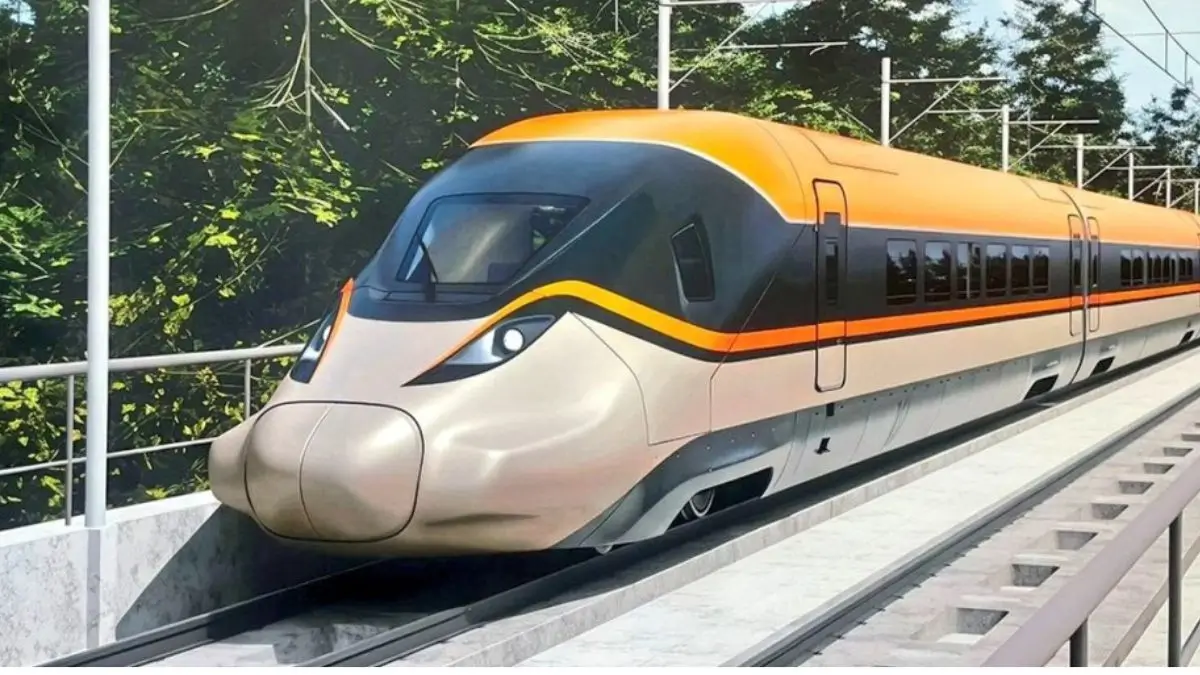
India has officially unveiled the first proposed design of its ambitious Mumbai-Ahmedabad Bullet Train project, marking a historic moment in the modernization of the country’s railway infrastructure. The design was displayed at the Ministry of Railways in New Delhi and offers citizens a first glimpse of India’s future high-speed train network.
The Mumbai-Ahmedabad High-Speed Rail (MAHSR) corridor is India’s first-ever bullet train project. It is being developed with technical and financial assistance from Japan and is based on the famous Japanese Shinkansen technology. The project aims to transform rail travel by significantly reducing travel time between Mumbai and Ahmedabad.
Features of the Proposed Bullet Train
The newly revealed train design reflects modern aerodynamic engineering and advanced transportation technology. Reports suggest that the train will be capable of running at speeds up to 280–320 km per hour, allowing passengers to complete the Mumbai-Ahmedabad journey in nearly two hours.
The bullet train is expected to provide airline-like comfort with modern seating, improved safety systems, advanced signaling mechanisms, and enhanced passenger amenities. The project is also expected to encourage the adoption of advanced rail technologies in India under the “Make in India” initiative.
Route and Connectivity of the Bullet Train Corridor
The Mumbai-Ahmedabad Bullet Train corridor will cover approximately 508 kilometers and connect major commercial and industrial centers across Maharashtra and Gujarat. The corridor includes 12 planned stations such as Mumbai, Thane, Virar, Boisar, Vapi, Surat, Vadodara, Ahmedabad, and Sabarmati.
A major engineering highlight of the project is the undersea tunnel section near Mumbai. India has also deployed some of its largest Tunnel Boring Machines (TBMs) for this project, showcasing the scale and technological complexity involved in the construction process.
Role of Japan in the Bullet Train Project
Japan is playing a crucial role in the implementation of the Mumbai-Ahmedabad Bullet Train project. The project uses Japanese Shinkansen technology, which is globally recognized for safety, punctuality, and efficiency. Japan has also provided financial assistance through low-interest loans for the project.
The collaboration between India and Japan demonstrates growing strategic and technological cooperation between the two nations. It also reflects India’s efforts to develop world-class transportation infrastructure.
Economic and Strategic Importance of the Project
The bullet train project is expected to generate employment opportunities, improve regional connectivity, and stimulate economic growth in western India. Faster transportation between Mumbai and Ahmedabad can strengthen business activities, tourism, and industrial development.
The project is also strategically important because it represents India’s entry into the high-speed rail sector. Successful implementation could pave the way for similar corridors in other parts of the country in the future.
Construction Progress and Expected Launch
The Mumbai-Ahmedabad Bullet Train project has faced delays due to land acquisition issues, environmental clearances, and the COVID-19 pandemic. However, construction work has accelerated in recent years. Authorities are hopeful that the first operational section between Surat and Vapi may become functional around 2027, while the full corridor could be completed later.
The unveiling of the train design indicates that the project is progressing steadily and entering a more visible stage of development.

Why This News is Important
Important for Infrastructure Development
The unveiling of India’s first bullet train design is significant because it represents a major transformation in the country’s transportation infrastructure. High-speed rail systems are considered symbols of technological advancement and economic development. India joining the group of countries operating bullet trains would mark a major achievement in modern infrastructure creation.
Important for Government Exams
This topic is highly relevant for competitive examinations such as UPSC, SSC, Banking, Railways, Defence, State PSCs, and teaching examinations because it combines multiple subjects including current affairs, science and technology, infrastructure development, international relations, economy, and transportation.
Questions may be asked regarding:
- Mumbai-Ahmedabad High-Speed Rail Corridor
- Shinkansen technology
- India-Japan cooperation
- High-speed rail development
- Infrastructure projects in India
- Make in India initiative
Important for Economic Growth
The project is expected to improve connectivity between two major economic centers of India. Reduced travel time can increase business efficiency, support tourism, and encourage investment. Large infrastructure projects also create employment opportunities in engineering, construction, manufacturing, and technology sectors.
Important for Technological Advancement
The project introduces advanced rail technologies to India, including high-speed rail systems, modern signaling technology, and sophisticated tunnel engineering. Such technological exposure can help India build expertise in future transportation projects.
Historical Context
Beginning of the Bullet Train Project
The Mumbai-Ahmedabad Bullet Train project was officially launched in September 2017 when Prime Minister Narendra Modi and former Japanese Prime Minister Shinzo Abe laid the foundation stone in Ahmedabad.
The project was conceived as India’s first high-speed rail corridor inspired by Japan’s successful Shinkansen network, which has maintained an excellent safety record for decades.
Evolution of High-Speed Rail in India
India has long discussed the need for faster rail connectivity because of increasing population and urbanization. Traditional railway systems often face congestion and slower travel times. The bullet train project emerged as part of India’s broader effort to modernize transport infrastructure and compete with global standards.
Delays and Challenges
The project experienced several challenges, including land acquisition disputes, environmental concerns, and disruptions caused by the COVID-19 pandemic. Despite these obstacles, construction activities have continued with support from both Indian and Japanese agencies.
Future of High-Speed Rail in India
The success of the Mumbai-Ahmedabad corridor could encourage the development of additional high-speed rail routes in India. Proposed future corridors may connect major cities such as Delhi, Varanasi, Chennai, Bengaluru, and Hyderabad.
Key Takeaways from This News
| S.No. | Key Takeaway |
|---|---|
| 1 | India unveiled the first proposed design of the Mumbai-Ahmedabad Bullet Train. |
| 2 | The project is based on Japanese Shinkansen high-speed rail technology. |
| 3 | The bullet train corridor will cover around 508 km with 12 stations. |
| 4 | The train is expected to run at speeds up to 320 km/h and reduce travel time significantly. |
| 5 | The project is important for infrastructure modernization, economic growth, and India-Japan cooperation. |
FAQs Related to Mumbai-Ahmedabad Bullet Train Project
1. What is the Mumbai-Ahmedabad Bullet Train Project?
The Mumbai-Ahmedabad Bullet Train Project is India’s first high-speed rail corridor connecting Mumbai in Maharashtra with Ahmedabad in Gujarat using Japanese Shinkansen technology.
2. What is the total length of the bullet train corridor?
The corridor is approximately 508 kilometers long.
3. Which countries are collaborating on this project?
India and Japan are jointly collaborating on the project.
4. Which technology is being used in the bullet train project?
The project uses Japanese Shinkansen high-speed rail technology.
5. What will be the maximum speed of the bullet train?
The bullet train is expected to operate at speeds up to 320 km/h.
6. Which organization is implementing the project?
The project is being implemented by the National High Speed Rail Corporation Limited.
7. When was the foundation stone of the project laid?
The foundation stone was laid in September 2017.
8. Which leaders inaugurated the project?
Prime Minister Narendra Modi and former Japanese Prime Minister Shinzo Abe inaugurated the project.
9. How many stations are planned on the corridor?
There are 12 planned stations on the corridor.
10. Why is the bullet train project important for competitive exams?
The project is important because it covers topics related to infrastructure, transportation, India-Japan relations, technology, economy, and current affairs frequently asked in UPSC, SSC, Banking, Railways, and State PSC examinations.
Some Important Current Affairs Links