



RELOS Agreement India-Russia enhances defence logistics, mutual access to bases, and strategic maritime and aerial reach for Indian armed forces. Key updates, objectives, and significance explained.
RELOS Agreement: What India-Russia’s New Defence Pact Means for Strategic Ties
What is the RELOS Agreement?
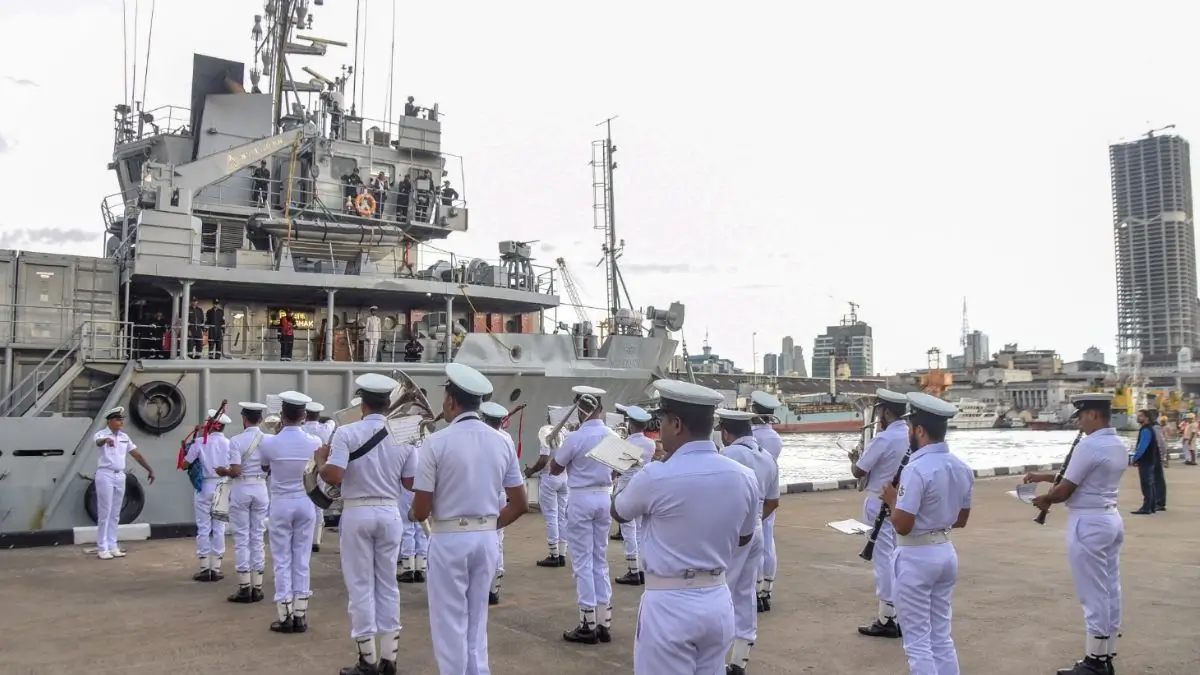
The RELOS Agreement — full form: Reciprocal Exchange of Logistic Support — is a bilateral military-logistics pact between India and Russia. Under this accord, both countries’ armed forces (navies, air forces, and other military formations) will be able to access each other’s military facilities: ports, airfields/airbases, maintenance and repair facilities, refuelling stations and logistical support hubs.
Ratified by the Russian parliament’s lower house (the State Duma) on 2 December 2025, the RELOS pact was signed earlier — on 18 February 2025 — by India’s Ambassador to Russia and Russia’s then-Deputy Defence Minister
Key Provisions of the Pact
- Mutual access to bases and facilities: Indian military ships, aircraft, and personnel may access Russian naval ports and airfields; similarly, Russian forces can use Indian bases and facilities.
- Logistics support: The agreement covers refuelling, replenishment (rations, munitions, spare parts), maintenance/repairs, berthing for ships and aircraft — thus streamlining long-distance deployments.
- Applicability: It applies to joint military exercises, training missions, humanitarian assistance, disaster-relief operations, and other mutually agreed operations.
- Operational flexibility: The pact allows operations “wherever both governments agree,” meaning deployments can happen across diverse geographies — from the Indian Ocean to Arctic waters.
Strategic Implications for India and Russia
For India, RELOS significantly extends the operational reach of its military — especially its Navy and Air Force. Through access to Russian ports in the Arctic, Pacific, and possibly beyond, Indian naval vessels and aircraft will be able to refuel, resupply, and maintain deeper maritime and aerial presence. This aligns with New Delhi’s vision of developing a global strategic footprint.
For Russia, access to Indian naval bases in the Indian Ocean Region (IOR) enhances its capability to project power in the Indo-Pacific — a region of growing geopolitical competition. The pact thus strengthens Moscow’s ability to operate beyond its immediate neighbourhood.
The agreement also institutionalizes defence cooperation between the two countries — making collaboration smoother, predictable, and less dependent on ad-hoc arrangements. It supports joint exercises, coordinated operations (including humanitarian and disaster-relief missions), which deepens interoperability between Indian and Russian forces.
Broader Defence-Diplomacy and Geopolitical Significance
The RELOS pact comes at a time of shifting global geopolitical alignments. By ratifying this agreement just before the scheduled state visit of Russian President to India (December 4–5, 2025), both nations signal a renewed commitment to their long-standing strategic partnership.
For India, which has multiple logistics/support agreements (with other friendly nations) as part of its strategic-autonomy policy, RELOS adds a crucial spine to its defence diplomacy architecture.
Given India’s reliance on Russian-made military hardware (aircraft, tanks, warships, missiles), RELOS ensures that maintenance, support, and operational logistics for such platforms can be carried out more efficiently and reliably — especially during long-range deployments or joint operations.

Why This News Matters
Strategic Depth in Defence Cooperation
The ratification of the RELOS Agreement marks one of the most significant enhancements in India-Russia defence cooperation in recent years. By granting mutual logistic support and base access, the pact gives both nations the ability to deploy and sustain military presence across vast geographies — from the Indian Ocean to Arctic and Pacific waters. For India, this translates into extended maritime and aerial reach, vital for safeguarding sea-lines of communication, trade routes, and projecting power in critical corridors.
Reaffirming Long-Term Partnership Amid Global Uncertainty
In an era of shifting global alliances and rising geopolitical competition, especially in the Indo-Pacific, this agreement underscores that India and Russia continue to view each other as key strategic partners. The timing — just before the state visit of Russia’s top leadership — signals both readiness and urgency. For India, which pursues a policy of strategic autonomy, RELOS adds flexibility: it allows collaboration with Russia while engaging with other global powers.
Operational Readiness and Defence Modernization
India’s armed forces are increasingly involved in diverse roles — from joint exercises with global partners to humanitarian missions and disaster relief. RELOS ensures that logistic support will not be a bottleneck. For students preparing for government exams (especially in defense, civil services, or railways/police — where understanding strategic developments helps), this reflects India’s evolving defence posture and how international pacts shape operational readiness.
Historical Context
The defence relationship between India and Russia (and earlier the Soviet Union) has been long-standing, dating back to the Cold War era. Over decades, Russia has been India’s primary arms supplier — providing aircraft, tanks, missiles, submarines, ships and other systems. However, logistics support, especially for operations beyond immediate regions, remained largely ad-hoc.
In recent years, India has diversified its defence partnerships — signing logistic-support agreements with various countries as part of its strategy to ensure operational flexibility and strategic autonomy. The RELOS pact, signed in February 2025, represents a maturation of the India-Russia partnership: moving from mere arms supply to integrated logistics cooperation.
With global strategic dynamics — including increased focus on the Arctic, Indo-Pacific competition, and maritime security — such agreements have become more relevant. RELOS reflects this shift: by formalizing logistic cooperation, India and Russia prepare for joint operations, extended deployments, and greater interoperability.
Key Takeaways from RELOS Agreement between India and Russia
| S. No. | Key Takeaway |
|---|---|
| 1 | RELOS is a military-logistics pact enabling Indian and Russian forces to access each other’s bases, ports, airfields and logistical facilities for mutual support. |
| 2 | The pact was ratified by Russia’s State Duma on 2 December 2025; originally signed on 18 February 2025. |
| 3 | It facilitates refuelling, replenishment, maintenance, repairs, and berthing for military ships and aircraft — streamlining long-distance deployments. |
| 4 | RELOS enhances India’s operational reach — from Indian Ocean to Arctic and Pacific waters — enabling a stronger naval and aerial footprint. |
| 5 | The agreement institutionalizes India-Russia defence cooperation, reinforcing their long-standing strategic partnership even as India diversifies its global ties. |
FAQs: Frequently Asked Questions on RELOS Agreement
1. What does RELOS stand for?
RELOS stands for Reciprocal Exchange of Logistic Support — a military‑logistics agreement between India and Russia.
2. When was the RELOS Agreement signed and ratified?
The pact was signed on 18 February 2025 and ratified by the Russian State Duma on 2 December 2025.
3. What is the main objective of RELOS?
The objective is to allow mutual access to military bases, ports, airfields, and logistical facilities, facilitating refuelling, maintenance, and long-distance deployments of armed forces.
4. Which branches of the military does RELOS cover?
It applies to Indian and Russian navies, air forces, and other military formations, enabling joint operations, training exercises, and humanitarian missions.
5. How does RELOS benefit India strategically?
India gains extended operational reach in the Indian Ocean, Arctic, and Pacific regions, ensuring logistics support for Russian-made platforms and boosting maritime and aerial presence.
6. Is RELOS limited to military exercises only?
No, it also applies to humanitarian assistance, disaster relief, joint training, and other mutually agreed operations.
7. Why is the RELOS pact significant in global geopolitics?
It strengthens India-Russia strategic ties, enhances defence interoperability, and signals commitment to long-term partnership amid changing global alliances.
Some Important Current Affairs Links