



Introduction
In a significant stride towards bolstering its capabilities in polar and ocean research, India has inaugurated two cutting-edge facilities at the National Centre for Polar and Ocean Research (NCPOR) in Goa. Union Minister Dr. Jitendra Singh unveiled the Sagar Bhavan and Polar Bhavan, marking a pivotal moment in India’s scientific infrastructure development.
Sagar Bhavan: A Hub for Oceanic Studies
Spanning 1,772 square meters and constructed at a cost of ₹13 crore, Sagar Bhavan is equipped with ultra-low temperature laboratories, including two -30°C ice core labs and +4°C storage units for sediment and biological samples. The facility also features a Class 1000 clean room for trace metal and isotope analysis, positioning it as a premier center for oceanographic research.
Polar Bhavan: Advancing Polar Research
Polar Bhavan, the largest building on the NCPOR campus, covers 11,378 square meters and was built at a cost of ₹55 crore. It houses state-of-the-art laboratories, 55 accommodation units for scientists, conference and seminar halls, a library, and a canteen. Notably, it is home to the “Science On Sphere” platform—a 3D visualization system displaying climate and earth system data—and will soon host India’s first Polar and Ocean Museum.
Strategic Importance in Ocean Geopolitics
The inauguration of these facilities aligns with India’s vision to play a pivotal role in global ocean governance and scientific collaboration. Dr. Singh emphasized that institutions like NCPOR are crucial in positioning India as a key player in ocean geopolitics, enhancing the nation’s capacity to monitor weather patterns and respond effectively to climate change challenges.
Why This News Is Important
Enhancing Scientific Infrastructure
The establishment of Sagar Bhavan and Polar Bhavan signifies India’s commitment to advancing its research capabilities in polar and ocean sciences. These facilities provide state-of-the-art infrastructure to support cutting-edge research and innovation.
Strengthening Global Scientific Collaboration
By investing in world-class research facilities, India aims to foster international partnerships and collaborations in polar and ocean research, contributing to global scientific endeavors.
Addressing Climate Change Challenges
The new facilities will enhance India’s ability to monitor and understand climate change, particularly in polar regions, which are critical indicators of global environmental health.
Supporting National Development Goals
Aligned with India’s vision for a developed nation by 2047, these initiatives contribute to the nation’s scientific and technological advancements, supporting sustainable development goals.
Promoting Public Engagement in Science
The upcoming Polar and Ocean Museum will serve as a platform for public scientific outreach, educating the public about the importance of polar and ocean research.
Historical Context
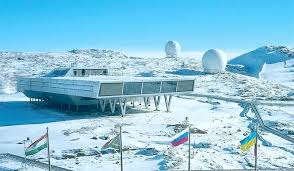
The National Centre for Polar and Ocean Research (NCPOR) was established in 1998 as an autonomous institution under the Ministry of Earth Sciences, Government of India. It serves as the nodal agency for coordinating and implementing research programs in polar and ocean sciences, including the maintenance of India’s permanent research stations in Antarctica—Maitri and Bharati—and the Arctic. NCPOR has been instrumental in advancing India’s scientific presence in polar regions and contributing to global climate research.
Key Takeaways from “India Enhances Polar and Ocean Research with New State-of-the-Art Facilities in Goa”
| # | Key Takeaway |
|---|---|
| 1 | Inauguration of Sagar Bhavan and Polar Bhavan: Two advanced research facilities at NCPOR in Goa. |
| 2 | State-of-the-Art Infrastructure: Includes ultra-low temperature labs, clean rooms, and 3D visualization platforms. |
| 3 | Strategic Role in Ocean Geopolitics: Enhances India’s position in global ocean governance and scientific collaboration. |
| 4 | Commitment to Climate Research: Facilities support monitoring and understanding of climate change, particularly in polar regions. |
| 5 | Public Scientific Outreach: Polar and Ocean Museum to educate the public on the importance of polar and ocean research. |
FAQs: Frequently Asked Questions
1. What are Sagar Bhavan and Polar Bhavan?
Sagar Bhavan and Polar Bhavan are two newly inaugurated state-of-the-art research facilities at the National Centre for Polar and Ocean Research (NCPOR) in Goa. They support advanced studies in polar and ocean sciences.
2. Who inaugurated these research hubs?
Union Minister Dr. Jitendra Singh inaugurated the new facilities.
3. What special equipment is housed in Sagar Bhavan?
Sagar Bhavan includes ultra-low temperature laboratories like -30°C ice core labs, +4°C storage for sediment and biological samples, and a Class 1000 clean room for trace metal and isotope analysis.
4. What is the significance of Polar Bhavan?
Polar Bhavan is the largest building on the NCPOR campus with advanced labs, accommodation for scientists, conference halls, and a 3D visualization platform called “Science On Sphere”. It will also host India’s first Polar and Ocean Museum.
5. How do these facilities contribute to climate change research?
They enhance India’s ability to monitor polar regions and oceans, which are vital indicators for understanding global climate change and its effects.
Some Important Current Affairs Links