









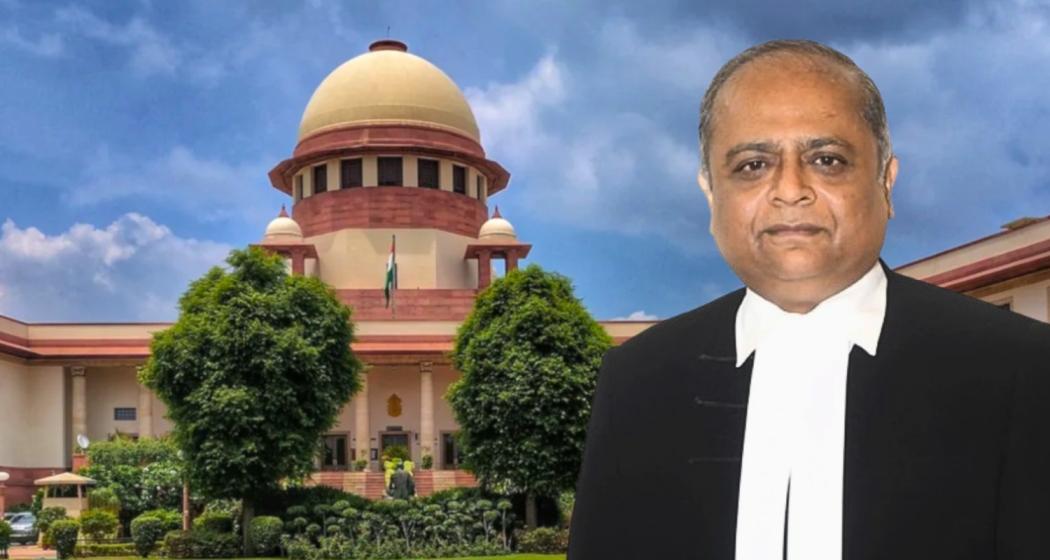
Supreme Court judge elevation news: SC Collegium recommends Justices Alok Aradhe and Vipul Pancholi for elevation, ensuring full judicial strength and strategic succession planning. Key insights for government exam aspirants.
Supreme Court Collegium Recommends Elevation of Justices Alok Aradhe and Vipul Pancholi
Introduction
In a significant development, the Supreme Court Collegium, led by Chief Justice B.R. Gavai, has recommended the elevation of two prominent High Court Chief Justices—Alok Aradhe and Vipul Pancholi—to the Supreme Court of India. This recommendation aims to fill the vacancies left by the recent retirements of Justices Bela Trivedi and Sudhanshu Dhulia, thereby restoring the Supreme Court to its full sanctioned strength of 34 judges.
Profiles of the Recommended Judges
Justice Alok Aradhe
Justice Aradhe, currently serving as the Chief Justice of the Bombay High Court, has an extensive judicial career spanning several High Courts. He began his tenure as a judge in the Madhya Pradesh High Court and has since served in the Jammu & Kashmir, Karnataka, and Telangana High Courts. His elevation to the Supreme Court is anticipated to bring a wealth of experience and judicial acumen to the apex court.
Justice Vipul Pancholi
Justice Pancholi, the Chief Justice of the Patna High Court, is noted for his rapid ascent within the judiciary. Appointed as a judge in the Gujarat High Court in 2014, he was transferred to the Patna High Court in July 2023, where he assumed the role of Chief Justice a month later. His elevation to the Supreme Court marks a significant milestone in his judicial career.
Collegium’s Decision and Government’s Approval
The Supreme Court Collegium’s recommendation was promptly approved by the Union Government. Law Minister Arjun Meghwal announced the appointments on the social media platform X, stating that the President, after consultation with the Chief Justice of India, has appointed Justice Aradhe and Justice Pancholi as judges of the Supreme Court. The swift approval process underscores the government’s commitment to maintaining the judiciary’s strength and functionality.
Dissent within the Collegium
Despite the Collegium’s unanimous recommendation, Justice B.V. Nagarathna, the only woman judge in the Supreme Court, recorded a dissenting note regarding Justice Pancholi’s elevation. Justice Nagarathna expressed concerns about Pancholi’s relatively low seniority and questioned the rationale behind his transfer from the Gujarat High Court to the Patna High Court in July 2023. She also highlighted the existing representation from the Gujarat High Court in the Supreme Court, suggesting that Pancholi’s elevation might not be in the best interest of judicial diversity.
Significance of the Elevations
The elevation of Justices Aradhe and Pancholi is poised to have several implications for the Indian judiciary. With these appointments, the Supreme Court will operate at its full capacity, ensuring the timely and effective adjudication of cases. Additionally, Justice Pancholi’s elevation places him in line to become the Chief Justice of India in October 2031, following the retirement of Justice Joymalya Bagchi. This succession plan is indicative of the Collegium’s long-term vision for the judiciary’s leadership.
Why This News Is Important
Judicial Strength and Functionality
The Supreme Court’s elevation to its full sanctioned strength of 34 judges is crucial for the efficient functioning of the judiciary. A complete bench ensures that cases are heard and decided promptly, reducing the backlog and enhancing public confidence in the judicial system.
Representation and Diversity
The appointments reflect the Collegium’s efforts to maintain a balanced representation from various High Courts. While Justice Aradhe brings experience from multiple High Courts, Justice Pancholi’s elevation raises discussions about regional representation, given the existing judges from the Gujarat High Court in the Supreme Court.
Succession Planning
Justice Pancholi’s potential future role as the Chief Justice of India underscores the importance of strategic succession planning within the judiciary. Such foresight ensures continuity and stability in the apex court’s leadership.
Historical Context
Evolution of the Collegium System
The Collegium system, established through judicial decisions, has been the primary method for appointing judges to the Supreme Court and High Courts. Over the years, the system has undergone scrutiny and reforms to enhance transparency and accountability in judicial appointments.
Previous Elevations and Controversies
The elevation of judges has occasionally been contentious, with instances of dissent within the Collegium and debates over seniority and regional representation. These discussions highlight the complexities involved in maintaining a balanced and effective judiciary.
Key Takeaways from “SC Collegium Recommends Aradhe, Pancholi for Elevation in Top Court”
| No. | Key Takeaway |
|---|---|
| 1. | The Supreme Court Collegium has recommended the elevation of Justices Alok Aradhe and Vipul Pancholi to the Supreme Court. |
| 2. | Justice Aradhe has served in multiple High Courts, including Madhya Pradesh, Jammu & Kashmir, Karnataka, Telangana, and Maharashtra. |
| 3. | Justice Pancholi’s rapid ascent in the judiciary is noteworthy, having been appointed as a judge in 2014 and elevated to Chief Justice of Patna High Court in 2023. |
| 4. | Justice B.V. Nagarathna recorded a dissenting note regarding Justice Pancholi’s elevation, citing concerns over seniority and regional representation. |
| 5. | The elevation of Justice Pancholi positions him to become the Chief Justice of India in October 2031, following the retirement of Justice Joymalya Bagchi. |
FAQs: Frequently Asked Questions
1. Who has been recommended by the Supreme Court Collegium for elevation to the Supreme Court?
The Supreme Court Collegium has recommended Justices Alok Aradhe and Vipul Pancholi for elevation to the Supreme Court of India.
2. What positions did Justices Aradhe and Pancholi hold before the recommendation?
Justice Alok Aradhe was the Chief Justice of the Bombay High Court, while Justice Vipul Pancholi was the Chief Justice of the Patna High Court.
3. Why is Justice Pancholi’s elevation considered controversial?
Justice B.V. Nagarathna dissented regarding Pancholi’s elevation, citing concerns about his low seniority, rapid transfer from Gujarat to Patna High Court, and regional representation in the Supreme Court.
4. What is the sanctioned strength of judges in the Supreme Court of India?
The Supreme Court has a sanctioned strength of 34 judges, including the Chief Justice of India.
5. When is Justice Pancholi expected to become Chief Justice of India?
Justice Pancholi is in line to become the Chief Justice of India in October 2031, following the retirement of Justice Joymalya Bagchi.
6. What is the significance of these elevations for the judiciary?
These elevations restore the Supreme Court to full strength, ensuring timely adjudication of cases and a stable succession plan for future leadership.
7. What is the Collegium system in India?
The Collegium system is a mechanism for appointing judges to the Supreme Court and High Courts, comprising the Chief Justice of India and senior judges of the Supreme Court.
Some Important Current Affairs Links