
SEMICON India 2026 will showcase India’s growing semiconductor ecosystem. Know its dates, venue, theme, India Semiconductor Mission and key exam facts.
SEMICON India 2026: India’s Semiconductor Ambitions Take Centre Stage
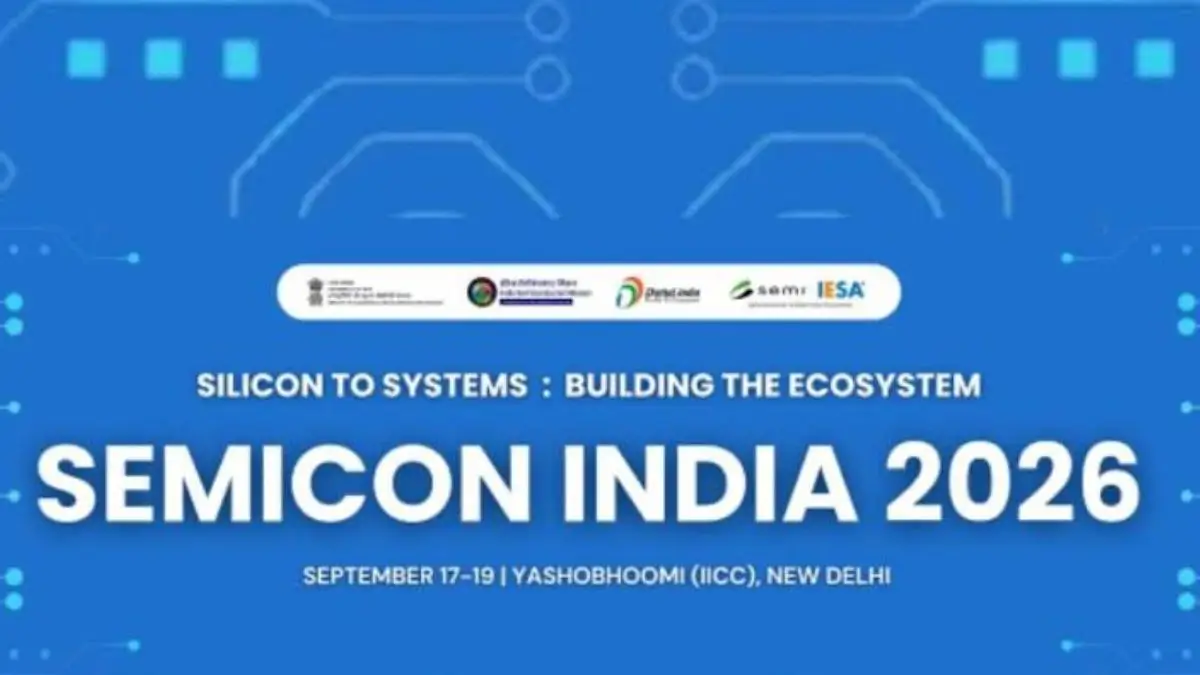
SEMICON India 2026 is set to highlight India’s rapidly developing semiconductor ecosystem and its ambition to become an important global hub for chip manufacturing, design, packaging and electronics. The fifth edition of the event will be held from 17 to 19 September 2026 at Yashobhoomi, New Delhi, under the theme “Silicon to Systems: Building the Ecosystem.”
Major Global Participation Expected
The three-day event is expected to bring together semiconductor companies, policymakers, technology experts, investors, researchers and industry leaders from India and abroad. Reports indicate that the event will feature more than 500 exhibitors, over 290 international companies, more than 150 speakers and delegations from over 40 countries. The participation is expected to strengthen international cooperation and investment opportunities in India’s semiconductor sector.
Focus on the Complete Semiconductor Value Chain
SEMICON India 2026 will focus on developing a comprehensive semiconductor value chain rather than concentrating only on chip fabrication. The ecosystem includes semiconductor design, manufacturing, assembly, testing, packaging, equipment, materials and electronics applications. This integrated approach is important because a globally competitive semiconductor industry requires capabilities across several interconnected stages of production.
India Semiconductor Mission Supports the Sector
The event comes at a time when India is implementing the India Semiconductor Mission (ISM) to strengthen domestic semiconductor capabilities. The first phase of the mission was approved in December 2021 with a financial support framework of ₹76,000 crore. The government has provided fiscal assistance for semiconductor fabs, compound semiconductor facilities, assembly and testing units and chip-design activities.
Semiconductor Projects and Investment Momentum
India’s semiconductor push has already attracted major investments. According to a government background note, 10 semiconductor projects with a cumulative investment of about ₹1.60 lakh crore had been approved across six states by December 2025. These projects are intended to establish manufacturing and packaging capabilities while creating employment and strengthening India’s position in global technology supply chains.
Semiconductor Manufacturing and Economic Security
Semiconductors are essential components used in smartphones, computers, automobiles, telecommunications equipment, defence systems, medical devices, artificial intelligence infrastructure and many other technologies. Building domestic capabilities can therefore reduce India’s vulnerability to international supply-chain disruptions while supporting technological and economic security.
India’s Growing Role in Chip Design
India already has considerable strength in semiconductor research and chip design because of its large pool of engineers and technology professionals. Government programmes such as the Chips to Start-up (C2S) Programme are aimed at strengthening domestic chip-design capabilities and developing skilled manpower. The programme seeks to connect academic institutions, startups and industry with semiconductor design and development activities.
SEMICON India 2026 and Skill Development
A dedicated workforce component at SEMICON India 2026 is expected to draw attention to employment and skill-development opportunities in the semiconductor industry. The event is also associated with initiatives aimed at students and young innovators, including a semiconductor-focused hackathon. Such initiatives can help develop the specialised workforce required for chip design, fabrication, testing and advanced electronics.
Importance for Make in India and Atmanirbhar Bharat
India’s semiconductor strategy is closely connected with the broader objectives of Make in India and Atmanirbhar Bharat. Domestic semiconductor production can support electronics manufacturing, encourage high-technology investment, create skilled employment and strengthen India’s position in global value chains.
SEMICON India 2026: Exam Perspective
For government-exam aspirants, SEMICON India 2026 is important under topics such as science and technology, semiconductor technology, digital economy, industrial policy, manufacturing, Atmanirbhar Bharat and international economic cooperation. Key facts to remember include the venue, dates, theme, India Semiconductor Mission and the government’s semiconductor investment and support initiatives.

Why This News is Important
Strategic Importance of Semiconductors
Semiconductors are often described as the foundation of the modern digital economy. They power almost every advanced electronic system, from mobile phones and computers to electric vehicles, satellites, defence equipment and artificial intelligence systems. Therefore, developing domestic semiconductor capabilities has strategic importance beyond ordinary industrial production.
Strengthening Supply-Chain Resilience
The global semiconductor industry has experienced supply-chain disruptions in recent years. India’s efforts to establish domestic manufacturing, packaging and testing facilities can help diversify supply sources and reduce excessive dependence on imports. This makes semiconductor policy relevant to India’s economic and technological security.
Boost to High-Technology Manufacturing
SEMICON India 2026 demonstrates India’s intention to move further into high-value manufacturing. A successful semiconductor ecosystem can support downstream industries such as automobiles, telecommunications, consumer electronics, renewable-energy equipment and defence technology.
Employment and Skill Development
The semiconductor industry requires highly specialised professionals in electronics, physics, engineering, materials science, chip design and manufacturing. The development of this ecosystem can therefore create opportunities for skilled employment while encouraging universities and technical institutions to expand semiconductor-related education and research.
Important for Competitive Examinations
The topic combines science and technology with government policy, economic development and strategic affairs. Candidates preparing for UPSC, State PCS, SSC, banking, railways, defence and police examinations should remember the event’s theme, venue, dates, India Semiconductor Mission, financial support framework and the importance of semiconductor self-reliance.
Historical Context: India’s Semiconductor Development Journey
Early Semiconductor Efforts
India’s semiconductor journey dates back several decades, with government-supported electronics and semiconductor research institutions contributing to the country’s early capabilities. However, large-scale commercial semiconductor manufacturing remained limited, while India’s strongest advantage developed in chip design and engineering services.
India Semiconductor Mission
A major policy shift came with the India Semiconductor Mission, approved by the Union Cabinet in December 2021. The mission established a dedicated framework for attracting investment and developing semiconductor and display-manufacturing capabilities. Its initial support framework had an outlay of ₹76,000 crore and offered fiscal assistance to eligible projects.
Development of Semiconductor Projects
Subsequent approvals expanded India’s semiconductor ecosystem to include fabrication, assembly, testing and packaging projects. By December 2025, the government reported 10 approved projects involving approximately ₹1.60 lakh crore of investment across six states.
India Semiconductor Mission 2.0
The semiconductor strategy entered another phase with India Semiconductor Mission 2.0, announced in the Union Budget 2026. The initiative seeks to deepen domestic capabilities and move beyond individual projects towards a stronger and more complete semiconductor ecosystem.
SEMICON India as a Global Platform
SEMICON India has evolved into an important platform for bringing together global semiconductor companies, policymakers, investors and technology experts. The 2026 edition is particularly significant because it is being organised as India moves from policy announcements towards actual semiconductor manufacturing and ecosystem development.
Key Takeaways from SEMICON India 2026: India’s Semiconductor Push
| S. No. | Key Takeaway |
|---|---|
| 1 | SEMICON India 2026 will be held from 17–19 September 2026 at Yashobhoomi, New Delhi. |
| 2 | The theme of SEMICON India 2026 is “Silicon to Systems: Building the Ecosystem.” |
| 3 | The India Semiconductor Mission was approved in December 2021 with an initial support framework of ₹76,000 crore. |
| 4 | By December 2025, 10 semiconductor projects worth about ₹1.60 lakh crore had been approved across six states. |
| 5 | SEMICON India 2026 aims to strengthen India’s complete semiconductor ecosystem covering design, manufacturing, packaging, testing, skills and global partnerships. |
FAQs: SEMICON India 2026
1. What is SEMICON India 2026?
SEMICON India 2026 is a major semiconductor industry event aimed at showcasing India’s growing semiconductor ecosystem and strengthening collaboration among industry, government, investors, researchers and technology companies.
2. When will SEMICON India 2026 be held?
SEMICON India 2026 will be held from 17 to 19 September 2026.
3. Where will SEMICON India 2026 be organised?
The event will be organised at Yashobhoomi, New Delhi.
4. What is the theme of SEMICON India 2026?
The theme is “Silicon to Systems: Building the Ecosystem.”
5. What is the India Semiconductor Mission?
The India Semiconductor Mission (ISM) is the Government of India’s dedicated initiative to develop a sustainable semiconductor and display ecosystem in the country.
6. When was the India Semiconductor Mission approved?
The India Semiconductor Mission was approved in December 2021.
7. What was the initial financial support framework for the India Semiconductor Mission?
The initial financial support framework was ₹76,000 crore.
8. Why are semiconductors important for India?
Semiconductors are essential for smartphones, computers, automobiles, telecommunications, defence equipment, artificial intelligence, medical technology and numerous other electronic systems. Domestic capabilities can also improve supply-chain resilience and technological security.
9. What is the Chips to Start-up Programme?
The Chips to Start-up (C2S) Programme is a government initiative designed to strengthen semiconductor chip-design capabilities and develop skilled manpower by involving academic institutions, startups and industry.
10. Which ministry is primarily associated with India’s semiconductor development initiatives?
The Ministry of Electronics and Information Technology (MeitY) is the key ministry associated with India’s semiconductor development initiatives.
Some Important Current Affairs Links