










First Wooden Gurdwara India: Sri Nanak Niwas, constructed in Fazilka by Punjab Police, showcases sustainable architecture, Seva, and cultural innovation—ideal for UPSC and SSC exam preparation.
India’s First Wooden Gurdwara Opens in Fazilka: A Landmark of Faith & Architecture
Introduction to Sri Nanak Niwas
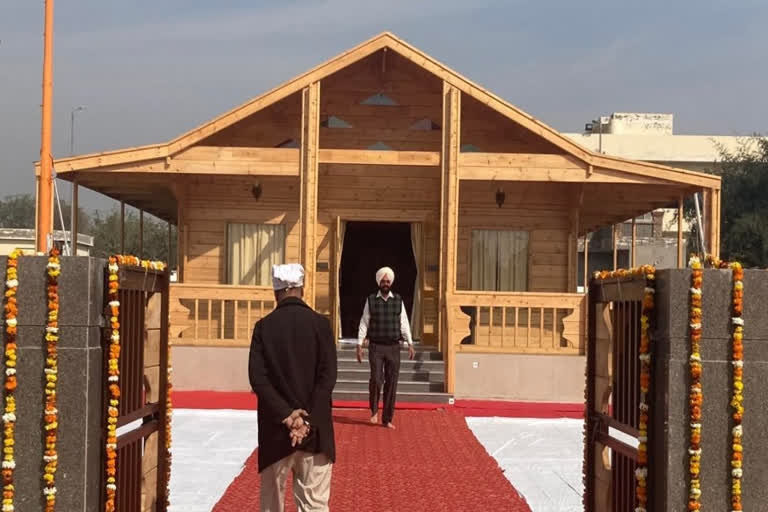
Nestled within the police lines of Fazilka in Punjab, Sri Nanak Niwas has become India’s first wooden Gurdwara, marking a significant milestone in religious architecture. Constructed entirely of Finnish Deodhar wood and inaugurated in February 2023, this shrine represents a perfect blend of spirituality, design innovation, and communal harmony
Vision Behind the Project
The inception of this Gurdwara is credited to former SSP Bhupinder Singh Sidhu, who drew inspiration from a similar hut-style shrine in the Himalayan region. Recognizing the absence of a place of worship for police personnel and their families in the Fazilka lines, he spearheaded the project, envisioning a space open to everyone irrespective of religion
Architectural Design & Materials
A marvel of engineering and craftsmanship, Sri Nanak Niwas is built with termite-resistant Finnish pine wood imported specifically for durability. Its design highlights include interlocking beams, ventilated domes, and four open entrances. The structure offers both modern environmental compatibility and traditional Sikh architectural motifs
Community-Driven Funding & Seva
Constructed in approximately four months, the Gurdwara was financed through widespread community donations—from police staff, locals, and philanthropic individuals. Even contributions as modest as ₹11 were appreciated, emphasizing grassroots-level participation. This collective effort underscores the Sikh principle of Seva, or selfless service
Facilities & Spiritual Significance
Spanning around two kanals within the police lines, Sri Nanak Niwas includes a langar hall and quarters for the Granthi, facilitating daily prayers, discourse sessions (katha), and community meals (langar). Its name honours Guru Nanak, embodying his teachings of unity, faith, and humility
Eco-Friendly & Cultural Impact
The choice of wood over conventional materials brings notable environmental advantages—lower carbon emissions, enhanced sustainability, and minimal maintenance. Beyond being a spiritual center, the Gurdwara serves as a model for blending ecological awareness with heritage conservation
Why This News Matters 🧭
Relevance for Exam Aspirants
- Policing & Governance: This initiative exemplifies leadership from within the police force, showcasing how officers like SSP Bhupinder Singh Sidhu can make valuable community contributions beyond law enforcement.
- Social Harmony: The open-access model reinforces government exam themes such as inclusive governance, communal unity, and respect for diverse faiths.
- Environment & Heritage: Reflects policy priorities on sustainable infrastructure and adaptive reuse of eco-friendly materials.
- Cultural Innovation: Highlights state-level public engagement in religious and cultural innovations, relevant for general studies and ethics sections.
Historical Context: Roots of Wooden Architecture in Sikh Places of Worship
- Traditional Styles: Sikh shrines are historically known for masonry and marble—but wooden Gurdwaras are rare.
- Global Influences: Bhupinder Sidhu was inspired by a wooden, temple-like structure (a ‘hut-style’ Gurdwara) he observed in a hill state in India
- Evolving Public Spaces: Over the past decade, state actors have initiated community-built religious sites, emphasizing local participation and heritage protection, similar to this project.
- Sustainable Infrastructure: Aligns with India’s 2030 mission for eco-conscious public buildings, particularly in regions prone to climatic stress and termite activity.
Key Takeaways from Sri Nanak Niwas
| # | Key Takeaway |
|---|---|
| 1 | First wooden Gurdwara in India: Sri Nanak Niwas marks a historic achievement in Fazilka police lines |
| 2 | SSP-led initiative: Conceived by Bhupinder Singh Sidhu to meet spiritual needs and promote unity among police personnel and public . |
| 3 | Finnish Deodhar wood: Chosen for its termite-resistance and longevity, ideal for hot and humid climates . |
| 4 | Community-funded Seva: Built through contributions from staff, locals, and philanthropists reflecting the seva ethos . |
| 5 | Eco‑cultural impact: A model of sustainable religious architecture that enhances communal harmony and architectural innovation . |
FAQs: Frequently Asked Questions
1. Where is India’s first wooden Gurdwara located?
It is located in the police lines of Fazilka district, Punjab.
2. Who conceptualized and initiated the construction of Sri Nanak Niwas?
The project was initiated by former SSP Bhupinder Singh Sidhu.
3. Which material was used to construct the Gurdwara?
Termite-resistant Finnish Deodhar (pine) wood was used for construction.
4. What makes this Gurdwara architecturally unique?
It is the first of its kind in India made entirely of wood, with interlocking beams, open-door architecture, and eco-sustainability features.
5. How was the construction of this Gurdwara funded?
The Gurdwara was funded entirely through community donations, including contributions from police staff and local citizens.
6. What are the additional facilities available within Sri Nanak Niwas?
The Gurdwara includes a langar hall and living quarters for the Granthi.
7. Why is this Gurdwara significant for competitive exams?
It blends topics like eco-friendly infrastructure, community service, cultural innovation, and inclusive governance—relevant for UPSC, State PCS, SSC, Defence, Railways, and Teaching exams.
Some Important Current Affairs Links