








UPI’s Dominance in India’s Digital Payments Landscape
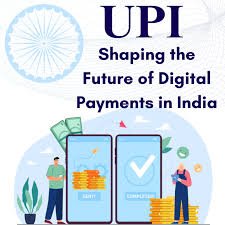
The growth of India’s digital payments ecosystem has been remarkable over the past few years, and one of the key drivers of this revolution is the Unified Payments Interface (UPI). The UPI system, launched in 2016 by the National Payments Corporation of India (NPCI), has significantly transformed the way people conduct financial transactions in the country. By providing a seamless, instant, and secure method for transferring funds between bank accounts, UPI has become a game-changer in the digital payments sector.
UPI’s Contribution to Financial Inclusion
One of the standout features of UPI is its contribution to financial inclusion. It has made digital transactions accessible to a wider population, including those in rural and remote areas who previously had limited access to banking services. With features such as easy-to-use mobile applications, minimal internet requirements, and interoperability between banks, UPI has empowered millions of individuals to engage in online payments without the need for a traditional bank account or credit card.
Growth of UPI Transactions in India
The scale of UPI’s success can be seen in the volume of transactions processed. In 2024, UPI recorded a milestone of over 10 billion transactions, marking a significant increase in adoption. This surge can be attributed to various factors, including government initiatives, digital literacy programs, and partnerships with fintech companies. UPI’s ability to handle large volumes of transactions with speed and security has made it the preferred choice for consumers, merchants, and businesses alike.
Challenges and Future Outlook
Despite its success, UPI faces some challenges, such as issues related to cybersecurity, fraud prevention, and infrastructure in certain regions. However, the government and regulatory bodies are continuously working on enhancing the security and reliability of the system. As UPI continues to evolve, it is expected to integrate newer technologies like blockchain to further strengthen its position in the digital payments landscape.

Why This News is Important
Significance in the Digital Economy
The rise of UPI is crucial in understanding India’s transition into a cashless economy. Digital payment systems like UPI are instrumental in achieving the government’s vision of promoting a less-cash economy, thereby reducing the reliance on physical currency. The widespread use of UPI has transformed the payment habits of the masses and is expected to accelerate economic growth, especially by increasing efficiency in business transactions.
Impact on Government Initiatives
UPI has become central to numerous government initiatives, such as direct benefit transfers (DBT) and digital literacy programs. These initiatives aim to increase transparency, reduce corruption, and enhance access to services for the common man. UPI’s role in facilitating these initiatives makes it a cornerstone of India’s push towards financial inclusion.
Empowering Small Businesses
For small and medium enterprises (SMEs), UPI offers a low-cost, accessible method to accept payments. This is particularly significant in rural and semi-urban areas, where cash transactions were once the norm. UPI’s success has enabled businesses to reach more customers, expand their markets, and contribute to the economic growth of the country.
Historical Context: Background Information
The evolution of digital payments in India has been a gradual process, influenced by several key developments. Before UPI, India had a fragmented digital payments landscape dominated by methods like credit and debit cards, mobile wallets, and bank transfers. However, these methods were often cumbersome and lacked widespread interoperability.
The vision of UPI was to create a standardized, real-time digital payment system that would be accessible to everyone, regardless of their bank or geographical location. The launch of UPI in 2016, under the guidance of the Reserve Bank of India (RBI) and the NPCI, marked a turning point in the digital payments sector. UPI was designed to simplify the process of money transfers by allowing users to link multiple bank accounts to a single platform.
With UPI’s growth, the Indian government began pushing for greater adoption of digital payments through initiatives like the Digital India campaign and the Pradhan Mantri Jan Dhan Yojana (PMJDY), which focused on opening bank accounts for the unbanked population. The combination of these factors has contributed to UPI’s massive success.
Key Takeaways from “UPI’s Dominance in India’s Digital Payments Landscape”
| Serial No. | Key Takeaway |
|---|---|
| 1 | UPI, launched in 2016 by NPCI, has transformed India’s digital payments landscape. |
| 2 | UPI has played a key role in promoting financial inclusion by making digital transactions accessible. |
| 3 | India’s UPI system recorded over 10 billion transactions in 2024, reflecting its widespread adoption. |
| 4 | UPI supports government initiatives like DBT, digital literacy, and financial inclusion programs. |
| 5 | Despite challenges in cybersecurity and infrastructure, UPI is expected to evolve with the integration of new technologies like blockchain. |
Important FAQs for Students from this News
1. What is UPI, and how has it transformed digital payments in India?
Answer: UPI (Unified Payments Interface) is a real-time payment system developed by the National Payments Corporation of India (NPCI). It allows users to link multiple bank accounts and make instant, seamless transactions through mobile phones. UPI has transformed digital payments in India by making them accessible, secure, and efficient, particularly in rural and remote areas.
2. What are the key features of UPI that make it popular?
Answer: UPI offers several key features: instant transactions, low-cost transfers, interoperability between banks, and ease of use through mobile apps. It also supports both peer-to-peer (P2P) and merchant payments, allowing users to send or receive money, pay bills, or buy products/services with a few clicks.
3. How does UPI contribute to financial inclusion in India?
Answer: UPI plays a significant role in financial inclusion by making digital payments accessible to people in remote areas with limited banking access. It eliminates the need for physical bank visits and enables users to carry out transactions using their mobile phones, even without the need for a credit card.
4. What role does UPI play in government schemes?
Answer: UPI is integrated with various government schemes such as Direct Benefit Transfers (DBT) and financial inclusion initiatives. These schemes aim to make subsidies, pensions, and other benefits directly accessible to citizens, improving transparency and reducing corruption.
5. What challenges does UPI face in India’s digital payments ecosystem?
Answer: Despite its success, UPI faces challenges related to cybersecurity, fraud prevention, and infrastructure, especially in rural areas. To address these concerns, regulatory bodies and the government are continuously working to enhance UPI’s security and improve its accessibility.
Some Important Current Affairs Links