








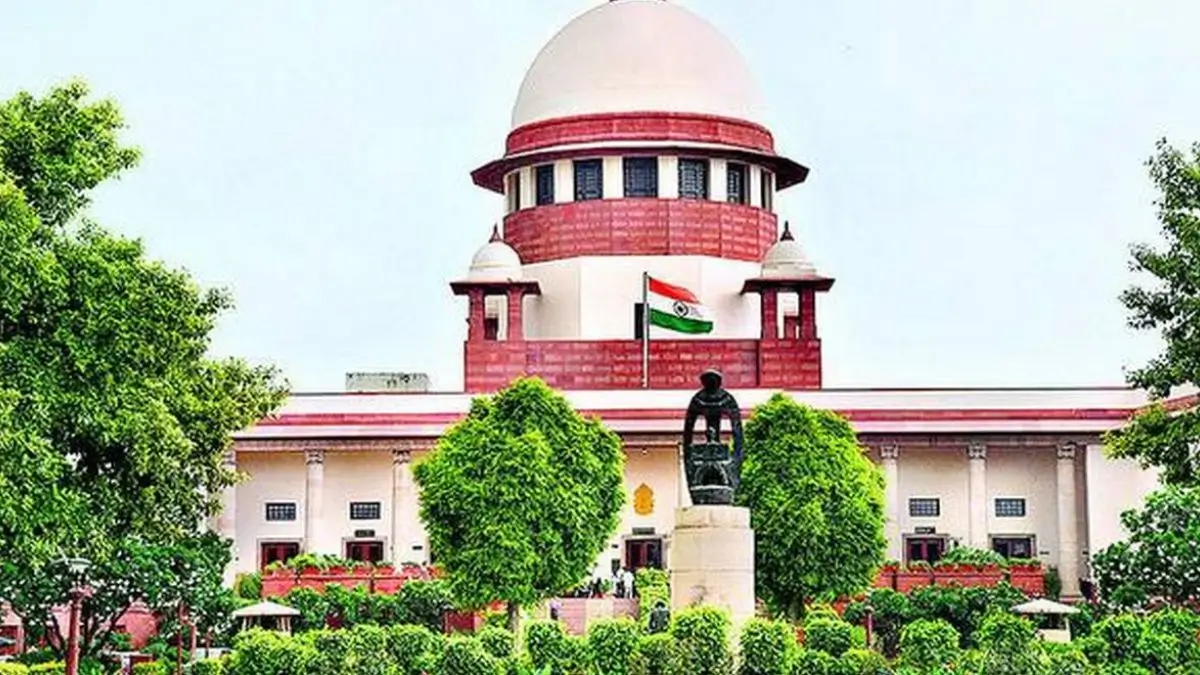
Passive euthanasia Supreme Court verdict allows Harish Rana’s life support withdrawal under medical supervision, reinforcing the right to die with dignity under Article 21.
Supreme Court Allows Withdrawal of Life Support in Harish Rana Passive Euthanasia Case
In a historic and landmark judgment, the Supreme Court of India has granted permission for the withdrawal of life‑sustaining treatment for Harish Rana, a 32‑year‑old man who was in a permanent vegetative state for over 13 years since a tragic accident. This ruling marks the first judicial implementation of passive euthanasia in India where artificial life support can be legally discontinued under strict medical and ethical supervision.
Harish Rana sustained severe brain injuries following a fall from the fourth floor of his paying guest accommodation in 2013, resulting in 100% quadriplegia and a permanent vegetative state. Since the accident, he depended entirely on artificial life support, including clinically administered nutrition and hydration, to stay alive. Despite years of medical care, his condition showed no meaningful improvement.
The petition for passive euthanasia was moved by his father, who prayed that continuing invasive life support was merely prolonging biological existence without therapeutic benefits, thus violating the dignity of life. A Bench of Justices J.B. Pardiwala and K.V. Viswanathan evaluated the case under the passive euthanasia framework recognized earlier by the Supreme Court and finally approved the withdrawal of clinically administered life support.
Judicial and Medical Safeguards
The Court directed that Rana be admitted to the All India Institute of Medical Sciences (AIIMS), Delhi, where a specialized medical team will oversee the dignified withdrawal of treatment in accordance with established legal and ethical protocols. The judgment emphasized that passive euthanasia does not mean actively causing death, but rather involves withholding or withdrawing medical treatment when recovery is no longer possible.
In its order, the Supreme Court observed that continued life support in a vegetative state may undermine human dignity and that clinical decisions guided by expert medical boards should be respected. This decision is seen as a major advancement in India’s jurisprudence on end‑of‑life care and the constitutional right to die with dignity.

📌 Why This News Is Important for Government Exam Aspirants
Relevance to Constitution and Fundamental Rights
This judgment is a significant development in Indian constitutional law, especially concerning Article 21 (Right to life and personal liberty), which has been interpreted to include the right to die with dignity. Understanding the evolution and judicial application of fundamental rights is crucial for exams like UPSC Civil Services, State PSCs, and Law‑related posts. The case also highlights how the judiciary balances individual rights with ethical and medical considerations.
Significance in Healthcare and Legal Ethics
For candidates preparing for Medical Officer, Nursing Services, Defence Services, and Police exams, knowledge of passive euthanasia’s legal status and its safeguards is important in understanding healthcare policy, patient rights, and medical ethics. The ruling also sets precedents for future cases where terminal or vegetative state patients and their families seek judicial relief when medical recovery is not possible.
Public Policy and Governance
The judgment reflects the government’s evolving approach to sensitive ethical issues and highlights the role of courts in shaping policy where the legislature has not enacted specific laws. Questions based on this case can appear under Polity, Governance, Ethics, and Judiciary sections in various competitive exams.
📌 Historical Context: Passive Euthanasia in India
Evolution in Indian Jurisprudence
Passive euthanasia, where medical treatment is withheld or withdrawn allowing a natural death, has been legally recognized in India since 2011 during the Aruna Shanbaug case. However, this recognition remained largely theoretical until 2018, when the Supreme Court in Common Cause v. Union of India formally endorsed passive euthanasia and the concept of living wills under Article 21.
From Guidelines to Judicial Implementation
Despite legal recognition, few cases moved to court due to the complex procedural safeguards and social hesitancy among medical practitioners. Revised guidelines in 2023 simplified certain aspects but required medical board approvals. The Harish Rana v. Union of India (2026) judgment is the first time the Supreme Court executed these guidelines by allowing life support withdrawal, making it a milestone moment in India’s legal history on end‑of‑life care.
📌 Key Takeaways from Supreme Court Passive Euthanasia Verdict for Harish Rana
| S.No. | Key Takeaway |
|---|---|
| 1 | The Supreme Court allowed the first judicial implementation of passive euthanasia in the Harish Rana case after 13 years of vegetative state. |
| 2 | The verdict recognized the right to die with dignity under Article 21 of the Constitution. |
| 3 | The Court directed that life support be withdrawn under strict medical supervision at AIIMS Delhi. |
| 4 | Passive euthanasia involves withholding or withdrawing medical treatment that only prolongs biological existence. |
| 5 | This decision sets a major legal and ethical precedent for future medical and judicial end‑of‑life care cases. |
FAQs: Frequently Asked Questions
1. What is passive euthanasia?
Passive euthanasia refers to the withholding or withdrawal of medical treatment that sustains life when the patient is in a terminal or irreversible vegetative state. It allows the patient to die naturally without active intervention.
2. Who was Harish Rana?
Harish Rana was a 32-year-old man who suffered a fall in 2013, resulting in quadriplegia and a permanent vegetative state, and remained on life support for over 13 years.
3. What did the Supreme Court rule in this case?
The Supreme Court allowed the withdrawal of life support for Harish Rana, under strict medical and ethical supervision, marking the first judicial execution of passive euthanasia in India.
4. Which constitutional right does this case involve?
The case is linked to Article 21 of the Indian Constitution, which guarantees the Right to Life and Personal Liberty. The court emphasized that it also includes the right to die with dignity.
5. Where will the withdrawal of life support take place?
The Supreme Court directed that the withdrawal of life support be conducted at the All India Institute of Medical Sciences (AIIMS), Delhi, under the supervision of a specialized medical board.
6. Is passive euthanasia legal in India?
Yes, passive euthanasia has been legally recognized in India since the Aruna Shanbaug case (2011) and clarified further in Common Cause v. Union of India (2018).
7. Does passive euthanasia involve actively causing death?
No, it only involves withholding or withdrawing medical interventions. It does not involve active steps to end life.
8. Why is this judgment significant for exams?
This is a landmark case demonstrating judicial interpretation of Article 21, end-of-life care ethics, and medical law, which are commonly asked in UPSC, State PSC, Banking, SSC, Railways, and Defence exams.
Some Important Current Affairs Links