





One Nation One Election JPC extension 2026 explained with key bills, benefits, challenges, constitutional changes, and exam relevance for UPSC, SSC, and PCS aspirants.
One Nation One Election: JPC Gets More Time to Review Key Bills
Introduction to the Recent Development
The Indian Parliament has taken a significant step in advancing electoral reforms by extending the tenure of the Joint Parliamentary Committee (JPC) examining the “One Nation One Election” proposal. The extension allows the committee to continue reviewing crucial legislation related to simultaneous elections across the country. This move reflects the government’s sustained commitment to restructuring India’s electoral system.
Extension of JPC Tenure Explained
The Lok Sabha has extended the tenure of the JPC until the first day of the last week of the Monsoon Session 2026. The motion for extension was introduced by committee chairman P.P. Chaudhary and was passed through a voice vote in Parliament.
This extension provides the committee additional time to thoroughly examine the legal, constitutional, and administrative complexities involved in synchronizing elections at both national and state levels.
Key Bills Under Examination
The JPC is currently reviewing two important legislative proposals:
- Constitution (129th Amendment) Bill, 2024 – This bill aims to enable simultaneous elections for the Lok Sabha and State Legislative Assemblies.
- Union Territories Laws (Amendment) Bill, 2024 – This bill seeks to align election cycles in Union Territories with national elections.
These bills collectively form the backbone of the One Nation One Election framework and require significant constitutional amendments.
Concept of One Nation One Election
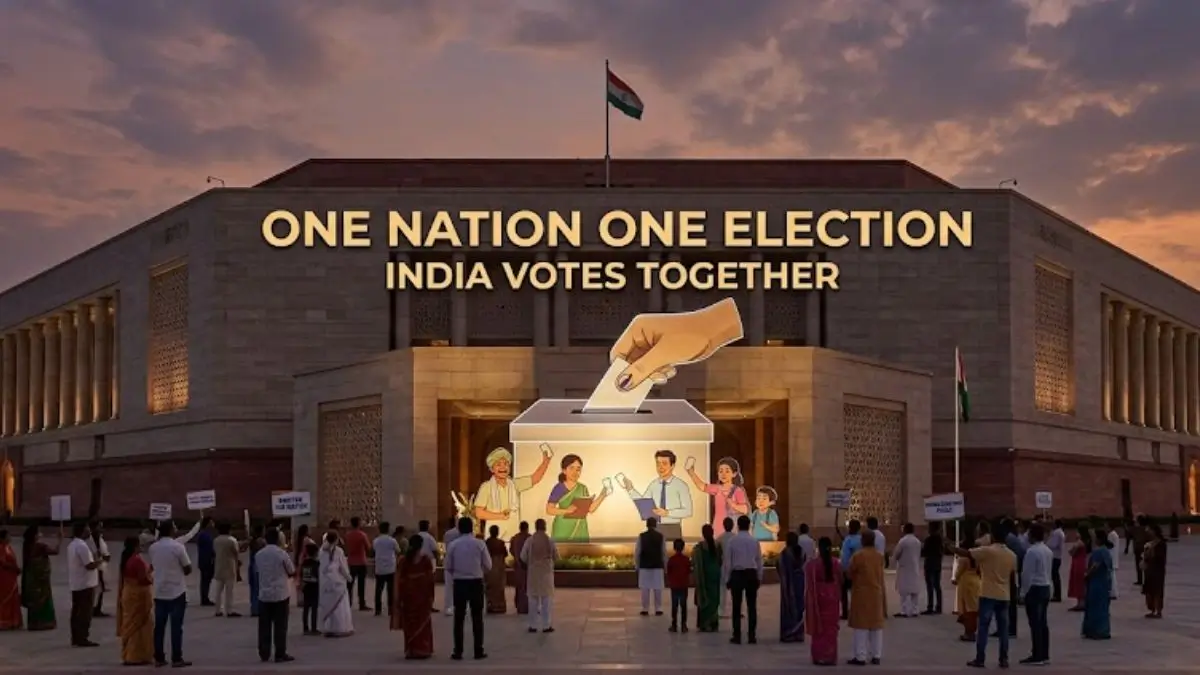
The “One Nation One Election” proposal aims to conduct elections for the Lok Sabha and all State Assemblies simultaneously. This system was followed in India during the 1950s and 1960s before being disrupted due to premature dissolutions of assemblies.
The proposal intends to streamline election cycles, reduce costs, and minimize administrative burdens caused by frequent elections.
Benefits of Simultaneous Elections
Supporters of the proposal highlight several advantages:
- Reduction in election-related expenditure
- Improved governance due to fewer disruptions
- Better utilization of administrative and security resources
- Increased voter participation
Frequent elections often trigger the Model Code of Conduct, which delays policy decisions and governance activities.
Challenges and Concerns
Despite its potential benefits, the proposal faces multiple challenges:
- Concerns over federalism and state autonomy
- Complex constitutional amendment process under Article 368
- Logistical challenges in conducting nationwide elections simultaneously
- Issues related to early dissolution of assemblies
These concerns necessitate careful deliberation, which is why the JPC requires additional time.

Why This News is Important
Significance for Indian Polity
The extension of the JPC’s tenure highlights the importance of electoral reforms in India. The “One Nation One Election” proposal is one of the most debated governance reforms in recent times. It has the potential to fundamentally alter how elections are conducted in the world’s largest democracy.
Relevance for Competitive Exams
For aspirants preparing for UPSC, SSC, Banking, and State PCS exams, this development is crucial. It touches upon key areas such as:
- Constitutional amendments
- Parliamentary committees
- Election Commission functions
- Federal structure of India
Understanding this topic helps candidates connect static polity concepts with current developments.
Impact on Governance and Economy
If implemented, simultaneous elections could significantly reduce public expenditure on elections and ensure policy continuity. However, it also raises critical questions about democratic representation and federal balance, making it a highly relevant topic for essay and interview stages.
Historical Context of One Nation One Election
Early Practice in India
India initially conducted simultaneous elections for the Lok Sabha and State Assemblies from 1951-52 until 1967. This system ensured uniform election cycles across the country.
Disruption of the Cycle
The cycle was disrupted due to premature dissolution of several state assemblies and the Lok Sabha. Political instability and frequent elections led to the current staggered election system.
Revival of the Proposal
The idea of simultaneous elections has been revisited multiple times by committees and policymakers. The introduction of the Constitution (129th Amendment) Bill, 2024 marks a concrete step toward reviving this system.
Key Takeaways from This News
| S. No. | Key Takeaway |
|---|---|
| 1 | Lok Sabha extended JPC tenure till Monsoon Session 2026 |
| 2 | JPC is reviewing the One Nation One Election proposal |
| 3 | Constitution (129th Amendment) Bill, 2024 is central to the reform |
| 4 | Proposal aims to conduct simultaneous Lok Sabha and Assembly elections |
| 5 | Reform involves major constitutional, legal, and federal challenges |
FAQs: Frequently Asked Questions
1. What is the “One Nation One Election” concept?
It is a proposal to conduct elections for the Lok Sabha and all State Legislative Assemblies simultaneously across India to streamline the electoral process.
2. What is the role of the Joint Parliamentary Committee (JPC) in this proposal?
The JPC is responsible for examining the constitutional, legal, and administrative aspects of implementing simultaneous elections and reviewing the related bills.
3. Which bills are being reviewed by the JPC?
The committee is reviewing the Constitution (129th Amendment) Bill, 2024 and the Union Territories Laws (Amendment) Bill, 2024.
4. Why has the JPC been given more time?
The complexity of aligning election cycles and making constitutional amendments requires detailed analysis, which led to the extension of the committee’s tenure.
5. What are the main benefits of One Nation One Election?
Key benefits include reduced election costs, improved governance, minimized disruptions due to frequent elections, and better resource utilization.
6. What are the challenges associated with this proposal?
Challenges include constitutional amendments, federal concerns, logistical issues, and handling premature dissolution of assemblies.
7. When were simultaneous elections last held in India?
Simultaneous elections were conducted from 1951-52 until 1967 before the cycle was disrupted.
8. Why is this topic important for competitive exams?
It is relevant to Indian Polity, governance reforms, constitutional amendments, and federal structure—key areas in UPSC and other government exams.
Some Important Current Affairs Links