Introduction
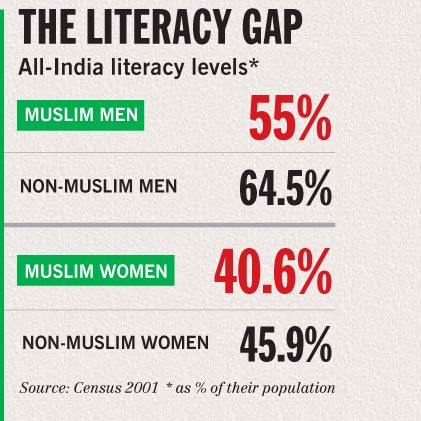
The literacy rate among Muslims in India has seen a significant improvement, increasing by 9.4% over the past decade. This development highlights the growing emphasis on education among the Muslim community and the impact of various government and private initiatives aimed at improving literacy rates across different sections of society.
Improvement in Muslim Literacy Rate
According to recent data, the literacy rate among Muslims in India has risen from 52.1% in 2001 to 61.5% in the latest report. This marks a positive shift, reflecting an increasing awareness of the importance of education within the community. The growth in literacy rates can be attributed to various factors, including government schemes, non-governmental organization (NGO) efforts, and societal changes that prioritize education.
Government Initiatives and Policies
Several government initiatives have played a crucial role in boosting the literacy rate among Muslims. Programs such as the Sarva Shiksha Abhiyan, Mid-Day Meal Scheme, and Scholarship Programs for Minority Students have contributed significantly to reducing dropout rates and encouraging children to continue their education. Additionally, the Right to Education (RTE) Act has ensured free and compulsory education for children up to 14 years of age, benefitting students from minority communities.
Role of NGOs and Community Efforts
Apart from government initiatives, several NGOs and community-led organizations have been instrumental in promoting education among Muslims. Institutions such as Aligarh Muslim University (AMU), Jamia Millia Islamia, and various madrasa modernization programs have helped bridge the educational gap. Awareness campaigns and financial assistance for economically weaker students have further propelled literacy growth.
Challenges Despite Progress
Despite this positive growth, challenges remain in achieving universal literacy among Muslims. Socio-economic barriers, gender disparities, and lack of educational infrastructure in certain regions continue to hinder progress. Female literacy, in particular, still lags behind the national average, necessitating further efforts to ensure inclusive education.
Future Prospects and the Way Forward
To sustain and further improve literacy rates among Muslims, continuous efforts are needed. Strengthening existing schemes, enhancing digital education access, increasing community participation, and addressing socio-economic issues will be crucial in ensuring that literacy rates continue to rise in the coming years.
Muslim literacy rate growth India
Why This News Is Important
Encouraging Socio-Economic Development
An increase in literacy rates contributes to better employment opportunities, improved living standards, and overall socio-economic development within the Muslim community.
Impact on National Development
Education plays a crucial role in the country’s progress. A rise in Muslim literacy rates indicates a step toward inclusive national development, reducing economic disparities and fostering social cohesion.
Empowerment Through Education
Higher literacy rates lead to greater empowerment, particularly for women and marginalized groups within the Muslim community, allowing them to participate more actively in socio-economic activities.
Government Policy Evaluation
This literacy growth serves as an indicator of the effectiveness of various government policies aimed at promoting minority education, highlighting areas that still need improvement.
Historical Context
Pre-Independence Educational Landscape
During British rule, educational opportunities for Muslims were limited, and traditional religious education was more common than formal schooling. The foundation of institutions like Aligarh Muslim University in 1875 marked the beginning of a structured approach to modern education within the community.
Post-Independence Educational Reforms
After independence, the Indian government introduced several policies aimed at improving literacy rates, including special provisions for minority communities in education plans and national development programs.
Recent Government Initiatives
Since the early 2000s, targeted schemes such as the Prime Minister’s 15-Point Program for Minorities and Padho Pardesh have focused on enhancing educational access and financial assistance for Muslim students.
Key Takeaways from Muslim Literacy Rate Growth
| S.No | Key Takeaway |
|---|---|
| 1 | The literacy rate among Muslims in India increased by 9.4% over the past decade. |
| 2 | Government initiatives like Sarva Shiksha Abhiyan and minority scholarships have played a crucial role in this growth. |
| 3 | NGOs and community efforts have significantly contributed to bridging the educational gap. |
| 4 | Challenges such as socio-economic barriers and gender disparities still persist in Muslim education. |
| 5 | Future improvements in digital education and policy interventions are necessary for continued progress. |
FAQs: Frequently Asked Questions
Q1: What is the current literacy rate among Muslims in India?
A: The literacy rate among Muslims in India is approximately 61.5% as per the latest data.
Q2: What factors contributed to the rise in Muslim literacy rates?
A: Government initiatives, NGO efforts, scholarships, and community awareness have contributed to the rise in literacy rates.
Q3: What are the challenges still faced in Muslim education?
A: Socio-economic barriers, gender disparities, and lack of infrastructure remain major challenges.
Q4: How has the government supported minority education?
A: Through programs like Sarva Shiksha Abhiyan, Mid-Day Meal Scheme, and scholarships for minority students.
Q5: What role do NGOs play in improving literacy?
A: NGOs provide financial aid, awareness campaigns, and educational infrastructure support.
Some Important Current Affairs Links