




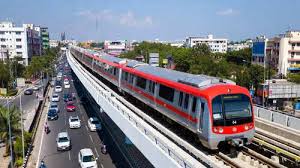
Pune Metro Phase‑2 expansion approved by Union Cabinet. Two new lines covering 31.6 km, 28 stations, cost ₹9,857.85 crore, enhancing urban transport and connectivity across Pune.
Cabinet Green-Lights Pune Metro Phase-2: Big Boost for Urban Mobility
The Union Cabinet, chaired by Narendra Modi, has formally approved Phase-2 expansion of the Pune Metro Rail Project — sanctioning two new corridors: Line 4 (Pune Metro) (Kharadi–Hadapsar–Swargate–Khadakwasla) and Line 4A (Pune Metro) (Nal Stop–Warje–Manik Baug).
Together, these lines will add approximately 31.636 km of elevated metro corridors, with 28 elevated stations across East, South, and West Pune. The estimated cost is ₹9,857.85 crore, to be funded jointly by the Government of India, the Government of Maharashtra, and external bilateral or multilateral funding agencies.
These new lines will connect major IT hubs, commercial zones, educational institutions, and dense residential areas — spanning routes via Solapur Road, Magarpatta Road, Sinhagad Road, Karve Road, and the Mumbai–Bengaluru Highway. Importantly, the Phase-2 network will integrate seamlessly with existing and sanctioned metro corridors at Kharadi Bypass, Nal Stop, and Swargate; and provide interchange at Hadapsar Railway Station — facilitating multimodal connectivity across metro, rail, and bus systems.
Pre-construction activities — such as topographical surveys and detailed design consultancy — have already started under the responsibility of Maharashtra Metro Rail Corporation Ltd. (Maha-Metro).
According to projections, the combined ridership on Lines 4 and 4A could reach 4.09 lakh per day by 2028, further increasing to around 7 lakh by 2038, 9.63 lakh by 2048, and over 11.7 lakh by 2058.
In simple terms: Phase-2 of the Pune Metro aims to deliver faster, greener, and more connected travel across a growing Pune — easing traffic congestion, slashing commute times, and paving the way for sustainable urban mobility.

Why This News Is Important for Exam Aspirants
Relevance to Infrastructure & Urban Development Section
The approval of Pune Metro Phase-2 is a major infrastructural milestone in India’s urban transport landscape. For competitive examinations (like public service, civil service, railways, banking, or general studies), such infrastructure developments often become part of current affairs questions under “recent developments in urban transport,” “infrastructure projects,” or “public policy and governance.”
Given India’s rapid urbanization and focus on sustainable transport solutions, memorizing key facts — corridor names, project cost, length, funding pattern, ridership projections — can help aspirants answer both static and dynamic GK/general awareness questions.
Reflects Government’s Push for Sustainable & Integrated Mobility
The decision underscores the central and state governments’ commitment to enhancing public transportation, reducing road congestion and pollution, and promoting multi-modal connectivity. For exam sectors like railways, civil service (policies & planning), and defence (strategic infrastructure), this news offers a clear example of long-term transport planning and urban governance.
Moreover, the involvement of central funding + bilateral/multilateral agencies introduces aspects of fiscal planning, public-private cooperation, and urban transport economics — themes increasingly relevant in aspirant-level interviews or descriptive-answer segments.
Historical Context: Evolution of Pune Metro and Phase-2
- The Pune Metro project began earlier to cater to Pune’s growing population, increasing traffic, and expansion of IT/commercial hubs. The first phase (Phase-1) included corridors such as Vanaz–Ramwadi, designed to improve mass transit in core city zones.
- Earlier in 2025, under Phase-2, the government had already approved two additional elevated corridors: Line 2A (Pune Metro) (Vanaz–Chandani Chowk) and Line 2B (Pune Metro) (Ramwadi–Wagholi/Vitthalwadi), spanning 12.75 km with 13 stations and costing around ₹3,626.24 crore.
- The newly approved Line 4 and 4A mark the second major approval under Phase-2, now substantially expanding the network into East, South, and West Pune — reflecting the city’s transition from limited metro corridors to a large-scale metro network crossing 100 km.
- This expansion is part of a broader national trend where metropolitan regions in India (e.g. Delhi, Mumbai, Bengaluru, Hyderabad, Chennai, Kolkata) are reinforcing mass-transit infrastructure to meet rising urban demands. With Pune crossing the 100-km network threshold, it positions itself alongside these major cities
Thus, the Phase-2 approval reflects the strategic urban transport planning India has been progressively adopting over the last decade, aligning with goals of sustainable development, reduced pollution and traffic, and integrated connectivity.
Key Takeaways from Pune Metro Phase-2 Approval
| # | Key Takeaway |
|---|---|
| 1 | Union Cabinet has approved Phase-2 expansion of Pune Metro — Line 4 (Kharadi–Hadapsar–Swargate–Khadakwasla) and Line 4A (Nal Stop–Warje–Manik Baug). |
| 2 | The expansion adds ~31.636 km of elevated corridors with 28 stations, at an estimated cost of ₹9,857.85 crore. |
| 3 | The project is funded jointly by the Government of India, Government of Maharashtra, and external bilateral/multilateral funding agencies. |
| 4 | The new corridors will link major IT hubs, commercial zones, educational institutions, and residential areas — significantly improving multimodal connectivity across East, South, and West Pune. |
| 5 | Ridership is projected to grow from ~4.09 lakh/day by 2028 to over 11.7 lakh/day by 2058, indicating long-term transport planning and urban growth in Pune. |
FAQs: Frequently Asked Questions
1. What is Pune Metro Phase‑2?
Pune Metro Phase‑2 is an expansion of the existing metro network in Pune, including two new elevated corridors: Line 4 (Kharadi–Hadapsar–Swargate–Khadakwasla) and Line 4A (Nal Stop–Warje–Manik Baug), spanning around 31.636 km with 28 stations.
2. What is the estimated cost of Pune Metro Phase‑2?
The project is estimated to cost ₹9,857.85 crore, funded jointly by the Government of India, Government of Maharashtra, and external bilateral/multilateral agencies.
3. What are the key routes and stations in Phase‑2?
Phase‑2 covers major routes including Kharadi, Hadapsar, Swargate, Khadakwasla, Nal Stop, Warje, and Manik Baug, connecting IT hubs, commercial zones, educational institutions, and residential areas.
4. What is the projected ridership for the new metro lines?
Ridership is expected to reach approximately 4.09 lakh per day by 2028, growing to over 11.7 lakh per day by 2058, highlighting long-term urban transport planning.
5. How will Phase‑2 integrate with existing transport systems?
The new lines will provide seamless integration with existing metro corridors, bus systems, and Pune Railway stations, especially at Swargate, Hadapsar, and Kharadi Bypass, enhancing multimodal connectivity.
6. Which authority is responsible for executing Pune Metro Phase‑2?
Maharashtra Metro Rail Corporation Ltd. (Maha‑Metro) is responsible for construction, surveys, and design consultancy for the project.
7. Why is Pune Metro Phase‑2 significant for urban mobility?
It will reduce traffic congestion, cut commute time, promote sustainable transport, and facilitate better connectivity across East, South, and West Pune.
Some Important Current Affairs Links