





Kartavya Bhavan inauguration 2025 marks a key milestone in India’s Central Vista redevelopment project. Discover how this sustainable and modern government office complex enhances administrative efficiency and governance.
Kartavya Bhavan: A Milestone in India’s Administrative Transformation
Introduction: A New Era in Governance
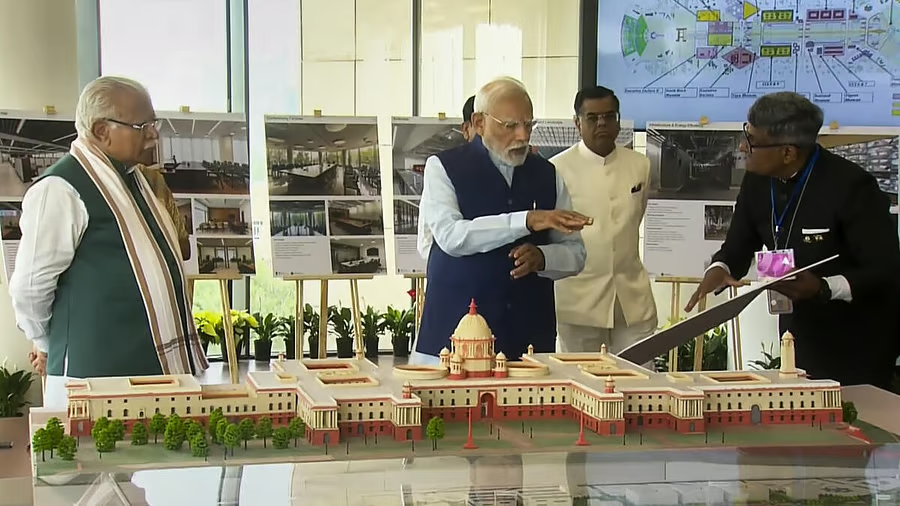
On August 6, 2025, Prime Minister Narendra Modi inaugurated Kartavya Bhavan-03 at Kartavya Path in New Delhi. This state-of-the-art facility marks the first completed structure under the Common Central Secretariat (CCS) initiative, a cornerstone of the Central Vista redevelopment project. The CCS aims to consolidate various ministries and departments under one roof to enhance administrative efficiency and modernize governance infrastructure.
Architectural and Functional Features
Kartavya Bhavan-03 spans approximately 1.5 lakh square meters, comprising seven floors and two basement levels. It houses key ministries, including the Ministries of Home Affairs, External Affairs, Rural Development, MSME, DoPT, Petroleum and Natural Gas, and the office of the Principal Scientific Adviser. The building is designed with energy-efficient systems, rooftop solar panels, EV charging stations, and a zero-discharge waste management system. These features align with the government’s commitment to sustainable development.
Technological Advancements and Security Measures
Kartavya Bhavan-03 integrates advanced IT infrastructure, including smart card-based access control, integrated electronic surveillance, and a centralized command system. These technological advancements aim to streamline administrative processes and enhance security within the complex.
Symbolism and Significance
The name “Kartavya Bhavan” reflects a shift from colonial-era administration to a system rooted in democratic values. Prime Minister Modi emphasized that the building symbolizes the government’s commitment to modern, citizen-centric governance. The relocation of key ministries from historic buildings like North Block signifies a move towards a more integrated and efficient administrative framework.
Future Plans and Vision
Kartavya Bhavan-03 is the first of ten planned buildings under the CCS project, with the entire complex expected to be operational by 2027. The project aims to create a unified administrative hub that fosters collaboration, enhances efficiency, and supports the government’s vision of a developed India.

Why This News is Important
Enhancing Administrative Efficiency
The inauguration of Kartavya Bhavan-03 represents a significant step towards streamlining India’s administrative processes. By consolidating multiple ministries under one roof, the government aims to reduce redundancy, improve coordination, and enhance decision-making efficiency. This move is expected to lead to faster implementation of policies and better service delivery to citizens.
Promoting Sustainable Development
The building’s design incorporates several eco-friendly features, such as rooftop solar panels, electric vehicle charging stations, and a zero-discharge waste management system. These initiatives align with India’s commitment to sustainable development and reducing its carbon footprint. The integration of green technologies sets a precedent for future government infrastructure projects.
Modernizing Governance Infrastructure
Kartavya Bhavan-03 is equipped with advanced IT infrastructure, including smart card-based access control and integrated electronic surveillance. These technological advancements aim to modernize governance infrastructure, making administrative processes more secure and efficient. The building serves as a model for future government offices, emphasizing the importance of technology in governance.
Symbolizing Democratic Values
The name “Kartavya Bhavan” reflects a shift from colonial-era administration to a system rooted in democratic values. Prime Minister Modi emphasized that the building symbolizes the government’s commitment to modern, citizen-centric governance. This move signifies a break from traditional bureaucratic structures and an embrace of more transparent and accountable governance.
Supporting the Vision of a Developed India
The CCS project is part of the government’s broader vision to transform India into a developed nation. By creating a unified administrative hub, the government aims to foster collaboration, enhance efficiency, and support the implementation of policies that contribute to national development. Kartavya Bhavan-03 is a tangible manifestation of this vision.
Historical Context
The Central Vista Redevelopment Project is an ambitious initiative aimed at revamping India’s central administrative area located near Raisina Hill, New Delhi. Originally designed by British architects Edwin Lutyens and Herbert Baker, the area has housed key government buildings since the colonial era. The redevelopment project, initiated in 2020, seeks to modernize these structures and create a more efficient and integrated administrative framework. The project includes the construction of ten Common Central Secretariat buildings, a new Parliament building, and the redevelopment of Kartavya Path (formerly Rajpath). The first phase of the project is expected to be completed by 2026, with the entire redevelopment plan slated for completion by 2027.
Key Takeaways from “Kartavya Bhavan: A Milestone in India’s Administrative Transformation”
| S.No. | Key Takeaway |
|---|---|
| 1. | Kartavya Bhavan-03 is the first completed building under the Common Central Secretariat initiative. |
| 2. | The building houses key ministries, including Home Affairs, External Affairs, and Petroleum and Natural Gas. |
| 3. | It features energy-efficient systems, rooftop solar panels, EV charging stations, and zero-discharge waste management. |
| 4. | The building integrates advanced IT infrastructure, including smart card-based access control and integrated electronic surveillance. |
| 5. | The CCS project aims to create a unified administrative hub, with the entire complex expected to be operational by 2027. |
FAQs: Frequently Asked Questions
1. What is Kartavya Bhavan?
Kartavya Bhavan is the first completed building under the Common Central Secretariat (CCS) project, inaugurated by PM Narendra Modi, designed to house multiple ministries for enhanced administrative efficiency.
2. Which ministries are housed in Kartavya Bhavan-03?
It houses the Ministries of Home Affairs, External Affairs, Rural Development, MSME, DoPT, Petroleum and Natural Gas, and the Principal Scientific Adviser’s office.
3. What is the significance of the name “Kartavya Bhavan”?
The name symbolizes a shift from colonial-era governance to a democratic, citizen-centric administration emphasizing duty (“Kartavya”) and modern governance.
4. What sustainable features does Kartavya Bhavan include?
The building incorporates rooftop solar panels, EV charging stations, energy-efficient systems, and a zero-discharge waste management system to promote sustainability.
5. What technological advancements are implemented in Kartavya Bhavan?
It features smart card-based access control, integrated electronic surveillance, and a centralized command system for security and operational efficiency.
6. When is the entire Common Central Secretariat complex expected to be completed?
The full complex, including ten buildings, is expected to be operational by 2027.
7. What is the Central Vista Redevelopment Project?
It is a major initiative to modernize and redevelop the central administrative area of New Delhi, including new government offices, the Parliament building, and public spaces.
Some Important Current Affairs Links