




INSV Kaundinya maiden voyage highlights India Oman maritime heritage, showcasing ancient stitched-ship techniques and strengthening cultural and diplomatic ties.
INSV Kaundinya Embarks on Historic Maiden Voyage to Oman
Introduction to the Voyage
INSV Kaundinya, the Indian Naval Sailing Vessel built using ancient shipbuilding methods, began its maiden overseas voyage from Porbandar, Gujarat to Muscat, Oman on December 29, 2025. This significant expedition marks the first international journey of this traditional stitched-ship, symbolising India’s maritime heritage revival and strengthening diplomatic ties with Oman.
Traditional Construction and Unique Features
Unlike modern naval vessels, INSV Kaundinya has been crafted using ancient Indian stitched-ship techniques where wooden planks are sewn together with natural fibres like coconut coir rope and sealed with natural resins — completely without nails, metal parts, or engines. The design is inspired by 5th-century ship depictions found in the renowned Ajanta Caves paintings, reflecting India’s centuries-old maritime craftsmanship.
Flag-Off Ceremony and Leadership
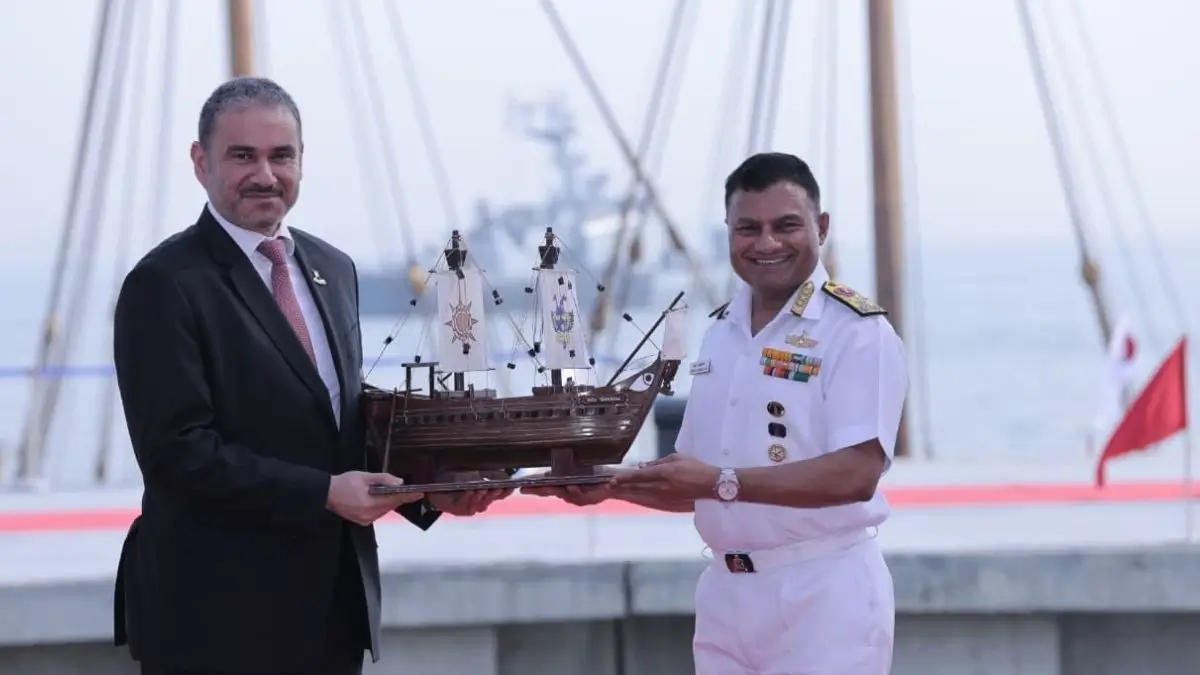
The voyage was formally flagged off by Vice-Admiral Krishna Swaminathan, Flag Officer Commanding-in-Chief of the Western Naval Command, in the presence of Issa Saleh Al Shibani, Ambassador of the Sultanate of Oman to India. The vessel’s journey retraces ancient ocean routes that once connected India with the Arabian Peninsula and beyond.
Crew and Navigation
The expedition is led by Commander Vikas Sheoran as skipper and Commander Y. Hemant Kumar (associated with the project since its conceptual inception) as Officer-in-Charge. The crew comprises 4 officers and 13 naval personnel, all skilled in traditional sailing methods using square sails and oars. The entire journey spans approximately 1,400 km over 15 days at sea.
Cultural Significance and Heritage Revival
More than a naval mission, the voyage of INSV Kaundinya symbolises India’s attempt to rediscover its ancient oceanic connections and reclaim its identity as a historical maritime civilisation. By retracing the sea routes of the Indian Ocean, the expedition highlights India’s ancient cultural exchanges, trade networks, and navigational expertise that once linked it with West Asia, Africa, and Southeast Asia.
Diplomatic Ties with Oman
The journey also serves as a form of maritime diplomacy enhancing India-Oman bilateral relations. Oman has historically been part of India’s maritime trade network, and the voyage strengthens cultural and historical linkages between the two nations — extending beyond strategic cooperation to shared heritage narratives.

Why This News Is Important for Exams
Exam Relevance for UPSC, PSC, SSC, Defence & Banking Aspirants
This news is highly relevant for current affairs sections of competitive exams such as UPSC Civil Services, State PSCs, SSC CGL, Indian Navy/Army/Airforce recruitment tests, banking exams, and railway exams. It intersects crucial topics like Indian heritage, maritime history, cultural diplomacy, international relations, and defence innovations.
Cultural and Heritage Importance
The INSV Kaundinya expedition is rooted in India’s ancient maritime traditions, highlighting the role of seafaring and shipbuilding in historical trade and cultural links. Exams often ask questions about India’s civilisational traits, maritime history, and historical trade routes, making this voyage a topical example of heritage revival.
International Relations and Diplomacy
Students preparing for exams should understand how soft power tools like cultural and historical projects can reinforce diplomatic ties. The voyage strengthens India-Oman relations, reflecting broader strategic cooperation in the Indian Ocean Region — an area often featured in GS papers and current affairs sections.
Defence and Strategic Dimensions
This initiative by the Indian Navy also reflects the non-combat strategic roles of defence institutions — using naval assets for cultural, educational, and diplomatic missions. Aspirants in defence exams should note how the military contributes beyond warfare into nation-building and international goodwill.
Historical Context: India’s Maritime Legacy
Ancient Indian Seafaring Tradition
India’s maritime history dates back millennia, with coastal regions like Gujarat, Malabar, and Konkan acting as hubs of Indian Ocean trade networks. Merchants from the Indian subcontinent used oceanic routes to exchange spices, textiles, and ideas with Arabia, Africa, and Southeast Asia long before European explorers entered the Indian Ocean.
Stitched-Ship Technique
The stitched-ship method was once prevalent in early Indian Ocean cultures. Ships were built by stitching wooden planks together using coir ropes and natural fibres — a technology capable of enduring long sea journeys without metal fasteners. This technique is depicted in ancient Indian art and references from maritime history documents.
Historical Namesake: Kaundinya
The INSV Kaundinya is named after the legendary Indian mariner Kaundinya, who, according to regional lore, sailed to Southeast Asia and contributed to the establishment of early Indianised kingdoms through cross-cultural interactions. While partly mythological, the name signifies India’s long-standing maritime explorations.
India-Arab Maritime Relations
Centuries of trade connected India’s western coast with countries like Oman, Yemen, and East Africa. These exchanges shaped economic, cultural, and social linkages across the Indian Ocean, long before modern nation-state diplomacy.
Key Takeaways from INSV Kaundinya’s Maiden Voyage
| S. No. | Key Takeaway |
|---|---|
| 1 | INSV Kaundinya began its maiden voyage from Porbandar to Muscat, Oman on December 29, 2025. |
| 2 | The vessel was built using ancient stitched-ship techniques without nails or metal parts. |
| 3 | The voyage retraces historic maritime routes between India and the Arabian Peninsula. |
| 4 | The mission strengthens India-Oman cultural and diplomatic ties. |
| 5 | It showcases the revival of India’s maritime heritage and traditional shipbuilding skills. |
FAQs: Frequently Asked Questions
1. What is INSV Kaundinya?
INSV Kaundinya is an Indian Naval Sailing Vessel built using ancient stitched‑ship techniques, without nails, engines, or metal parts, reflecting India’s centuries-old maritime heritage.
2. When did INSV Kaundinya begin its maiden voyage?
The vessel embarked on its maiden voyage from Porbandar, Gujarat to Muscat, Oman on December 29, 2025.
3. Who are the key officers leading the voyage?
The expedition is led by Commander Vikas Sheoran as skipper and Commander Y. Hemant Kumar as Officer-in-Charge, along with a crew of 4 officers and 13 naval personnel.
4. Why is this voyage significant for India?
The voyage highlights India’s maritime heritage, ancient oceanic trade routes, and traditional shipbuilding, while also strengthening India-Oman diplomatic ties.
5. What is unique about the shipbuilding method used?
INSV Kaundinya uses coir ropes and natural resins to stitch wooden planks, following techniques seen in ancient Indian art and historical references, completely avoiding metal fasteners.
6. How long is the voyage to Oman?
The journey spans approximately 1,400 km and is expected to take 15 days at sea using traditional sailing methods.
7. What cultural and historical importance does the voyage have?
It revives India’s ancient seafaring tradition, showcases maritime craftsmanship, and retraces historic trade and cultural links with Oman and the Arabian Peninsula.
Some Important Current Affairs Links




