






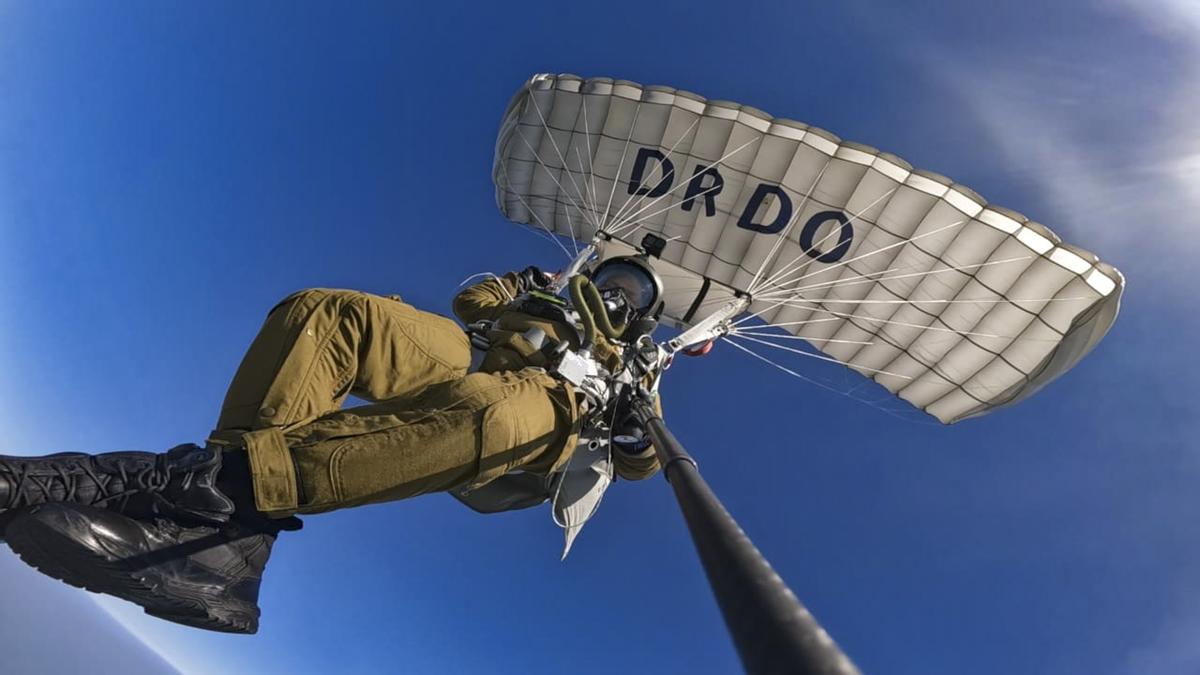
MCPS DRDO test at 32,000 feet showcases India’s Indigenous Military Combat Parachute System, enhancing high-altitude airborne operations and defence self-reliance.
DRDO’s Indigenous Combat Parachute System Successfully Tested at 32,000 Feet
Introduction: A Significant Milestone in India’s Defence Capabilities
The Defence Research and Development Organisation (DRDO) has achieved a remarkable feat by successfully testing its indigenously developed Military Combat Parachute System (MCPS) at an altitude of 32,000 feet. This accomplishment marks a significant advancement in India’s self-reliance in defence technology and enhances the operational capabilities of the Indian Armed Forces.
Development and Design of the MCPS
The MCPS was developed by DRDO’s Aerial Delivery Research and Development Establishment (ADRDE) in Agra and the Defence Bioengineering and Electromedical Laboratory (DEBEL) in Bengaluru. Designed to meet the rigorous demands of high-altitude combat operations, the system integrates advanced features that ensure the safety and effectiveness of paratroopers during airborne missions.
Key Features and Capabilities
The MCPS boasts several enhanced tactical features, including:
- Lower Rate of Descent: Ensures a safer landing by reducing the speed at which paratroopers descend.
- Superior Steering Capabilities: Allows precise navigation, enabling paratroopers to land accurately in designated zones.
- Compatibility with NavIC: Integrated with the Indian Regional Navigation Satellite System (NavIC), providing reliable navigation unaffected by external interference.
- High-Altitude Deployment: The MCPS is the only parachute system in operational service with the Indian Armed Forces capable of deployment above 25,000 feet.
Successful Test and Operational Significance
The successful combat freefall jump from 32,000 feet was executed by test jumpers of the Indian Air Force, demonstrating the system’s efficiency, reliability, and advanced design. This achievement not only showcases the capabilities of the MCPS but also underscores India’s commitment to enhancing its defence preparedness through indigenous innovations.
Strategic Implications for India’s Defence Sector
The induction of the MCPS into the Indian Armed Forces signifies a strategic move towards reducing dependency on foreign equipment and ensuring the availability of critical systems during times of conflict. The system’s indigenous development also promises shorter turnaround times for maintenance and repairs, further strengthening India’s defence autonomy.

Why This News is Important
Enhancing High-Altitude Operational Capabilities
The successful test of the MCPS at 32,000 feet significantly enhances the Indian Armed Forces’ ability to conduct high-altitude airborne operations. This capability is crucial for strategic missions in challenging terrains, such as mountainous regions, where traditional parachute systems may not perform optimally.
Advancement in Indigenous Defence Technology
This achievement underscores DRDO’s growing expertise in developing advanced defence technologies indigenously. It reflects India’s commitment to achieving self-reliance in defence production, reducing reliance on foreign suppliers, and ensuring the availability of critical systems during times of conflict.
Integration with NavIC for Enhanced Navigation
The MCPS’s compatibility with NavIC, India’s regional navigation satellite system, ensures reliable and secure navigation for paratroopers. This integration enhances the system’s effectiveness in high-altitude operations, where GPS signals may be weak or unreliable.
Strategic Implications for Defence Autonomy
By developing and deploying the MCPS, India takes a significant step towards achieving greater autonomy in its defence capabilities. The system’s indigenous development ensures that critical components are readily available, reducing dependence on foreign suppliers and enhancing operational readiness.
Boosting Confidence in Indigenous Defence Systems
The successful test of the MCPS boosts confidence in India’s indigenous defence systems. It demonstrates that Indian-designed and manufactured equipment can meet the high standards required for complex military operations, paving the way for future advancements in defence technology.
Historical Context: Background of the MCPS Development
Early Initiatives in Parachute Development
India’s journey towards developing indigenous parachute systems began in the mid-20th century, with initial efforts focusing on basic designs for low-altitude jumps. Over the years, advancements in materials and design led to the development of more sophisticated systems capable of handling higher altitudes and heavier loads.
Formation of DRDO’s Aerial Delivery Research and Development Establishment
In the 1980s, the Indian government established the Aerial Delivery Research and Development Establishment (ADRDE) in Agra to focus on the development of parachute systems for military applications. This move marked a significant step towards achieving self-reliance in airborne technologies.
Collaboration with Defence Bioengineering and Electromedical Laboratory
In the 2000s, ADRDE collaborated with the Defence Bioengineering and Electromedical Laboratory (DEBEL) in Bengaluru to integrate bioengineering principles into parachute design. This collaboration aimed to enhance the safety and comfort of paratroopers during high-altitude jumps.
Development of the MCPS
The MCPS was conceived as a solution to the challenges posed by high-altitude airborne operations. Drawing on decades of research and development, DRDO engineers designed a system that incorporated advanced materials, aerodynamics, and bioengineering principles to ensure the safety and effectiveness of paratroopers during combat freefall jumps.
Certification and Induction into Service
After extensive testing and validation, including over 350 trials with the Paratrooper Training School, the MCPS was certified by the Centre for Military Airworthiness and Certification. It was officially inducted into service in 2023, marking a significant milestone in India’s defence capabilities.
Key Takeaways from DRDO’s Indigenous Combat Parachute System Test
| No. | Key Takeaway |
|---|---|
| 1 | The MCPS is the only parachute system in operational service with the Indian Armed Forces capable of deployment above 25,000 feet. |
| 2 | Developed by DRDO’s ADRDE in Agra and DEBEL in Bengaluru, the MCPS integrates advanced features for high-altitude operations. |
| 3 | The system’s compatibility with NavIC ensures reliable and secure navigation during airborne missions. |
| 4 | The successful test at 32,000 feet demonstrates the MCPS’s effectiveness and reliability in extreme conditions. |
| 5 | Induction of the MCPS into service enhances India’s self-reliance in defence technology and reduces dependency on foreign equipment. |
FAQs: Frequently Asked Questions
1. What is the MCPS tested by DRDO?
The MCPS (Military Combat Parachute System) is an indigenously developed parachute system by DRDO for high-altitude airborne operations of Indian Armed Forces.
2. At what altitude was the MCPS successfully tested?
The MCPS was successfully tested at an altitude of 32,000 feet.
3. Which DRDO laboratories developed the MCPS?
The MCPS was developed by ADRDE (Aerial Delivery Research and Development Establishment) in Agra and DEBEL (Defence Bioengineering and Electromedical Laboratory) in Bengaluru.
4. What are the key features of the MCPS?
Key features include lower descent rate for safer landings, superior steering for precise navigation, high-altitude deployment above 25,000 feet, and compatibility with NavIC.
5. What is NavIC, and how is it integrated with MCPS?
NavIC is India’s regional navigation satellite system. MCPS integration allows reliable and secure navigation during high-altitude jumps, even in areas where GPS signals may be weak.
6. Why is the MCPS significant for India’s defence capabilities?
The MCPS enhances high-altitude operational capabilities, reduces dependency on foreign parachute systems, and strengthens indigenous defence technology and autonomy.
7. When was the MCPS inducted into operational service?
After extensive testing and certification, MCPS was inducted into service in 2023.
8. Who conducted the test jump from 32,000 feet?
The test jump was conducted by trained test jumpers of the Indian Air Force.
Some Important Current Affairs Links