



India Partner Country Gulfood 2026 marks a historic debut at Dubai’s mega food exhibition, boosting agri-food exports, bilateral trade with UAE, and global economic partnerships.
India’s Historic Debut as Partner Country at Gulfood 2026 in Dubai
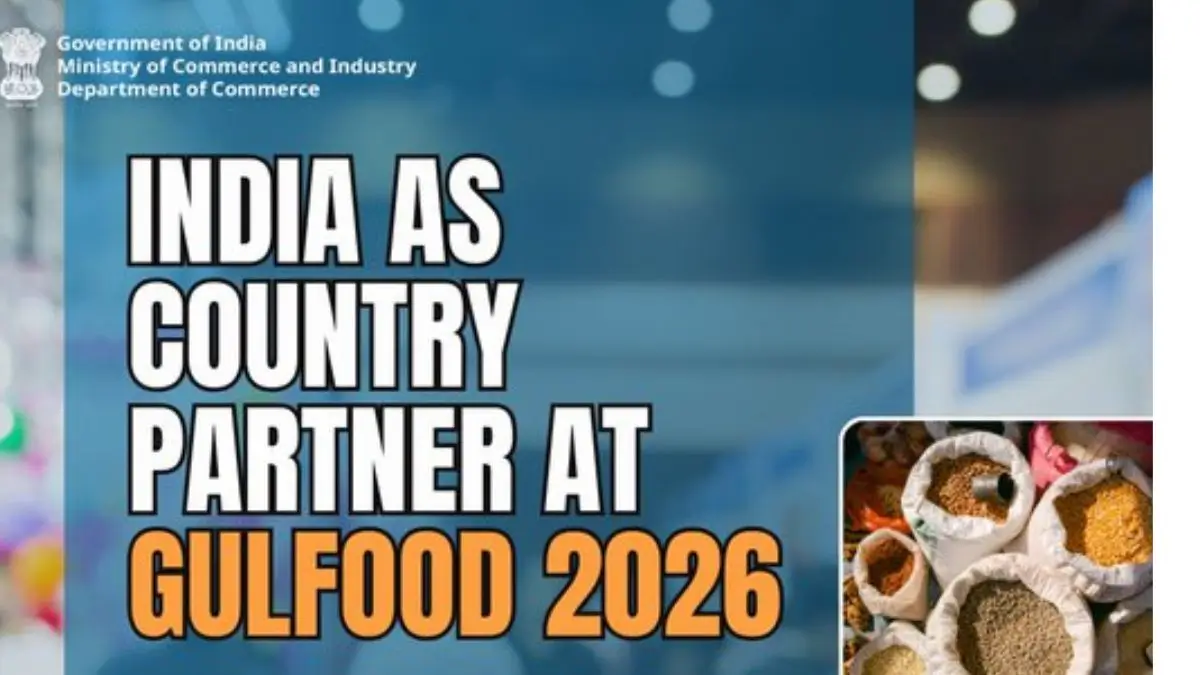
India has created a landmark moment in global trade by participating as the Partner Country at Gulfood 2026, the world’s largest food and beverage exhibition held in Dubai, UAE from 26–30 January 2026. This is the first time in the event’s 31-year history that India has been accorded this prestigious status, reflecting its growing influence in global agricultural and food markets.
The event unfolded simultaneously across two major venues — Dubai World Trade Centre (DWTC) and the expanded Dubai Exhibition Centre at Expo City Dubai — marking the largest edition in Gulfood’s history. India’s elevated role at such a mega global event underscores its expanding agri-food export capacity and strategic economic ties with the UAE.
India’s Strategic Participation Led by APEDA
India’s presence at Gulfood 2026 was spearheaded by the Agricultural and Processed Food Products Export Development Authority (APEDA), under the Ministry of Commerce and Industry. The Indian pavilion spanned a massive 1,434 square metres and was inaugurated by Avinash Joshi, Secretary, Ministry of Food Processing Industries, along with the Indian Ambassador to the UAE, Deepak Mittal.
The pavilion showcased the diversity and quality of Indian agricultural produce and processed food products, giving a platform to exporters, cooperatives, startups and state agencies to connect with global buyers.
Pan-India Representation at the Expo
India’s pavilion featured 161 exhibitors from 25 states and regions, representing a broad range of sectors such as fresh and processed foods, cereals and grains, beverages, spices, and value-added products. The aim was to amplify India’s export capabilities and focal strengths in the global supply chain.
In addition to APEDA-led participants, the Federation of Indian Export Organisations (FIEO) also took part with several exhibitors, particularly highlighting high-demand items like basmati rice and cereal-based products.
Boost to Bilateral Trade and Investment
India’s debut as the Gulfood 2026 Partner Country is more than symbolic — it points to strengthened economic ties with the UAE, especially under the India-UAE Comprehensive Economic Partnership Agreement (CEPA). This agreement has created enhanced market access for Indian agricultural and food products across the Gulf and beyond.
The Indian delegation also focused on attracting global investments in sectors such as food processing, cold chain infrastructure, logistics, and allied agri-industries. This aligns with the government’s efforts to boost farmer incomes, reduce post-harvest waste and strengthen India’s role in global supply networks.
Indian Innovation and Export Potential on Display
Beyond traditional goods, India’s participation highlighted innovation in agri-tech and startup ecosystems through curated zones and networking sessions with international buyers. This move positions India not only as a large producer but also as a forward-looking food system innovator.
Overall, India’s impactful role at Gulfood 2026 marks a significant leap forward in expanding its global trade footprint, enhancing brand India on international platforms, and leveraging partnerships for economic growth.

Why This News is Important for Government Exam Aspirants
Significance of India’s Partner Country Status
India’s elevation as Partner Country at Gulfood 2026 is a strategic achievement with wide implications for students preparing for competitive exams like UPSC, SSC, Banking, Railways, and Defence Services. It reflects India’s rising global economic influence, particularly in the agri-food sector, which is one of the largest employment generators in the country.
This event showcases how government policies — such as focused export promotion, trade agreements like CEPA, and industry support through bodies like APEDA and FIEO — translate into real global presence and economic outcomes. Questions on international trade agreements, export promotion councils, and India’s economic diplomacy are common across exams.
Relevance to Syllabus Areas
For General Studies and Economy sections, this news links to topics on:
- India’s foreign trade strategy
- Government initiatives in agriculture and food processing
- India-UAE bilateral relations and global partnerships
The prominence of Indian startups and agri-tech at the event also connects with innovation and entrepreneurship themes relevant for banking and management exams.
Understanding such developments helps students answer analytical questions on global supply chains, economic diplomacy, and India’s role in international exhibitions and trade fairs — topics often tested in descriptive and interview stages of exams.
Historical Context: India’s Evolving Trade Engagement
India has long been a major player in the global agricultural landscape, traditionally exporting commodities like rice, spices, tea and textiles. Over the decades, successive governments have created export promotion bodies such as APEDA (1976) to strategically enhance market access for Indian products.
The India-UAE Comprehensive Economic Partnership Agreement (CEPA), signed in 2022, significantly expanded trade relations between the two nations. This agreement facilitated reduced tariffs and improved market entry for Indian goods, particularly agrarian and processed foods.
Gulfood, established in the early 1990s, steadily grew into the largest annual food and beverage trade exhibition globally. India’s selection as Partner Country in 2026 is symbolic of its ascent from a major exporter to a globally influential trade partner — an evolution tracked across several current affairs and economic syllabus areas.
Key Takeaways from “India’s Historic Debut as Partner Country at Gulfood 2026”
| S.No. | Key Takeaway |
|---|---|
| 1 | India participated as the Partner Country at Gulfood 2026 for the first time in 31 years. |
| 2 | The event took place across two Dubai venues — DWTC and Dubai Exhibition Centre. |
| 3 | The Indian pavilion, led by APEDA, spread over 1,434 sq. m and featured 161 exhibitors. |
| 4 | India’s participation highlights its growing role in global agri-food trade and bilateral relations with the UAE under CEPA. |
| 5 | The event provided opportunities to attract investments in food processing, export-oriented infrastructure and innovation. |
FAQs: Frequently Asked Questions
1. What is Gulfood 2026, and why is it significant for India?
Answer: Gulfood 2026 is the world’s largest food and beverage trade exhibition held in Dubai. India participated as the Partner Country for the first time, highlighting its growing global presence in the agri-food sector and strengthening trade relations with the UAE.
2. Which Indian body led the country’s participation at Gulfood 2026?
Answer: The Agricultural and Processed Food Products Export Development Authority (APEDA), under the Ministry of Commerce and Industry, spearheaded India’s participation, managing the pavilion and coordinating exhibitors.
3. How many exhibitors represented India at Gulfood 2026?
Answer: India’s pavilion hosted 161 exhibitors from 25 states and regions, showcasing fresh and processed foods, beverages, cereals, spices, and other agri-products.
4. How does India’s participation in Gulfood 2026 benefit its economy?
Answer: It strengthens India’s agri-food exports, promotes global trade partnerships, attracts foreign investment in food processing and logistics, and enhances India’s brand as a reliable supplier in international markets.
5. What role does CEPA play in India-UAE trade?
Answer: The India-UAE Comprehensive Economic Partnership Agreement (CEPA), signed in 2022, reduces tariffs and provides better market access for Indian products, facilitating smoother trade and economic collaboration.
6. Which Indian organizations participated besides APEDA?
Answer: The Federation of Indian Export Organisations (FIEO) also participated, highlighting high-demand items like basmati rice, cereals, and processed foods to global buyers.
7. What was the size of the Indian pavilion at Gulfood 2026?
Answer: The pavilion spanned 1,434 square metres, making it one of the largest national displays at the exhibition.
8. Why is India’s participation historically important?
Answer: This is the first time in 31 years that India has been the Partner Country at Gulfood, signaling its rising role in global trade and international food markets.
9. Which sectors were highlighted at India’s pavilion?
Answer: Sectors included fresh and processed foods, cereals, beverages, spices, agri-tech startups, and value-added products.
10. How does this event relate to government exam preparation?
Answer: It is relevant for topics on India’s foreign trade policy, export promotion, international agreements, agri-food sector, and economic diplomacy, which are commonly included in UPSC, SSC, Banking, Railways, and Defence exams.
Some Important Current Affairs Links