






India Germany Joint Statement 2026 strengthens strategic partnership with defence, technology, economy, climate action, and education cooperation. Key details for exams.
India–Germany Joint Statement 2026: Strengthening a Future-Ready Strategic Partnership
Introduction: India–Germany Strategic Diplomacy 2026
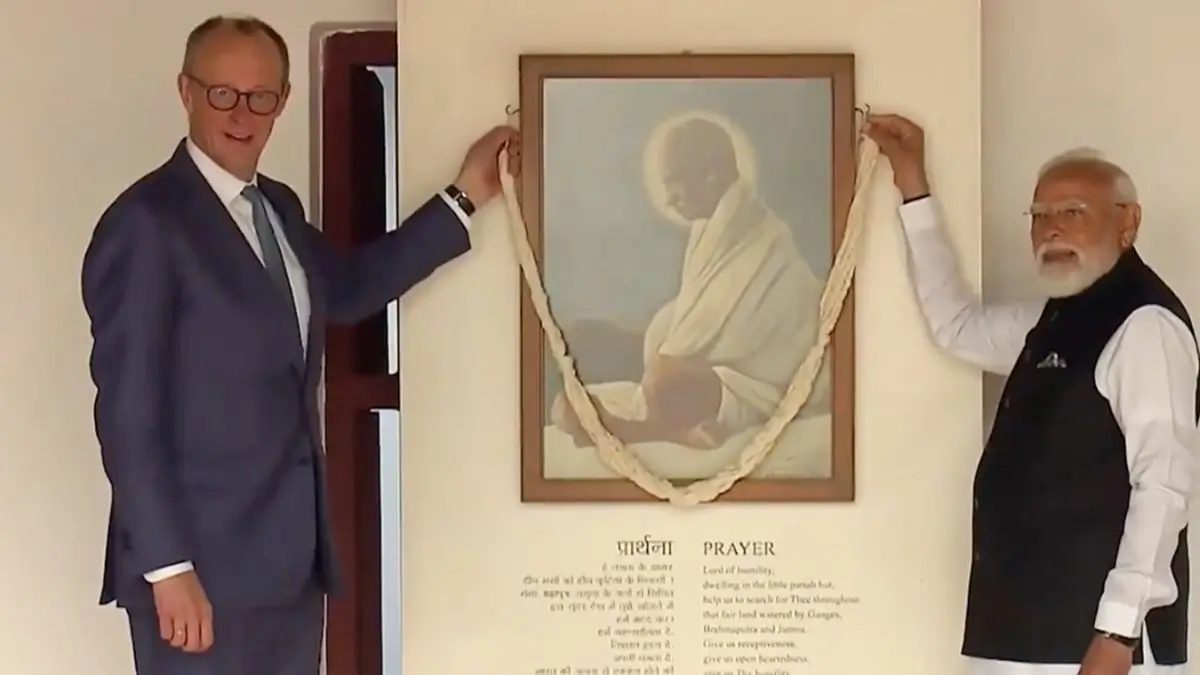
In January 2026, India and Germany significantly strengthened their long-standing bilateral partnership through a comprehensive Joint Statement issued during German Chancellor Friedrich Merz’s official visit to India from January 12 to 13, 2026. Hosted by Prime Minister Narendra Modi, the visit marked Chancellor Merz’s first official trip to India and Asia, and reinforced cooperation across defence, economy, technology, climate action, and people-to-people ties.
Deepening Defence and Security Cooperation
A primary highlight of the statement was expanded defence collaboration between the two nations. Both countries agreed to deepen their military-to-military engagement through increased joint exercises, training programs, and staff-level dialogues. Germany confirmed participation in key naval and air exercises such as MILAN 2026 and Tarang Shakti 2026, reflecting enhanced interoperability and shared security objectives.
The cooperation also prioritised a Defence Industrial Cooperation Roadmap to promote co-development and co-production of defence equipment, combining India’s skilled workforce with Germany’s advanced technology in areas such as submarines, counter-drone systems, and other strategic platforms.
Counter-Terrorism and Global Security Alignment
India and Germany strongly condemned all forms of terrorism, including recent terror attacks in Jammu & Kashmir and Delhi. The Joint Statement committed both nations to closer coordination in counter-terrorism efforts, sharing intelligence on terrorist financing and safe havens in alignment with the United Nations Charter and international law.
Through the Joint Working Group on Counter-Terrorism, both countries pledged to implement the Mutual Legal Assistance Treaty and work jointly against entities on the UN 1267 Sanctions List, showcasing solidarity on global security norms.
Economic and Trade Collaboration
Economic cooperation remains a cornerstone of the partnership. India-Germany trade surpassed USD 50 billion in 2024, accounting for more than 25% of India’s trade with the European Union. Both leaders encouraged greater investment, especially in manufacturing, startups, MSMEs, artificial intelligence (AI), and digital technologies.
Germany reaffirmed support for the India-EU Free Trade Agreement, which is expected to further unlock trade potential and foster resilient global supply chains. India actively invited German firms to expand operations within its business-friendly ecosystem.
Technology, Innovation and Science Partnerships
The Joint Statement emphasised collaboration in critical technologies including semiconductors, AI, telecom, and Industry 4.0 initiatives. A Semiconductor Ecosystem Partnership was announced to strengthen value-chain cooperation, and both nations committed to expanding space cooperation between ISRO and DLR.
Efforts were also made to extend the Indo-German Science and Technology Centre (IGSTC) and establish centres of excellence in battery technology, green transport, and healthcare research.
Green and Sustainable Development Initiatives
Climate action emerged as a flagship area of cooperation under the Green and Sustainable Development Partnership (GSDP). Germany pledged €10 billion until 2030 to support renewable energy, green hydrogen, sustainable urban transport, and climate-resilient infrastructure, with nearly half already utilised.
A key agreement under India’s National Green Hydrogen Mission further showcased shared commitment to net-zero goals and sustainable industrial growth.
Indo-Pacific and Global Policy Coordination
Both nations reiterated support for a free, open, and rules-based Indo-Pacific region and launched a bilateral consultation mechanism for regional dialogue. Support for the India–Middle East–Europe Economic Corridor (IMEC) highlighted commitment to global connectivity and economic integration.
The leaders also endorsed UN Security Council reforms, expressed concerns on conflicts such as in Ukraine and Gaza, and reiterated a commitment to a two-state solution for lasting peace.
Education, Mobility and People-to-People Ties
People-to-people exchanges received renewed focus. Germany announced visa-free transit for Indian passport holders and expanded mobility initiatives under the Migration and Mobility Partnership Agreement.
The pact emphasised higher education cooperation, increasing student exchanges, joint research programmes, and German language training in Indian institutions, further strengthening cultural and academic ties.

Why This News is Important for Government Exam Aspirants
Global Diplomacy and Strategic Partnership
The India-Germany Joint Statement 2026 is a crucial development in international relations, especially for exams like UPSC (IAS/IPS/IFS), SSC, and State PSCs, where questions on diplomacy, bilateral ties, and strategic partnerships are common. Understanding how India expands its global footprint with major European powers sharpens candidates’ grasp of foreign policy priorities.
Defence and Security Cooperation
In an era of evolving global security threats, the enhanced defence cooperation between India and Germany reflects strategic realignment. This is relevant for defence services entrance exams (NDA, CDS) and general studies papers focusing on national security, joint military exercises, and defence industrial collaboration policies.
Economic and Technological Growth
The statement’s emphasis on trade, investment, and technological cooperation aligns with India’s economic goals. Aspirants for banking, railways, and administrative services must understand such agreements to answer questions on trade policy, FDI promotion, and technology diplomacy.
Climate Action and Sustainable Development
With global climate commitments at the forefront of international agendas, the GSDP and green technology cooperation become significant for environmental studies and sustainable development sections of competitive exams.
People-to-People Engagement
Visa and educational cooperation reflect India’s push toward soft power diplomacy, an increasingly important topic in general studies and polity sections across government exams.
Historical Context: India–Germany Relations
Foundations of Diplomatic Engagement
India and Germany established diplomatic relations in 1951, soon after India’s independence and Germany’s post-war reconstruction. Over decades, these relations deepened across trade, culture, and science, laying a strong foundation for modern engagement.
Strategic Partnership Since 2000
In 2000, India and Germany elevated their cooperation to a Strategic Partnership, a framework that has consistently guided bilateral relations across political, economic, and security domains.
Institutional Dialogues and Consultations
In 2011, the Inter-Governmental Consultations (IGC) mechanism was introduced, further institutionalising bilateral engagement at the highest levels. These platforms became pivotal for policy coordination and collaborative roadmap development.
Trade and Economic Expansion
Over the years, Germany has emerged as India’s largest trading partner in the EU, with two-way trade crossing significant milestones. The 2026 statement builds on this robust economic foundation and expands it into emerging sectors like semiconductors and AI.
21st Century Strategic Focus
Today’s India-Germany ties emphasise defence cooperation, climate action, technology collaboration, and education, showcasing a comprehensive partnership that adapts to global challenges while supporting national development priorities.
Key Takeaways from India-Germany Joint Statement 2026
| S.No | Key Takeaway |
|---|---|
| 1 | India and Germany issued a Joint Statement during Chancellor Friedrich Merz’s January 2026 visit to India. |
| 2 | Defence cooperation expanded through joint exercises, training, and a Defence Industrial Cooperation Roadmap. |
| 3 | Both nations condemned terrorism and agreed on counter-terrorism coordination and legal cooperation. |
| 4 | Trade surpassed USD 50 billion, with renewed calls for the India-EU Free Trade Agreement. |
| 5 | Collaboration spans technology, climate action, Indo-Pacific strategy, and educational mobility initiatives. |
FAQs: India–Germany Joint Statement 2026
Q1. When did the German Chancellor visit India for the 2026 Joint Statement?
A: Chancellor Friedrich Merz visited India from 12–13 January 2026.
Q2. What is the main focus of the India–Germany 2026 Joint Statement?
A: Strengthening bilateral ties in defence, economy, technology, climate action, Indo-Pacific strategy, and people-to-people exchanges.
Q3. What major defence initiatives were agreed upon between India and Germany?
A: Expansion of joint exercises, training programs, Defence Industrial Cooperation Roadmap, and co-development of defence technologies.
Q4. How does the Joint Statement support economic cooperation?
A: It promotes trade growth, investment in startups, MSMEs, AI, and support for India-EU Free Trade Agreement.
Q5. Which green initiatives were highlighted in the Joint Statement?
A: Germany pledged €10 billion for renewable energy, green hydrogen, sustainable urban transport, and climate-resilient infrastructure.
Q6. How will education and people-to-people ties benefit from the partnership?
A: Through student exchanges, joint research programs, German language training, and expanded visa and mobility initiatives.
Q7. What global issues were addressed in the Joint Statement?
A: Support for a rules-based Indo-Pacific, India–Middle East–Europe Economic Corridor, UN Security Council reforms, and peace in Ukraine and Gaza.
Q8. Why is the India–Germany Joint Statement important for government exam aspirants?
A: It covers diplomacy, defence, economy, climate action, and technology cooperation, topics frequently asked in UPSC, SSC, State PSCs, NDA/CDS, and banking exams.
Some Important Current Affairs Links