




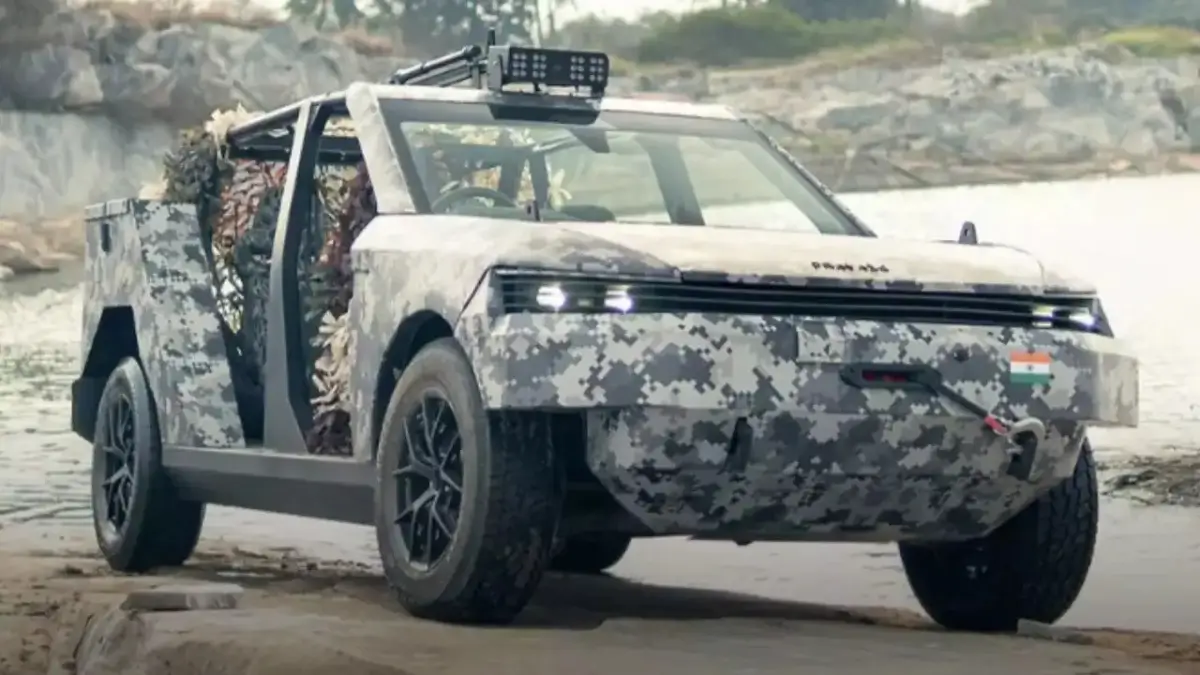
India first defence electric vehicle – Pravaig VEER – marks a milestone in Atmanirbhar Bharat. Learn how this indigenous EV enhances military mobility, stealth, and sustainability for Indian defence forces.
Pravaig launches “VEER”, India’s first electric vehicle designed for defence operations
Introduction to the VEER initiative
India has taken a bold step in its defence-mobility front with the launch of the Pravaig VEER EV, described as the country’s first indigenous electric vehicle specifically engineered for defence operations. This initiative, spearheaded by the Bengaluru-based firm Pravaig Dynamics, represents a strategic alignment of defence, innovation and self-reliance under the Atmanirbhar Bharat mission.
Design and capability features of the VEER
The VEER EV is specially crafted for the rigours of military use: it boasts stealth movement (low noise and heat signature), high terrain mobility (capable of traversing deserts, mountains and forests), and quick field-repair readiness. The vehicle has successfully completed military trials earlier this year, indicating its readiness for potential deployment.
Indigenous innovation and strategic significance
By leveraging a private sector startup for defence hardware, this project signals a shift in how India sources and deploys equipment for its armed forces. The VEER EV’s development emphasises reduced dependence on imports and showcases domestic R&D capabilities. The vehicle has also been recognised via the iDEX Innovation for Defence Excellence Award, which acknowledges cutting-edge defence innovations.
Implications for defence logistics and operations
With an all-electric propulsion system, the VEER EV offers significant benefits in terms of cost and logistics: lower fuel consumption, simplified maintenance and lessened dependence on traditional fuel supply chains. Tactically, the vehicle’s stealth and mobility enable operations in asymmetric warfare and difficult terrain, giving forces the advantage of surprise and endurance.
Next steps and challenges ahead
Pravaig Dynamics is reportedly scaling up production of the VEER EV following near-field trials, with next phases including certification, cost optimisation and integration into military logistics systems. However, key challenges remain, such as supply chain robustness, mass manufacturing at scale and ensuring that the vehicle meets rigorous defence reliability standards.

Why this News is Important
Relevance to defence procurement
For students preparing for civil services, banking, railways, defence or police exams, this news is important because it highlights a shift in defence procurement strategy. Rather than relying solely on traditional defence manufacturers or imports, India is harnessing indigenous innovation and private-sector agility. The VEER EV exemplifies how private enterprises are becoming partners in national security.
Link to strategic priorities
This development aligns with India’s broader strategic goals such as Atmanirbhar Bharat, “Make in India” and strengthening domestic manufacturing. Recognising how such priorities translate into concrete defence assets is critical. It speaks to how government policy, defence readiness and technological innovation converge — topics frequently asked in GS (General Studies) and current-affairs sections of competitive exams.
Implications for multiple exam fields
For defence aspirants or those targeting police exams, understanding the evolution of military hardware — especially electric and stealth vehicles — is relevant to internal security, modern warfare and logistics discussions. For banking and civil service exams, the economic dimensions — such as cost savings, logistics efficiency, and export potential — provide material for economy-related questions. The innovation angle also ties into science & technology segments for teaching or generalist exams.
Historical Context
In the context of India’s defence transformation, the launch of the VEER EV comes at a time when the country is accelerating efforts to modernise its armed forces, reduce dependence on imported equipment and integrate newer technologies such as electric propulsion and stealth design. Earlier, India relied heavily on imported vehicles or those built under licence; however, in recent years, initiatives like iDEX, Defence India Startup Challenge and various public–private partnerships have pushed the agenda of indigenous defence manufacturing. The VEER EV builds on this trajectory, representing a tangible outcome of linking innovation, private enterprise and military needs.
Key Takeaways from the Launch of VEER EV
| S.No | Key Takeaway |
|---|---|
| 1 | The VEER EV is India’s first electric vehicle specifically designed for defence operations (by Pravaig Dynamics). |
| 2 | It features stealth capabilities (low noise/heat), high terrain mobility (desert, mountain, forest) and quick field-repair readiness. |
| 3 | The vehicle aligns with Atmanirbhar Bharat and Make in India missions, signalling strategic push for indigenous defence manufacturing. |
| 4 | Electric propulsion offers cost efficiency, reduced fuel logistics, simplified maintenance — valuable for long-haul military operations. |
| 5 | Next steps include scaling production, achieving certification and integration into military logistics, but challenges remain (supply-chain, manufacturing scale). |
FAQs: Frequently Asked Questions
Q1. What is Pravaig VEER?
Pravaig VEER is India’s first indigenously designed electric vehicle developed specifically for defence operations by Bengaluru-based startup Pravaig Dynamics.
Q2. What makes VEER different from conventional defence vehicles?
Unlike fuel-powered vehicles, VEER runs on electric propulsion, offering stealth capabilities, low maintenance costs, and eco-friendly operations ideal for tactical and reconnaissance missions.
Q3. How does the VEER align with India’s Atmanirbhar Bharat mission?
The VEER embodies the spirit of self-reliance by being designed, engineered, and produced in India, minimizing defence import dependency and encouraging indigenous innovation.
Q4. What is the iDEX program mentioned in connection with VEER?
iDEX (Innovations for Defence Excellence) is a government initiative under the Ministry of Defence to promote innovation and technology development in the defence sector through startups and MSMEs.
Q5. Which organisation developed the VEER EV?
The VEER electric vehicle has been developed by Pravaig Dynamics, a Bengaluru-based EV manufacturer known for its advanced electric mobility solutions.
Q6. What are the advantages of using electric vehicles in defence operations?
Electric vehicles like VEER reduce fuel dependency, enhance stealth due to low noise and heat signatures, and ensure sustainability with lower emissions and simplified logistics.
Q7. Has the VEER completed its military trials?
Yes. The VEER successfully completed field and mobility trials earlier in 2025, confirming its operational readiness for potential deployment.
Q8. What future applications might the VEER have?
Beyond defence, similar electric platforms could be adapted for disaster management, border surveillance, and paramilitary use, contributing to multiple government missions.
Q9. How does the launch of VEER support India’s Make in India initiative?
The VEER project strengthens domestic manufacturing by demonstrating India’s capability to design high-end defence technologies within national borders.
Q10. Who can find this topic relevant for competitive exams?
Aspirants of defence, civil services, banking, railways, and teaching exams should study this news as it intersects with topics in science & tech, environment, economy, and defence policy.
Some Important Current Affairs Links




