




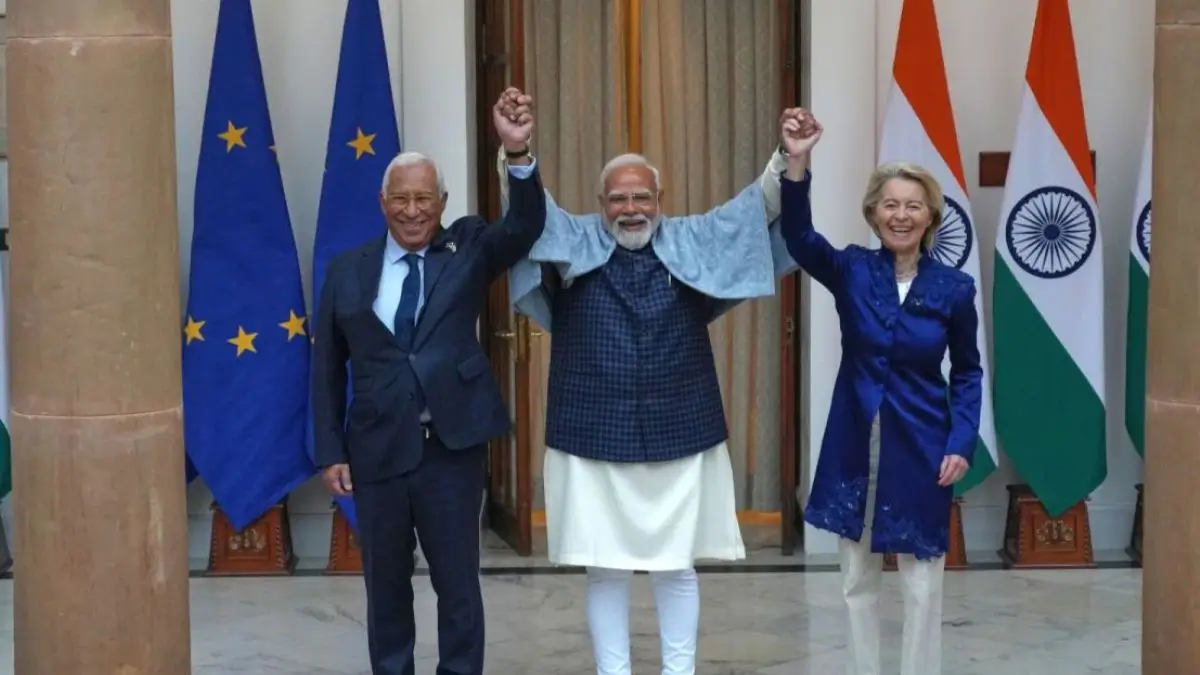
India EU Free Trade Agreement 2026, called the Mother of All Deals, opens markets, reduces tariffs, strengthens investment, and boosts trade cooperation between India and Europe.
India-EU Free Trade Agreement (FTA) 2026: A Historic Global Trade Breakthrough
Introduction: What Is the India-EU FTA?
The India-European Union Free Trade Agreement (FTA) is a landmark bilateral trade pact concluded on January 27, 2026, at the 16th India-EU Summit held in New Delhi, India.
Often hailed by global leaders as the “mother of all deals”, this FTA represents one of the largest and most comprehensive trade agreements India has ever negotiated. It marks the culmination of nearly two decades of negotiations aimed at liberalising trade in goods, services, and investment, strengthening economic cooperation, and deepening strategic ties between India and the European Union (EU) — an economic bloc of 27 member nations.
A Strategic Economic Partnership Covering 25% of Global GDP
The India-EU FTA is monumental not just for its scale, but also for its scope. Together, India and the EU account for nearly 25% of the world’s GDP and a significant share of global trade. The deal aims to reduce or eliminate tariffs on the vast majority of products traded between the two regions, making Indian exports more competitive in European markets and European products more affordable in India.
Under the agreement:
- Nearly 97% of EU exports will benefit from tariff cuts in India.
- Duties on passenger vehicles are set to be reduced from a high rate of 110% down to around 10% over time.
- Imported wines and spirits will see phased tariff reductions, with wine duties falling from 150% to around 20% for premium categories.
This ambitious liberalisation signals a major opening of India’s market, while also granting European businesses enhanced access to one of the fastest-growing major economies in the world.
Strengthening Services, Investment & SMEs
Beyond goods, the FTA includes provisions for trade in services and investment cooperation — especially in financial and maritime sectors — that could lead to increased European participation in India’s services markets. A dedicated chapter on Small and Medium-sized Enterprises (SMEs) ensures smaller companies from both sides can navigate new opportunities with reduced trade barriers and clearer regulatory frameworks.
Future Beyond Tariffs: Security, Green Energy & Cooperation
Alongside the FTA, India and the EU also signed agreements on Security and Defence Cooperation, including collaboration on maritime security, cyber security, and defence production. There is also a joint commitment to green hydrogen and climate action reflecting shared priorities for sustainable development and technological exchange.
Conclusion: A New Era in India-EU Relations
This global agreement sets a new benchmark in international economic cooperation. With tariff liberalisation, service market access, strategic alliances, and future-focused collaboration, the India-EU FTA is more than a trade pact — it is a comprehensive partnership shaping 21st century global economic architecture.

Why This News Is Important for Competitive Exams
Economic Significance and Long-Term Impact
The India-EU Free Trade Agreement (FTA) is a major milestone in India’s international trade policy. It signals India’s transition from a regionally focused trading partner to a key player in global economic governance. By covering nearly 25% of global economic output, the FTA is among the most substantial trade pacts India has ever concluded.
Its implementation will have wide-ranging implications for Indian industries, exports, consumer markets, and strategic partnerships. For students preparing for exams like UPSC, PCS, Banking, Railway, Defence and Teaching Exams, this development is important because:
- It highlights India’s proactive role in shaping global trade rules and expanding market access.
- It underscores the importance of economic diplomacy in advancing national interests.
- Questions related to international trade, tariff policies, bilateral agreements, and global partnerships often appear in General Studies papers, making this news a vital topic for revision.
Understanding the India-EU FTA prepares aspirants to answer questions on trade blocs, economic reforms, foreign policy, and international cooperation — topics frequently tested in both prelims and mains stages of competitive exams.
Historical Context: From Negotiations to the “Mother of All Deals”
Trade negotiations between India and the European Union date back to 2007. However, differences over tariffs, market access, services, and regulatory standards stalled talks in the early 2010s. Efforts were renewed and intensified in 2022, reflecting a mutual interest in boosting bilateral trade and responding to shifting global economic dynamics.
Over nearly 20 years of negotiations, both sides worked through complex issues related to trade deficits, industrial protections, and non-tariff barriers. The eventual breakthrough at the 16th India-EU Summit in January 2026 represents the culmination of these efforts.
The deal’s label — “Mother of all Deals” — underscores its depth, scale, and strategic importance. It not only liberalises trade but also deepens cooperation in areas such as services, investment, technology, and green energy, setting a precedent for future global economic partnerships.
Key Takeaways from India-EU FTA — “Mother of All Deals”
| S. No. | Key Takeaway |
|---|---|
| 1. | India and the EU concluded a historic Free Trade Agreement at the 16th India-EU Summit on January 27, 2026. |
| 2. | The FTA covers nearly 25% of global GDP and is termed the “Mother of all Deals”. |
| 3. | Tariffs on over 97% of EU exports to India will be reduced or eliminated to facilitate trade. |
| 4. | The agreement includes enhanced access for services, investment, and SME cooperation. |
| 5. | Alongside the trade pact, India and the EU signed security, defence, and green energy cooperation agreements. |
FAQs on India-EU Free Trade Agreement 2026
1. What is the India-EU Free Trade Agreement (FTA)?
The India-EU FTA is a historic trade pact signed on January 27, 2026, at the 16th India-EU Summit in New Delhi. It aims to liberalize trade in goods, services, and investment between India and the European Union, covering nearly 25% of global GDP.
2. Why is the India-EU FTA called the “Mother of All Deals”?
It is called the “Mother of All Deals” due to its scale, strategic importance, and comprehensive nature, covering tariffs, services, investment, and cooperation in technology, green energy, and defence.
3. Which sectors benefit from tariff reductions under the FTA?
Tariff reductions apply to goods such as automobiles, wines and spirits, electronics, and machinery. Nearly 97% of EU exports to India will receive lower tariffs over time.
4. How does the FTA impact Small and Medium Enterprises (SMEs)?
The FTA includes a dedicated chapter on SMEs, providing reduced trade barriers, simplified regulatory frameworks, and better market access for small businesses in both India and the EU.
5. What strategic cooperation is included besides trade?
Alongside trade, India and the EU agreed to collaborate on security, defence, cyber security, maritime security, green energy, and climate action.
6. How long were India-EU FTA negotiations?
Negotiations began in 2007 and continued intermittently for nearly 20 years, concluding successfully in 2026.
7. Why is the India-EU FTA important for students preparing for exams?
It is a key topic for UPSC, PCS, Banking, Defence, Railway, and Teacher exams as it relates to international trade, bilateral agreements, economic diplomacy, and global partnerships.
8. Which Indian minister highlighted the importance of the FTA?
Piyush Goyal, India’s Minister of Commerce & Industry, called it a “win-win deal for India and Europe” and emphasized its global economic impact.
9. What percentage of global GDP is covered under this agreement?
India and the EU together account for approximately 25% of global GDP.
10. What future collaborations are expected under the India-EU FTA?
The agreement paves the way for joint investment in green hydrogen, climate technologies, security partnerships, and digital trade initiatives.
Some Important Current Affairs Links