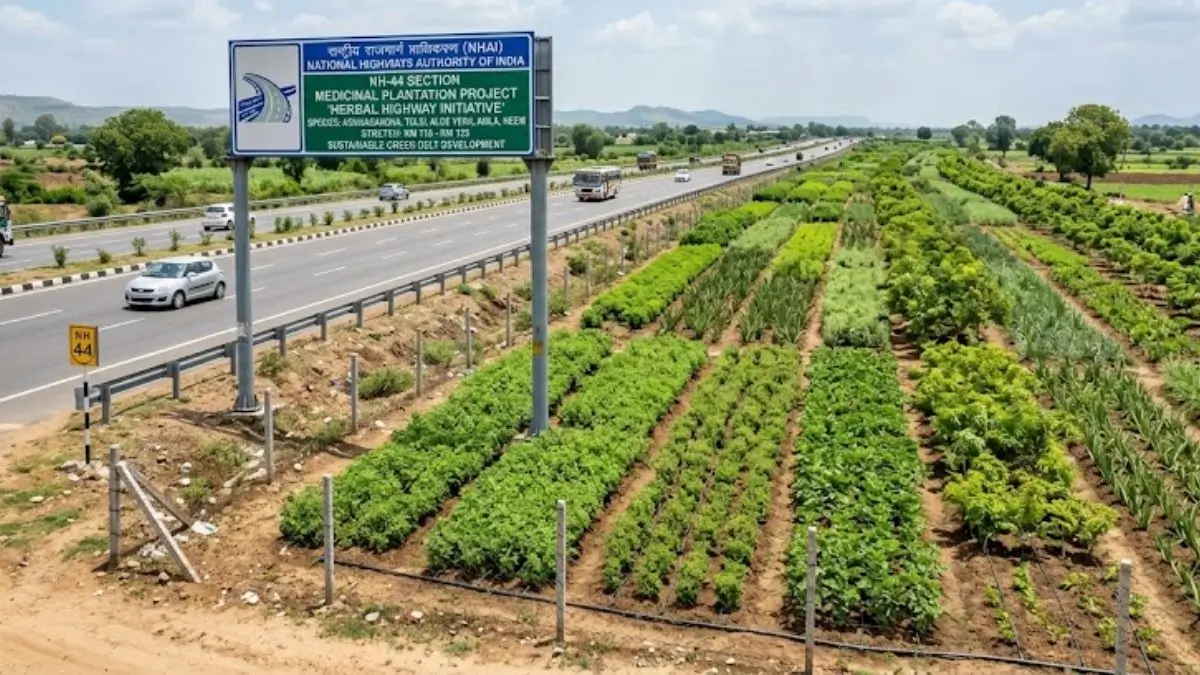





India economy PPP growth 2038 projection by EY estimates India will become the world’s second-largest economy with $34.2 trillion GDP, driven by reforms, demographics, and strong domestic demand.
India’s Economic Powerhouse: Poised to Become the World’s Second-Largest Economy by 2038
India’s Trajectory in PPP Terms
According to the August 2025 edition of EY’s Economy Watch, India is projected to emerge as the world’s second-largest economy in Purchasing Power Parity (PPP) terms by 2038, with an estimated GDP of $34.2 trillion. This projection hinges on maintaining a steady average growth rate of 6.5%, while the United States grows at 2.1% during the 2028–2030 period.
Robust Economic Fundamentals
India’s economic ascent is powered by strong structural support: a young median age of 28.8 years in 2025, high savings and investment rates, and a declining government debt-to-GDP ratio, expected to drop from 81.3% in 2024 to 75.8% by 2030.
Structural Reforms and Domestic Resilience
EY highlights a series of policy reforms fueling India’s resilience and competitiveness:
- Introduction of GST, Insolvency and Bankruptcy Code (IBC), and promotion of financial inclusion via UPI
- Incentives like the Production-Linked Incentive (PLI) scheme
- Large-scale public investment in infrastructure
- Advancement in emerging technologies—including AI, semiconductors, and renewable energy
Comparative Global Standing
While China continues to lead with a projected PPP GDP of $42.2 trillion by 2030, it’s grappling with ageing demographics and increasing debt. The United States, though stable, is challenged by slower growth and debt exceeding 120% of GDP. Germany and Japan, despite being advanced economies, have older populations and high dependence on global trade flows, placing India at a comparative advantage with its youthful population, rising domestic demand, and sustainable fiscal outlook.
Navigating Global Headwinds
The projection is particularly notable in the face of elevated U.S. tariffs on Indian exports. Despite these trade tensions, EY underscores that the negative impact on India’s GDP growth could be contained—amounting to just 0.1 percentage points—by pursuing export diversification, reinforcing domestic demand, and developing stronger trade partnerships.
Why This News Is Important
Strategic Relevance Across Government Exam Aspirants
For students aiming at roles in civil services, defence, railways, banking, education, or police services, these projections are more than just numbers—they provide critical context about India’s evolving geopolitical stature and the economic environment in which policies are crafted and implemented.
Understanding Economic Indicators and Planning
Mastery over concepts like GDP, PPP, demographic dividend, debt-to-GDP ratio, and policy reform initiatives is essential for analysis in exams such as UPSC, PSC, or banking recruitment. This report offers a lucid illustration of how these indicators interplay to shape long-term economic strategies.
Current Affairs with Long-Term Outlook
The report isn’t merely about present-day headlines—it’s a forward-looking projection until 2038, offering insights into the foundational strengths that will shape India’s future policy environment and international standing.
Interlinking Sectors and Reforms
Reforms such as GST, financial inclusion via UPI, and PLI schemes are relevant across sectors—banking, finance, infrastructure, and more. Grasping their long-term impact is valuable for applicants across diverse government roles.
Historical Context
Evolution of India’s Economic Engine
- Post-1991 liberalization marked a pivotal shift, catalyzing growth. Since then, India has steadily climbed from a nominal GDP of under $1 trillion to an estimated $3.9 trillion in 2024.
- Though currently the fourth-largest economy by nominal GDP and the third-largest by PPP, India’s long-term trajectory has been upward.
Domestic Demand as Growth Pillar
Termed the “Mumbai Consensus”, India’s growth is largely domestic demand–driven, unlike export-led models. With consumption accounting for 64% of GDP, this model has provided resilience and nurtured a growing middle class.
Delhi Declaration and Reform Legacy
The 1991 reforms, alongside consistent policy frameworks like GST, UPI, and PLI, have progressively modernized the economy, bolstering savings and investment and laying the groundwork for future expansion.
Key Takeaways from “India’s PPP Economy Outlook”
| S. No. | Key Takeaway |
|---|---|
| 1. | India is projected to become the world’s second-largest economy in PPP terms by 2038, with a GDP of $34.2 trillion. |
| 2. | India’s median age of 28.8 years, high savings/investment, and declining debt ratio are key structural strengths. |
| 3. | Ongoing reforms — GST, UPI, IBC, PLI, infrastructure development, and emerging technologies — underpin long-term resilience. |
| 4. | Compared to other major economies — China (ageing, debt), US (high debt, slower growth), and Germany/Japan (older demographics, trade reliance) — India holds a stronger growth trajectory. |
| 5. | Despite external pressures like U.S. tariffs, the growth impact is minimal (~0.1% GDP), provided India focuses on diversification and domestic demand. |
Frequently Asked Questions (FAQs)
Q1. What is the main finding of the EY Economy Watch August 2025 report about India?
India is projected to become the world’s second-largest economy in PPP terms by 2038, with an estimated GDP of $34.2 trillion.
Q2. What does Purchasing Power Parity (PPP) mean?
PPP is an economic theory that compares different countries’ currencies through a “basket of goods” approach, helping to assess the relative value of currencies and the cost of living.
Q3. What structural strengths support India’s growth projection?
A young population (median age 28.8 years), high savings and investment rates, and a declining government debt-to-GDP ratio are key strengths.
Q4. How does India’s debt-to-GDP ratio compare in future estimates?
It is expected to decline from 81.3% in 2024 to 75.8% by 2030.
Q5. What major reforms have contributed to India’s long-term growth?
Reforms like GST, UPI-based financial inclusion, Insolvency and Bankruptcy Code (IBC), PLI schemes, and investments in infrastructure and technology.
Q6. How is India’s growth trajectory different from China’s?
While China faces challenges like an ageing population and debt, India benefits from its youthful demographics, consumption-driven growth, and policy reforms.
Q7. What role does domestic demand play in India’s growth model?
India follows the “Mumbai Consensus”, meaning growth is driven by domestic consumption rather than just exports.
Q8. How much could U.S. tariffs reduce India’s GDP growth, according to EY?
The negative impact could be around 0.1 percentage points, which is relatively minor.
Q9. Which other economies are compared with India in the report?
The United States, China, Germany, and Japan.
Q10. Why is this news important for government exam aspirants?
It strengthens understanding of current economic indicators, policy reforms, and India’s geopolitical standing, all of which are crucial for exams like UPSC, PSCs, Banking, Railways, Defence, and Teaching positions.
Some Important Current Affairs Links