
ICGS Akshay commissioned 2026 marks a major boost to India’s maritime security. Learn about the Indian Coast Guard’s new Fast Patrol Vessel, Goa Shipyard Limited, Aatmanirbhar Bharat, key facts, MCQs, and exam-focused current affairs for UPSC, SSC, Banking, Railways, Defence, and State PSC exams.
Introduction
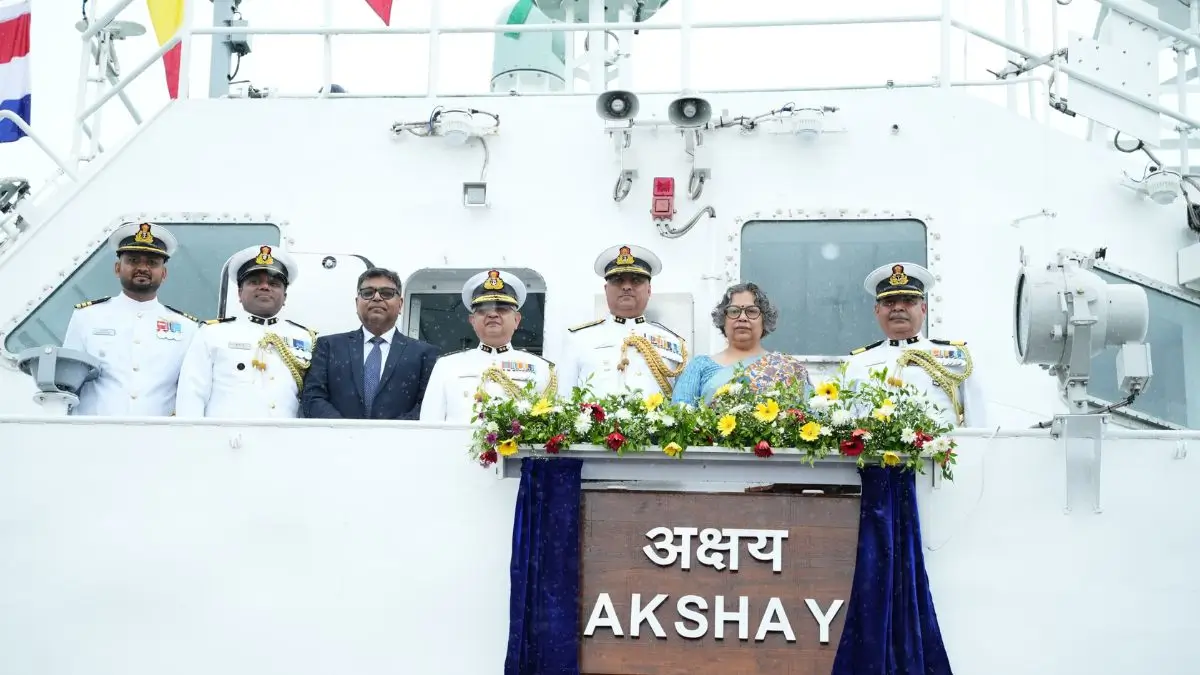
India has taken another significant step towards strengthening its maritime security with the commissioning of Indian Coast Guard Ship (ICGS) Akshay, a new-generation Fast Patrol Vessel (FPV), into the Bharatiya Tatrakshak (Indian Coast Guard) fleet. The induction of this indigenously built vessel reflects the country’s growing focus on self-reliance in defence manufacturing while enhancing surveillance and operational capabilities along India’s extensive coastline. The commissioning ceremony was held at Goa Shipyard Limited (GSL), Goa, marking another milestone in the modernization of the Indian Coast Guard.
A New Milestone in Maritime Security
ICGS Akshay has been designed as a modern Fast Patrol Vessel capable of performing multiple maritime missions. The ship has been inducted to strengthen the operational preparedness of the Indian Coast Guard in safeguarding India’s territorial waters, Exclusive Economic Zone (EEZ), and coastal regions.
The vessel has been named “Akshay,” meaning “Indestructible,” symbolizing resilience, courage, and the unwavering commitment of the Indian Coast Guard towards protecting India’s maritime interests. The induction represents another important step in the force’s ongoing modernization programme aimed at enhancing maritime security and coastal surveillance.
Built Under the Vision of Aatmanirbhar Bharat
One of the most significant aspects of ICGS Akshay is that it has been designed and constructed by Goa Shipyard Limited, one of India’s premier defence shipyards. The indigenous construction of the vessel demonstrates the success of the Government of India’s Aatmanirbhar Bharat and Make in India initiatives in the defence sector.
The increasing participation of Indian shipyards in building sophisticated defence platforms reduces dependence on imports, promotes technological innovation, generates employment, and strengthens India’s indigenous defence manufacturing ecosystem. The commissioning of Akshay showcases India’s growing capability to build world-class patrol vessels using domestic expertise.
Operational Capabilities of ICGS Akshay
ICGS Akshay has been designed to undertake a wide range of operational roles that are critical for maintaining maritime safety and national security. The vessel will perform:
- Coastal surveillance and maritime domain awareness.
- Search and Rescue (SAR) operations during emergencies.
- Maritime law enforcement against illegal activities.
- Anti-smuggling and anti-poaching operations.
- Protection of fishermen operating in Indian waters.
- Marine environmental protection and pollution response.
- Humanitarian Assistance and Disaster Relief (HADR) operations.
- Assistance to mariners in distress during cyclones and natural disasters.
These capabilities make the vessel a valuable asset for maintaining peace, safety, and security across India’s vast maritime boundaries.
Strengthening the Indian Coast Guard Fleet
The induction of ICGS Akshay comes at a time when India is continuously expanding the operational strength of the Indian Coast Guard to address emerging maritime challenges. These include illegal fishing, piracy, smuggling, trafficking, marine pollution, and increasing strategic activities in the Indian Ocean Region (IOR).
The new vessel will significantly improve rapid-response capability, allowing the Coast Guard to respond more efficiently to emergencies while ensuring effective maritime governance.
With increasing commercial shipping, offshore energy installations, and strategic maritime interests, such advanced patrol vessels are becoming essential components of India’s coastal defence architecture.
Role of the Indian Coast Guard
Established under the Coast Guard Act, 1978, the Indian Coast Guard functions under the Ministry of Defence and serves as India’s premier maritime law enforcement agency. Its responsibilities include safeguarding maritime zones, protecting offshore assets, conducting search and rescue missions, preventing smuggling, enforcing maritime laws, assisting fishermen, and protecting the marine environment.
Over the years, the force has expanded considerably by inducting advanced ships, aircraft, interceptor boats, and surveillance systems to meet evolving maritime security requirements. The addition of ICGS Akshay further enhances the Coast Guard’s ability to perform these diverse responsibilities efficiently.
Conclusion
The commissioning of ICGS Akshay is more than the induction of another patrol vessel—it represents India’s growing maritime capability, indigenous defence manufacturing strength, and commitment to securing its maritime frontiers. As regional maritime activities continue to increase, platforms like ICGS Akshay will play an indispensable role in ensuring coastal security, disaster response, environmental protection, and maritime law enforcement.
For competitive examination aspirants, this development is important because it combines themes related to internal security, defence modernization, Aatmanirbhar Bharat, Make in India, maritime security, and the Indian Coast Guard, all of which are frequently covered in UPSC, State PSC, SSC, CDS, NDA, CAPF, Banking, Railways, and other government recruitment examinations.

Why This News is Important for Government Exam Aspirants
Strengthening India’s Maritime Security
The commissioning of Indian Coast Guard Ship (ICGS) Akshay is an important development in India’s maritime security framework. As a new-generation Fast Patrol Vessel (FPV), the ship enhances the Indian Coast Guard’s ability to monitor the country’s vast coastline, safeguard territorial waters, and protect the Exclusive Economic Zone (EEZ). With increasing maritime activities in the Indian Ocean Region (IOR), the induction of modern patrol vessels is essential for preventing illegal fishing, smuggling, piracy, trafficking, and other maritime crimes. This development demonstrates India’s continued efforts to build a robust coastal security network capable of responding swiftly to emerging threats.
Significant for Defence and Internal Security Examinations
Questions related to the Indian Coast Guard, defence modernization, indigenous defence manufacturing, and maritime security frequently appear in competitive examinations such as UPSC Civil Services, State PSCs, CDS, NDA, CAPF, SSC CGL, SSC CHSL, Railways, Banking, Police, and various teaching recruitment examinations. Candidates should understand the role of the Indian Coast Guard, the importance of Fast Patrol Vessels, and the objectives behind strengthening India’s coastal surveillance capabilities. Such current affairs are often linked with static General Studies topics, making them highly relevant for both prelims and mains examinations.
Promotes Aatmanirbhar Bharat and Make in India
Another major reason this news is important is that ICGS Akshay has been designed and built in India by Goa Shipyard Limited (GSL). This reflects the success of the Government of India’s Aatmanirbhar Bharat and Make in India initiatives in the defence sector. Indigenous production of advanced defence platforms reduces dependence on foreign imports, promotes technological innovation, creates employment opportunities, and strengthens India’s defence industrial base. Government examinations frequently include questions on flagship initiatives related to self-reliance, indigenous manufacturing, and defence production.
Enhances India’s Strategic Position in the Indian Ocean Region
India occupies a strategically important location in the Indian Ocean Region, one of the world’s busiest maritime trade corridors. Protecting sea lanes of communication, offshore installations, fisheries, and maritime trade is vital for the country’s economic and national security interests. The induction of advanced patrol vessels such as ICGS Akshay improves surveillance, rapid-response capability, and maritime law enforcement. It also supports India’s broader vision of maintaining peace, stability, and security across the region.
Important from a Current Affairs Perspective
From a current affairs standpoint, the commissioning of ICGS Akshay connects multiple examination themes, including internal security, coastal security, maritime governance, disaster management, environmental protection, defence technology, and indigenous shipbuilding. Aspirants should remember the vessel’s name, its classification as a Fast Patrol Vessel, the shipyard responsible for its construction, and its primary operational roles. Such factual information is commonly tested in objective examinations, while the broader implications of maritime security and self-reliance are useful for descriptive papers, interviews, and essay writing.
Historical Context
Evolution of the Indian Coast Guard
The Indian Coast Guard (ICG) was formally established on 1 February 1977 and later received statutory status through the Coast Guard Act, 1978. Before its creation, responsibilities such as preventing smuggling, protecting marine resources, and conducting search and rescue operations were handled by multiple agencies, often leading to coordination challenges. The establishment of the Coast Guard created a dedicated maritime law enforcement force under the Ministry of Defence to safeguard India’s vast coastline and maritime interests.
Over the decades, the Indian Coast Guard has grown into one of the world’s largest coast guard organizations, operating an expanding fleet of offshore patrol vessels, fast patrol vessels, interceptor boats, aircraft, helicopters, and advanced surveillance systems. Its primary responsibilities include coastal security, maritime law enforcement, search and rescue (SAR), environmental protection, anti-smuggling operations, anti-poaching patrols, and assistance to fishermen.
Rise in India’s Maritime Security Priorities
India has a coastline of more than 7,500 kilometres, an Exclusive Economic Zone (EEZ) of over 2 million square kilometres, and numerous strategically important ports and offshore energy installations. As maritime trade expanded and security challenges increased, the Government of India began investing heavily in strengthening coastal surveillance and maritime infrastructure.
The importance of coastal security became even more evident after the 26/11 Mumbai terror attacks in 2008, when terrorists infiltrated India through the sea route. Following the attacks, the government significantly enhanced coastal surveillance by establishing Coastal Surveillance Radar Stations, strengthening coordination among maritime agencies, increasing Coast Guard deployments, and inducting modern patrol vessels and interceptor boats.
Indigenous Defence Manufacturing and Shipbuilding
In recent years, India has focused on achieving self-reliance in defence production through initiatives such as Aatmanirbhar Bharat and Make in India. Government-owned and private shipyards have been encouraged to design and manufacture advanced naval and coast guard vessels within the country.
Goa Shipyard Limited (GSL) has played a crucial role in this transformation by constructing sophisticated patrol vessels, offshore patrol vessels, interceptor boats, and other defence platforms for the Indian Coast Guard and the Indian Navy. The commissioning of ICGS Akshay reflects the growing capability of Indian shipyards to produce world-class maritime assets using indigenous technology and expertise.
Modernization of the Indian Coast Guard
The Indian Coast Guard has been continuously modernizing its fleet to address emerging maritime threats such as piracy, illegal fishing, drug trafficking, human trafficking, marine pollution, and maritime terrorism. The induction of Fast Patrol Vessels (FPVs), Offshore Patrol Vessels (OPVs), Air Cushion Vehicles (Hovercraft), Dornier surveillance aircraft, and Advanced Light Helicopters has significantly improved its operational capabilities.
Fast Patrol Vessels like ICGS Akshay are specifically designed for rapid deployment, coastal surveillance, law enforcement, and search and rescue operations. Their speed, endurance, and versatility make them indispensable for safeguarding India’s maritime boundaries and responding to emergencies.
India’s Expanding Maritime Vision
The commissioning of ICGS Akshay aligns with India’s broader maritime vision of ensuring a safe, secure, and sustainable maritime environment. It also complements national initiatives such as SAGAR (Security and Growth for All in the Region), which emphasizes regional maritime cooperation, collective security, and economic growth across the Indian Ocean Region.
As India continues to strengthen its maritime capabilities through indigenous defence production and technological innovation, the induction of modern vessels like ICGS Akshay represents another milestone in building a capable, self-reliant, and future-ready maritime security force.
Key Takeaways from ICGS Akshay Commissioned into Bharatiya Tatrakshak Fleet
| S. No. | Key Takeaway |
|---|---|
| 1 | ICGS Akshay has been commissioned into the Indian Coast Guard (Bharatiya Tatrakshak) fleet, strengthening India’s maritime security and coastal surveillance capabilities. |
| 2 | The vessel is an indigenously designed and built Fast Patrol Vessel (FPV) by Goa Shipyard Limited (GSL), showcasing the success of the Aatmanirbhar Bharat and Make in India initiatives in the defence sector. |
| 3 | ICGS Akshay will perform multiple missions, including coastal surveillance, search and rescue (SAR), anti-smuggling, anti-poaching, maritime law enforcement, environmental protection, and humanitarian assistance and disaster relief (HADR) operations. |
| 4 | The commissioning of the vessel enhances the Indian Coast Guard’s operational readiness to safeguard India’s territorial waters, Exclusive Economic Zone (EEZ), offshore assets, and fishermen, while addressing emerging maritime security challenges in the Indian Ocean Region (IOR). |
| 5 | The development is highly relevant for UPSC, State PSC, SSC, CDS, NDA, CAPF, Banking, Railways, Police, Defence, and other competitive examinations, as it covers important topics such as maritime security, internal security, defence modernization, indigenous shipbuilding, the Indian Coast Guard, SAGAR, and Aatmanirbhar Bharat. |
Frequently Asked Questions (FAQs)
1. What is ICGS Akshay?
ICGS Akshay is an indigenously built Fast Patrol Vessel (FPV) commissioned into the Indian Coast Guard (Bharatiya Tatrakshak) fleet to strengthen India’s maritime security and coastal surveillance capabilities.
2. Who built ICGS Akshay?
ICGS Akshay has been designed and constructed by Goa Shipyard Limited (GSL), one of India’s leading defence shipyards.
3. What is the primary role of ICGS Akshay?
Its primary role is to conduct coastal surveillance, maritime law enforcement, search and rescue (SAR) operations, anti-smuggling, anti-poaching, pollution response, and humanitarian assistance and disaster relief (HADR) missions.
4. Under which ministry does the Indian Coast Guard function?
The Indian Coast Guard functions under the Ministry of Defence, Government of India.
5. What does FPV stand for?
FPV stands for Fast Patrol Vessel, a high-speed ship designed for coastal security, surveillance, and rapid-response operations.
6. Which Act governs the Indian Coast Guard?
The Coast Guard Act, 1978 provides the legal framework for the functioning of the Indian Coast Guard.
7. What is the Exclusive Economic Zone (EEZ)?
The Exclusive Economic Zone (EEZ) is a maritime zone extending up to 200 nautical miles from a country’s coastline, where it enjoys sovereign rights over marine resources and economic activities.
8. What is the significance of indigenous shipbuilding?
Indigenous shipbuilding reduces dependence on imports, strengthens national security, promotes technological innovation, generates employment, and supports the Aatmanirbhar Bharat initiative.
9. What is the SAGAR initiative?
SAGAR stands for Security and Growth for All in the Region. It is India’s maritime vision aimed at ensuring peace, security, and sustainable development in the Indian Ocean Region.
10. Why is this news important for competitive examinations?
The commissioning of ICGS Akshay covers important topics such as maritime security, internal security, defence modernization, Make in India, Aatmanirbhar Bharat, Indian Coast Guard, coastal security, and disaster management, making it relevant for UPSC, State PSC, SSC, CDS, NDA, CAPF, Banking, Railways, Police, and Teaching examinations.
Some Important Current Affairs Links