










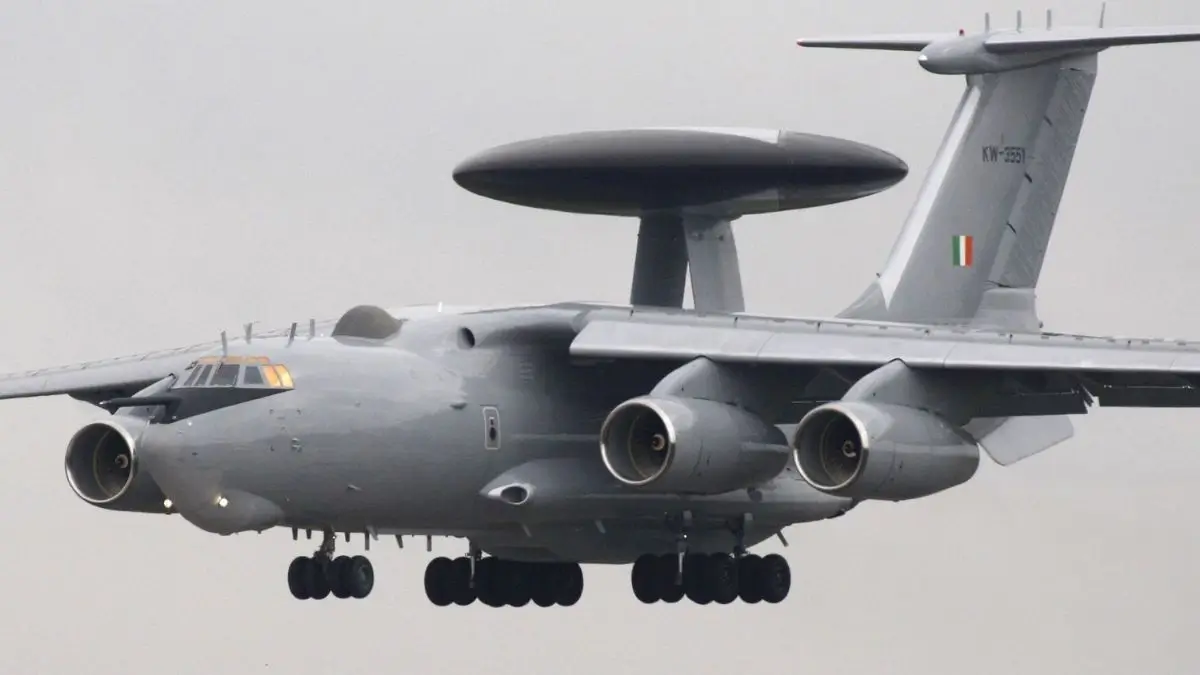
IAF indigenous maintenance network expands with 930 Indian companies, 62,300 indigenised spare parts, AI, Digital Twins and 3D printing to boost defence self-reliance.
Indian Air Force Strengthens Defence Self-Reliance
The Indian Air Force (IAF) is strengthening its aircraft maintenance ecosystem by expanding the participation of Indian industries and adopting advanced technologies such as Artificial Intelligence (AI), Digital Twins and 3D printing. The initiative is aimed at improving operational readiness while reducing dependence on overseas suppliers and global supply chains. As of August 31, 2026, around 930 Indian companies are contributing to the IAF’s maintenance requirements, particularly in mechanical, electrical, electronics and rubber-related components.
930 Indian Companies Join the Maintenance Ecosystem
The participation of 930 Indian firms represents a significant expansion of the domestic defence-support network. These companies are involved in manufacturing and supplying spare parts needed for aircraft and associated equipment. By developing a wider indigenous industrial base, the IAF can reduce the risks associated with delays in obtaining components from foreign manufacturers, particularly during periods of international supply-chain disruption.
More Than 62,300 Spare Parts Indigenised
A major achievement of the initiative is the domestic production of more than 62,300 spare parts. According to the reported figures, approximately 97% of frequently used operational spares and 93% of mandatory overhaul spares have been indigenised. This demonstrates the growing ability of Indian industry to support the maintenance requirements of sophisticated military platforms.
AI and Digital Twins to Enable Predictive Maintenance
The IAF is also moving towards technology-driven maintenance. AI and Digital Twin technologies can help technical teams monitor the condition of aircraft systems, identify potential defects and anticipate maintenance requirements. This approach represents a shift from conventional corrective maintenance, where equipment is repaired after a problem occurs, towards predictive maintenance that attempts to identify problems before they affect operations.
3D Printing Helps Meet Urgent Spare-Part Requirements
Additive manufacturing, commonly known as 3D printing, is another important element of the IAF’s maintenance strategy. An in-house 3D Additive Manufacturing Centre established in 2022 supports the production of certain non-critical airborne spares and components for ground equipment. Materials including aluminium, steel and titanium alloys can be used for relevant applications, helping shorten the time required to obtain selected parts.
MSMEs and Startups Receive Greater Opportunities
The initiative also highlights the increasing role of Indian MSMEs and startups in defence innovation. Around 180 projects involving MSMEs and startups are being pursued under programmes such as Make, iDEX and the Technology Development Fund. These initiatives have reportedly created defence-manufacturing opportunities valued at more than ₹17,000 crore.
Collaboration with Academic and Research Institutions
The IAF’s indigenous maintenance ecosystem extends beyond manufacturers. It has also collaborated with institutions including IITs, IISc, DIAT and MILIT for technology development. Such partnerships can connect military requirements with research expertise, engineering capabilities and innovative solutions, strengthening India’s broader defence technology ecosystem.
Strengthening Aatmanirbharta in Defence
The expansion of domestic maintenance capabilities is closely linked with India’s broader objective of Aatmanirbharta in defence. Indigenous production of spare parts can improve supply-chain resilience, support domestic manufacturing, create opportunities for smaller companies and reduce dependence on foreign sources. For the IAF, a reliable domestic maintenance network is particularly important because aircraft availability and timely servicing directly influence operational preparedness.

Why This News Is Important
Importance for National Security
The IAF’s expanded indigenous maintenance network is important because military preparedness depends not only on acquiring advanced aircraft but also on keeping them operational. A disruption in the supply of critical components can affect fleet availability. Increasing domestic manufacturing therefore strengthens India’s ability to sustain military operations under challenging circumstances.
Importance for Aatmanirbhar Bharat
The initiative is a practical example of the broader Aatmanirbhar Bharat approach in defence. Instead of depending extensively on overseas suppliers for maintenance requirements, India is developing domestic capabilities involving established manufacturers, MSMEs, startups and research institutions. This can strengthen the country’s defence-industrial base over the long term.
Importance for Technology and Innovation
The use of AI, Digital Twins and 3D printing shows how emerging technologies are changing military logistics and maintenance. Predictive maintenance can help identify potential failures earlier, while additive manufacturing can accelerate the production of selected components. These technologies are increasingly relevant to modern defence preparedness.
Importance for Indian Industry
The participation of 930 Indian companies and the reported ₹17,000-crore opportunity associated with MSME and startup projects demonstrate the economic dimension of defence indigenisation. Greater involvement of domestic industry can encourage technological development, generate specialised manufacturing capabilities and create new opportunities for Indian enterprises.
Importance for Competitive Examinations
For government-exam aspirants, this development connects several important subjects: Indian defence, Aatmanirbharta, Make in India, defence manufacturing, MSMEs, artificial intelligence, 3D printing and military technology. Questions can be framed around the IAF, indigenous defence production, maintenance technologies and the numerical achievements reported in the initiative.
Historical Context: India’s Journey Towards Indigenous Defence Maintenance
Early Dependence on Foreign Sources
After independence, India’s armed forces inherited and operated a defence ecosystem that depended significantly on foreign-origin equipment and technical support. As India’s military inventory expanded and became more technologically sophisticated, the need for domestic maintenance, repair and overhaul capabilities became increasingly important.
Development of Indigenous Defence Capabilities
Over the decades, India gradually expanded domestic capabilities through organisations such as Hindustan Aeronautics Limited (HAL), the Defence Research and Development Organisation (DRDO) and defence public-sector organisations. Indigenous programmes such as the Tejas fighter aircraft also contributed to the development of domestic aerospace and defence expertise.
Growing Role of Private Industry
India’s defence sector has increasingly opened opportunities for private companies, MSMEs and startups. Programmes such as Innovations for Defence Excellence (iDEX) and the Technology Development Fund have encouraged innovators to develop solutions for military requirements. The IAF’s engagement with approximately 180 MSME and startup projects reflects this broader transformation.
Shift Towards Advanced Maintenance Technologies
Military maintenance is also changing from conventional repair-based systems towards data-driven and predictive approaches. The IAF’s use of AI, Digital Twins and additive manufacturing reflects this technological transition. These tools can potentially improve maintenance planning, reduce downtime and increase the availability of military equipment.
Current Phase of Defence Self-Reliance
The involvement of 930 Indian companies and domestic production of more than 62,300 spare parts illustrate the current emphasis on building a resilient defence supply chain. The initiative forms part of India’s wider effort to strengthen indigenous manufacturing and reduce vulnerabilities caused by international supply-chain disruptions.
Key Takeaways from IAF Indigenous Maintenance Network
| S. No. | Key Takeaway |
|---|---|
| 1 | Around 930 Indian companies are supporting the IAF’s maintenance requirements in areas including mechanical, electrical, electronics and rubber components. |
| 2 | More than 62,300 spare parts have reportedly been manufactured domestically, including 97% of frequently used operational spares and 93% of mandatory overhaul spares. |
| 3 | The IAF is using Artificial Intelligence and Digital Twins to move towards predictive aircraft maintenance. |
| 4 | An in-house 3D Additive Manufacturing Centre, established in 2022, supports production of selected urgent spare parts and ground-equipment components. |
| 5 | Around 180 MSME and startup projects are being pursued under initiatives such as Make, iDEX and the Technology Development Fund, with reported opportunities exceeding ₹17,000 crore. |
Frequently Asked Questions (FAQs)
1. How many Indian companies are supporting the IAF’s maintenance ecosystem?
Around 930 Indian companies are contributing to the Indian Air Force’s maintenance requirements, covering areas such as mechanical, electrical, electronics and rubber components.
2. How many spare parts have been indigenised by the IAF?
More than 62,300 spare parts have reportedly been indigenised, strengthening India’s domestic defence supply chain.
3. What percentage of frequently used operational spares have been indigenised?
Approximately 97% of frequently used operational spares have been indigenised.
4. What percentage of mandatory overhaul spares have been indigenised?
Around 93% of mandatory overhaul spares have been indigenised.
5. Which technologies is the IAF using for predictive maintenance?
The IAF is adopting technologies including Artificial Intelligence (AI) and Digital Twins to improve maintenance planning and predict potential equipment failures.
6. What is the role of 3D printing in IAF maintenance?
3D printing, or additive manufacturing, is being used to produce selected non-critical airborne spares and components for ground equipment, helping reduce production and supply time.
7. When was the IAF’s 3D Additive Manufacturing Centre established?
The 3D Additive Manufacturing Centre was established in 2022.
8. Which materials can be used in the IAF’s additive manufacturing efforts?
The reported initiative includes the use of materials such as aluminium, steel and titanium alloys for appropriate applications.
9. How many MSME and startup projects are associated with the initiative?
Around 180 projects involving MSMEs and startups are being pursued through programmes such as Make, iDEX and the Technology Development Fund.
10. Why is indigenous aircraft maintenance important for India?
Indigenous maintenance reduces dependence on foreign supply chains, strengthens operational readiness, improves supply-chain resilience and supports India’s objective of Aatmanirbharta in defence.
Some Important Current Affairs Links




