


India’s Pioneering Women in Space Exploration
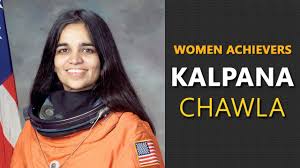
Kalpana Chawla: India’s First Woman in Space
Kalpana Chawla, born on March 17, 1962, in Karnal, Haryana, etched her name in history as the first woman of Indian origin to venture into space. Her early fascination with aviation led her to pursue a Bachelor of Engineering in Aeronautical Engineering from Punjab Engineering College. She furthered her studies in the United States, earning a Master’s degree from the University of Texas at Arlington and a Ph.D. in aerospace engineering from the University of Colorado Boulder. In 1997, Chawla embarked on her maiden space voyage aboard the Space Shuttle Columbia STS-87, marking a monumental achievement for India. Tragically, her second mission in 2003 ended in disaster when Columbia disintegrated during re-entry, resulting in the loss of all crew members.
Sunita Williams: Continuing the Legacy
Sunita Williams, an American astronaut of Indian-Slovenian descent, has been a prominent figure in space exploration. Born on September 19, 1965, in Ohio, USA, Williams has logged over 321 days in space, participating in missions aboard the International Space Station (ISS). Her contributions have been instrumental in various scientific experiments and spacewalks, further solidifying the presence of women in space exploration.
Gaganyaan Mission: India’s Ambitious Leap
The Indian Space Research Organisation (ISRO) is gearing up for its maiden human spaceflight mission, Gaganyaan, aiming to send Indian astronauts, known as ‘Vyomanauts,’ into space. In 2024, Prime Minister Narendra Modi introduced the four astronaut-designates: Group Captain Prashanth Nair, Group Captain Angad Prathap, Group Captain Ajit Krishnan, and Group Captain Shubhanshu Shukla. All are distinguished test pilots from the Indian Air Force, selected for this pioneering mission.
Absence of Women in Gaganyaan’s Crew
Notably, the Gaganyaan mission’s inaugural crew does not include women. This exclusion stems from the stringent selection criteria, which required candidates to be seasoned combat pilots with extensive experience. Women were inducted as combat pilots in the Indian Air Force only in 2016, resulting in a limited pool of female candidates with the requisite experience for the mission.
Vyommitra: The Humanoid Robot Astronaut
In a groundbreaking move, ISRO unveiled Vyommitra, a female humanoid robot designed to simulate human functions in space. Scheduled to be part of uncrewed Gaganyaan missions, Vyommitra will conduct experiments in microgravity, monitor module parameters, and support astronauts in future crewed missions. This innovation underscores ISRO’s commitment to advancing space technology and exploration.

Why This News is Important
Inspiration for Aspiring Women Scientists
Highlighting the achievements of women like Kalpana Chawla and Sunita Williams serves as a beacon of inspiration for young women aspiring to careers in science, technology, engineering, and mathematics (STEM). Their journeys exemplify the heights that can be reached with dedication and passion, encouraging more women to pursue opportunities in space exploration.
Awareness of Selection Criteria in Space Missions
Understanding the rigorous selection process for missions like Gaganyaan sheds light on the challenges and prerequisites for becoming an astronaut. This awareness can motivate aspiring candidates to prepare adequately and meet the necessary qualifications, fostering a more inclusive environment for future missions.
Technological Advancements with Humanoid Robots
The introduction of Vyommitra signifies a significant technological advancement in space exploration. Incorporating humanoid robots into missions can enhance safety, efficiency, and the scope of experiments conducted in space, paving the way for more sophisticated explorations in the future.
India’s Growing Footprint in Space Exploration
India’s initiatives, such as the Gaganyaan mission, highlight the nation’s growing capabilities and ambitions in space exploration. These endeavors position India as a formidable player in the global space community, opening avenues for international collaborations and advancements in space science.
Encouraging Policy Reforms for Gender Inclusion
The current absence of women in the Gaganyaan crew brings to light the need for policy reforms to promote gender inclusion in specialized fields like space exploration. Addressing these gaps can lead to more diverse and representative participation in future missions, enriching the field with varied perspectives and talents.
Historical Context
Pioneers of Indian Origin in Space
The legacy of space exploration by individuals of Indian origin began with Rakesh Sharma, who, in 1984, became the first Indian citizen to travel to space aboard the Soviet spacecraft Soyuz T-11. Following him, Kalpana Chawla and Sunita Williams made significant contributions, inspiring future generations and setting the stage for India’s own human spaceflight endeavors.
Evolution of ISRO’s Human Spaceflight Program
ISRO’s journey toward human spaceflight has been marked by incremental advancements, starting with unmanned missions and progressing to the development of technologies essential for crewed space travel. The Gaganyaan mission represents a culmination of these efforts, aiming to establish India as a nation capable of independent human space exploration.
Global Trends in Female Participation in Space
Globally, the participation of women in space missions has been on the rise, with agencies like NASA and ESA actively promoting gender diversity. India’s acknowledgment of the current gender gap in its space missions presents an opportunity to align with global trends and enhance female representation in future endeavors.
Key Takeaways from India’s Pioneering Women in Space Exploration
| S.No | Key Takeaway |
|---|---|
| 1 | Kalpana Chawla was the first woman of Indian origin to travel to space, inspiring future generations. |
| 2 | The Gaganyaan mission’s initial crew comprises only male astronauts due to specific selection criteria. |
| 3 | Sunita Williams, of Indian origin, has spent over 321 days in space, contributing significantly to space research. |
| 4 | ISRO introduced Vyommitra, a female humanoid robot, to assist in future space missions. |
| 5 | The exclusion of women from Gaganyaan highlights the need for policy reforms to enhance female participation in space exploration. |
Important FAQs for Students from this News
Who was the first Indian woman to go to space?
Kalpana Chawla was the first woman of Indian origin to go to space in 1997 aboard Space Shuttle Columbia.
Why are there no women astronauts in ISRO’s Gaganyaan mission?
The selection criteria required candidates to be experienced combat pilots. Since women were inducted as combat pilots in the Indian Air Force only in 2016, there were no eligible female candidates for this mission.
Who is Sunita Williams, and what is her contribution to space exploration?
Sunita Williams is an astronaut of Indian-Slovenian descent who has spent over 321 days in space and conducted multiple spacewalks.
What is Vyommitra, and how will it help in space missions?
Vyommitra is a female humanoid robot developed by ISRO to simulate human functions, conduct experiments, and assist astronauts in future space missions.
What is the significance of the Gaganyaan mission?
The Gaganyaan mission is India’s first human spaceflight program, aiming to send Indian astronauts (Vyomanauts) into space, making India the fourth nation to achieve independent human spaceflight.
Some Important Current Affairs Links




