





Emergency Diaries Amit Shah Launch: Discover how Amit Shah’s launch of The Emergency Diaries highlights PM Modi’s underground role in the 1975 Emergency, reinforcing the importance of democratic values.
📘 The Emergency Diaries: A Chronicle of Democratic Resistance
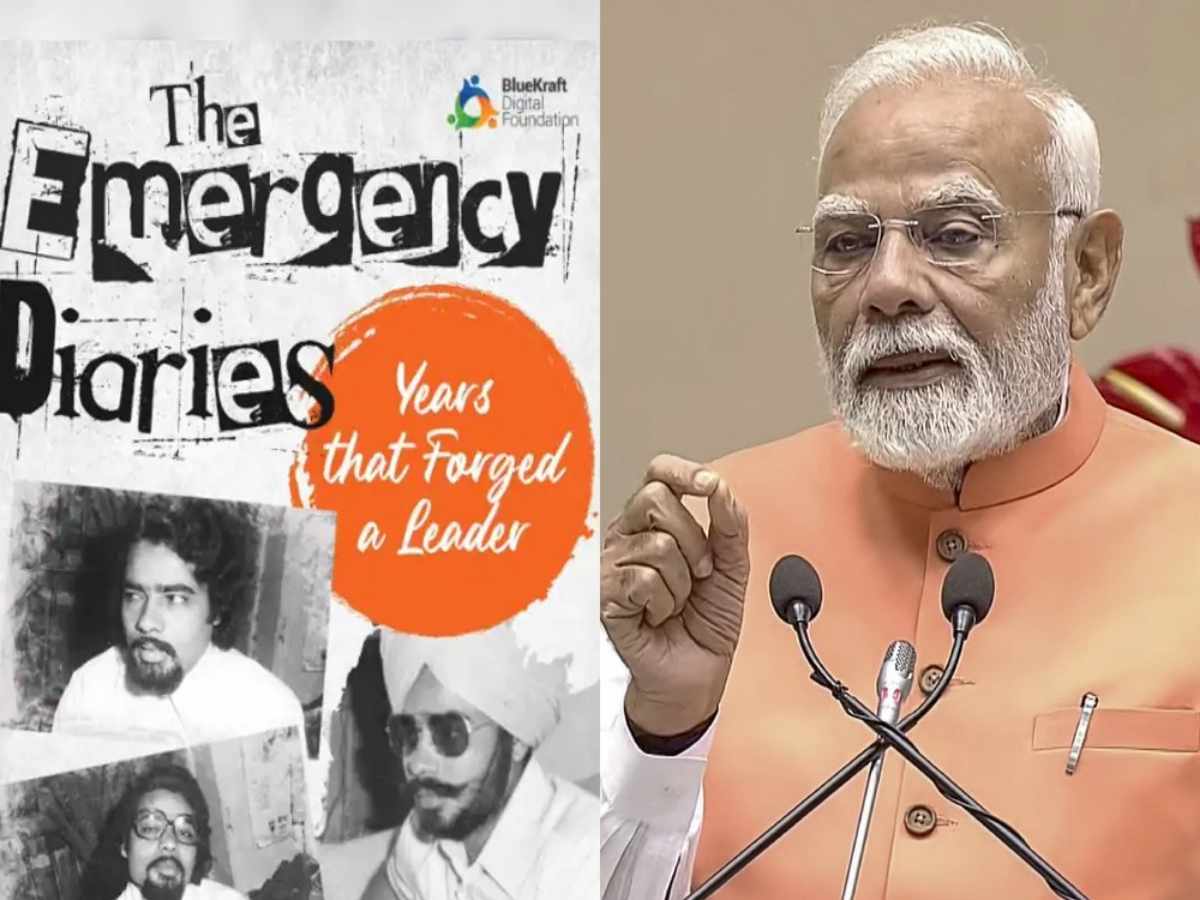
Union Home Minister Amit Shah inaugurated “The Emergency Diaries – Years that Forged a Leader” on June 25, 2025, in New Delhi, commemorating Savidhan Hatya Diwas—the 50th anniversary of the Emergency This remarkable publication captures the underground activism of a young Narendra Modi during the tumultuous period of 1975‑77.
Young Modi’s Underground Crusade
The book offers fascinating anecdotes of Modi—aged 25 then—as an RSS Pracharak who went underground to escape arrest. Disguised variously as a sannyasi, Sikh, hippie, incense vendor, and newspaper seller, he distributed clandestinely printed pamphlets, reached out to MISA detainees’ families, and mobilized public resistance
A Resistance Against Authoritarianism
Amit Shah underscored that the Emergency was a dark era where civil liberties were crushed, press freedom was curtailed, and dynastic politics reigned supreme. He attributed Modi’s underground activism to his unwavering belief in democratic values
Structure of the Book
The Emergency Diaries is divided into five insightful chapters:
- Media censorship under dictatorship
- State repression via MISA
- Role of RSS and Jana Sangh in resistance
- Testimonies of Emergency victims
- Return to citizen-led democracy
Youth & Democracy: Call to Action
Shah and I&B Minister Ashwini Vaishnaw urged the youth to draw lessons from this period and safeguard constitutional values. Shah also flagged off the “Loktantra Zindabad Yatra” to reinforce democratic consciousness across India
PM Modi’s Reflections
PM Modi shared that the Emergency was a pivotal learning phase in his life that reinforced his commitment to democratic ideals. He encouraged people to share their Emergency-era experiences, strengthening historical awareness among youth
Why This News Is Important
Relevance to Exam Syllabus
This launch is highly relevant to current affairs sections in exams like UPSC, SSC, State PSCs, defense, banking, and teaching exams. It connects past historical events—especially the Emergency—with today’s political narrative and ideological debates.
Democratic Values & Constitution
By spotlighting activism during the Emergency, the article reinforces concepts like fundamental rights, constitutional safeguards, press freedom, and democratic resilience—core pillars often tested in general studies papers.
Leadership in Crisis
Modi’s youthful resistance embodies leadership under duress. Such instances are commonly used in essay and ethics sections to illustrate moral courage and civic responsibility.
Political Context & Ideology
The narrative also underscores ideological leanings related to RSS influence, critique of dynastic politics, and emergence of non-Congress power centres—knowledge essential for political science and contemporary history topics.
Encouraging Youth Engagement
The emphasis on youth learning from historical struggles encourages civic-mindedness—an important dimension for aspirants preparing for roles that impact society directly.
Historical Context: The Emergency and Its Legacy
What Was the Emergency?
On 25 June 1975, then PM Indira Gandhi declared an Emergency under Articles 352, suspending civil liberties, censoring the media, and arresting political opponents under the Maintenance of Internal Security Act (MISA).
Constitutional & Civil Liberties Violations
This era witnessed systematic abuse of power: arbitrary detentions, forced sterilizations, suppression of dissent, and intense censorship—prompting nationwide resistance
Shah Commission Findings
Post-Emergency, the Shah Commission (1977–78) exposed abuses, concluding that the Emergency was imposed without valid cause and aided by MISA misuse, police force, and political interference
Role of RSS & Other Organisations
Groups like RSS and Jana Sangh remained active underground, distributing pamphlets and mobilising protest—Modi was one among such youth activists shaping future political leadership.
Impact on Political Landscape
The Emergency led to the collapse of the Indira Gandhi government in 1977, the formation of the Janata Party, and long-term vigilance within India’s democracy—highlighting the need for constitutional checks and party alternatives.
Key Takeaways from The Emergency Diaries
| S. No. | Key Takeaway |
|---|---|
| 1 | The book chronicles Modi’s underground activism during the 1975‑77 Emergency, including his use of disguises and grassroots resistance at age 25. |
| 2 | Emergency suspended civil liberties; press censorship and MISA were misused—a central theme highlighted by Amit Shah. |
| 3 | Structured in five sections, the book covers media censorship, state repression, Sangh and Jana Sangh resistance, victim testimonies, and democratic resurgence. |
| 4 | It reinforces democratic values and constitutional protection, aiming to educate youth on civic responsibility. |
| 5 | Highlights the ideological narrative contrasting authoritarianism and dynastic politics with grassroots democratic leadership. |
FAQs: Frequently Asked Questions
1. Who authored The Emergency Diaries?
The book is a compiled account, not authored by a single writer, but curated from various sources highlighting Narendra Modi’s underground activism and the broader resistance to the Emergency.
2. What role did Narendra Modi play during the Emergency?
At age 25, Modi was an RSS Pracharak who went underground, using disguises to avoid arrest, distribute pamphlets, and support anti-Emergency movements and detainees’ families.
3. What is MISA and why is it significant in this context?
The Maintenance of Internal Security Act (MISA) was used extensively during the Emergency to detain political activists without trial. It symbolizes the suppression of dissent and civil liberties.
4. Why did Amit Shah launch the book on June 25?
June 25 marks the anniversary of the 1975 Emergency declaration, observed as “Savidhan Hatya Diwas” by opposition and civil society groups, symbolizing resistance to authoritarianism.
5. What message is conveyed through the Loktantra Zindabad Yatra?
The yatra encourages youth to learn about the democratic values compromised during the Emergency and emphasizes active civic engagement to protect constitutional rights today.
Some Important Current Affairs Links