









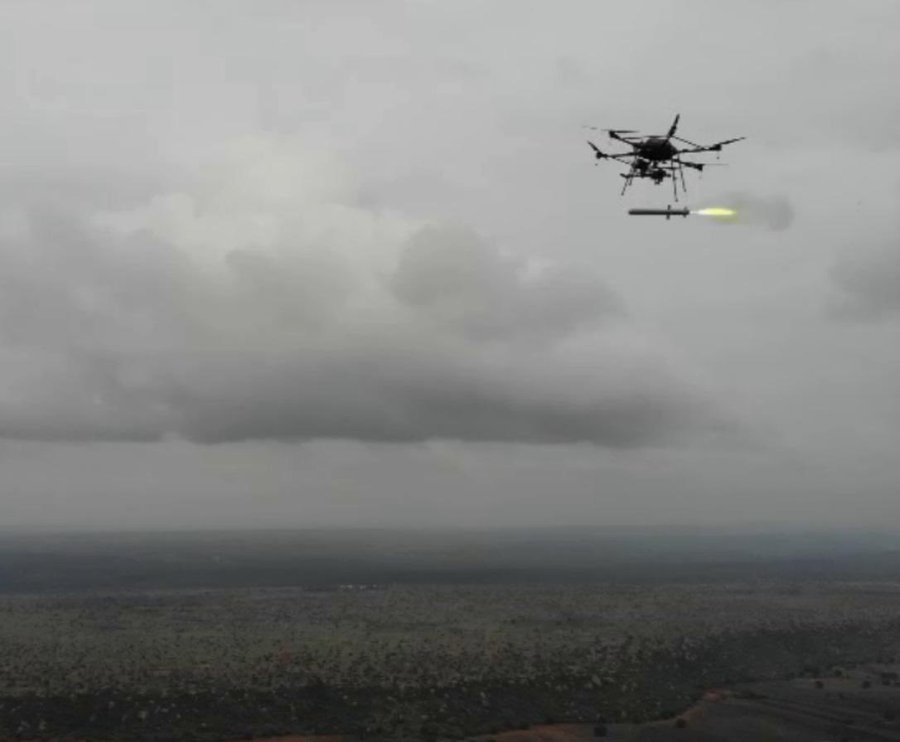
DRDO successfully tests ULPGM V3, an indigenous drone-launched precision missile with advanced infrared seeker tech, enhancing India’s defence capabilities under Atmanirbhar Bharat.
DRDO Successfully Test-Fires ULPGM‑V3: A New Leap in India’s Drone-Launched Precision Strike Capability
The Defence Research & Development Organisation (DRDO) has successfully flight-tested the Unmanned Aerial Vehicle Launched Precision Guided Missile (ULPGM)-V3 at the National Open Area Range (NOAR), Kurnool, Andhra Pradesh—marking a decisive advance in indigenous, drone-delivered precision strike technology. Defence Minister Rajnath Singh announced the success, underscoring its strategic value for India’s armed forces.
What Exactly Is ULPGM‑V3?
ULPGM‑V3 is an enhanced, extended-range iteration of DRDO’s earlier ULPGM series (V1/V2), featuring advanced seeker technologies for high-precision, day–night targeting. Reports note passive homing via an imaging infrared seeker and a high-definition dual-channel seeker architecture—capabilities that substantially improve accuracy against varied targets.
Key Technical Highlights You Should Remember for Exams
According to multiple outlets, the missile is a compact, fire‑and‑forget, air‑to‑surface weapon powered by a dual‑thrust solid propulsion unit, weighing roughly 12.5 kg, and reportedly offering multiple warhead options to defeat modern armour—details that are ripe for prelim/mains facts, as well as for descriptive answers in defence, S&T, and internal security papers.
Indigenisation, Start-Up Participation, and MSME Linkages
The test is not just a technology milestone—it is also an “Atmanirbhar Bharat” case study. Media coverage highlights participation from MSMEs and startups alongside DRDO, reinforcing questions around defence industrial base, Make in India, strategic autonomy, and technology diffusion—frequent themes in UPSC, State PSC, and MBA/Banking GA sections.
Why a Drone-Launched Precision Missile Matters Operationally
A UAV-borne, precision-guided, fire-and-forget missile gives commanders a low-signature, high-precision, and rapidly deployable option for time-sensitive targets, especially in contested or denied environments. It integrates seamlessly with India’s growing unmanned ecosystem, enabling standoff engagements with reduced risk to pilots—a doctrinal point that can enrich mains answers on modern warfare, air power, and counter‑armour tactics.
Strategic Significance for Multiple Exams
For Banking/SSC/Railways aspirants, ULPGM‑V3 is a high-probability one-liner (who tested, what, where, and why). For UPSC CSE/State PSC, it ties into defence R&D ecosystems, indigenous seeker tech, dual-use innovation, and India’s evolving UAV doctrine. For Defence and Police exams, it fits into internal security/technology modernisation discourses. Teachers’ recruitment exams (GA/Current Affairs) may also test the acronym expansion, the test location, and the indigenous nature of the system.
B) Why This News Is Important
Boost to Indigenous Defence R&D and Atmanirbhar Bharat
ULPGM‑V3’s successful test showcases India’s maturing capacity to design, develop, and validate sophisticated seeker and guidance technologies domestically—central to the exam themes of self-reliance, defence indigenisation, and strategic autonomy.
Operational Edge Through UAV-Launched Precision Strikes
By enabling accurate day–night engagements from unmanned platforms, India widens its standoff strike options while minimising pilot risk—an operational doctrine shift you can quote in essays on modern warfare, internal security, and force modernisation.
Rich Fact File for Objective Questions
The where (NOAR, Kurnool), what (ULPGM‑V3), who (DRDO + MSMEs/startups), and when (July 25, 2025 announcement) form a compact, high-yield fact set for prelims and MCQs across SSC, Banking, Railways, Defence, and Teaching exams.
C) Historical Context
From ULPGM‑V1/V2 to V3: An Evolution of Seeker, Range, and Precision
PIB and national dailies note that ULPGM‑V3 is an enhanced version of the earlier V2, reflecting DRDO’s iterative development pathway—progressively upgrading seekers, propulsion, and warhead options to address modern armoured and hardened targets. This trajectory mirrors India’s broader post‑2014 thrust on indigenous PGMs, loitering munitions, and UAV ecosystems—context you can connect to larger reforms like iDEX, Make I/II, and SRIJAN portals in mains answers.
D) Key Takeaways from “DRDO’s ULPGM‑V3 Drone-Launched Missile Test”
| S.No. | Key Takeaway |
|---|---|
| 1 | DRDO successfully flight‑tested the UAV‑Launched Precision Guided Missile (ULPGM)‑V3 at NOAR, Kurnool, Andhra Pradesh. |
| 2 | ULPGM‑V3 is an enhanced/extended‑range version over V2, featuring advanced seekers (including imaging IR / dual‑channel) for day–night precision. |
| 3 | The missile is compact, fire‑and‑forget, and reportedly ~12.5 kg with a dual‑thrust solid propulsion unit and multiple warhead options. |
| 4 | The programme reflects deep MSME/startup participation, strengthening India’s defence‑industrial base and Atmanirbhar Bharat push. |
| 5 | High MCQ value facts: name (ULPGM‑V3), developer (DRDO), location (NOAR Kurnool), date (July 25, 2025 announcement), and role (drone‑launched precision strike). |
FAQs: Frequently Asked Questions
Q1. What is ULPGM‑V3?
ULPGM‑V3 stands for Unmanned Aerial Vehicle Launched Precision Guided Missile Version 3. It is an advanced, indigenous, air-to-surface missile developed by DRDO, designed to be launched from drones for precision strikes on ground targets.
Q2. Who developed the ULPGM‑V3 missile?
The Defence Research and Development Organisation (DRDO), in collaboration with Indian startups and MSMEs, developed the ULPGM‑V3.
Q3. Where was the ULPGM‑V3 tested?
It was flight-tested at the National Open Air Range (NOAR), located in Kurnool, Andhra Pradesh.
Q4. What are the key features of ULPGM‑V3?
Key features include:
- Compact fire-and-forget missile
- High-precision targeting with dual-channel IR seeker
- Capability to engage in day and night conditions
- Suitable for drone deployment
- Indigenous development under ‘Atmanirbhar Bharat’
Q5. Why is ULPGM‑V3 important for India’s defence preparedness?
ULPGM‑V3 boosts India’s indigenous defence manufacturing capabilities, adds to drone-based warfare systems, and provides standoff precision strike capabilities without endangering pilot lives.
Q6. What are some similar indigenous DRDO developments?
Similar developments include:
- HELINA and Dhruvastra anti-tank missiles
- Nag missile system
- Smart Anti-Airfield Weapon (SAAW)
- Pinaka rocket system
Q7. What exams may ask questions related to ULPGM‑V3?
This topic is relevant for UPSC CSE (GS Paper III), CDS/AFCAT, CAPF, SSC CGL, Railways, Banking Awareness, and State PSC exams.
Some Important Current Affairs Links