









Current account deficit in India 2025 has declined sharply according to RBI data. Learn causes, economic impact, key facts, MCQs and exam-relevant insights for UPSC, SSC, Banking and PSC exams.
RBI Reports Sharp Fall in India’s Current Account Deficit in 2025
India’s External Sector Shows Improvement
The Reserve Bank of India (RBI) has reported a significant decline in India’s Current Account Deficit (CAD) during the April–December period of 2025. According to the latest Balance of Payments data released by the central bank, the CAD narrowed to $30.1 billion, which is about 1% of India’s GDP, compared to $36.6 billion in the same period of the previous year. This decline reflects an improvement in India’s external sector performance and stronger economic stability.
Growth in Services Exports and Remittances
One of the main reasons behind the decline in the current account deficit is the strong growth in services exports, particularly in sectors such as information technology, financial services, and professional services. India has been one of the world’s largest exporters of IT and digital services, which generate substantial foreign exchange earnings.
In addition to services exports, remittances from Indians working abroad also contributed significantly to improving the current account balance. Remittances represent a major inflow of foreign currency and help offset the deficit caused by higher imports.
Role of Foreign Direct Investment (FDI)
Another key factor supporting the improvement in the external sector was the increase in Foreign Direct Investment (FDI) inflows into India. Net FDI inflows rose during the period, reflecting greater investor confidence in India’s economic prospects. These inflows help finance the current account deficit and contribute to the country’s overall balance of payments stability.
However, the data also showed that Foreign Portfolio Investment (FPI) experienced some outflows due to global economic uncertainties. Despite this, the increase in long-term FDI inflows helped maintain a stable external account position.
Changes in Forex Reserves and Capital Flows
The report also highlighted fluctuations in foreign exchange reserves and capital flows. While forex reserves are influenced by global currency valuation and capital movements, the RBI continues to monitor them carefully to ensure macroeconomic stability.
Overall, the narrowing of the current account deficit indicates that India’s external sector remains resilient despite global economic uncertainties such as geopolitical tensions, oil price fluctuations, and international trade challenges. A lower deficit generally reduces pressure on the domestic currency and strengthens investor confidence in the economy.

Why This News is Important
Significance for India’s Economic Stability
The decline in India’s current account deficit is important because it signals improved economic stability and stronger external sector management. A lower CAD means that the country’s imports and external payments are better balanced with its export earnings and foreign inflows. This helps reduce dependence on external borrowing and protects the economy from sudden global financial shocks.
Impact on Currency and Foreign Exchange Reserves
A manageable current account deficit also helps maintain stability in the Indian rupee and foreign exchange reserves. When the deficit is high, it may lead to pressure on the currency because the country needs more foreign currency to pay for imports. A lower CAD helps the RBI maintain stronger reserves and reduces the risk of currency volatility.
Importance for Policy Makers and Investors
For policymakers and investors, this development indicates growing confidence in India’s economic fundamentals. Strong services exports, stable remittances, and consistent FDI inflows highlight India’s growing role in the global economy. This also supports long-term economic goals such as higher GDP growth, increased employment, and improved trade competitiveness.
For students preparing for competitive exams like UPSC, SSC, Banking, Railways, and State PSC, understanding the current account deficit and its implications is important for questions related to macroeconomic indicators and India’s balance of payments.
Historical Context: India’s Current Account Deficit
India’s current account deficit has historically fluctuated depending on factors such as oil import prices, global trade conditions, and capital inflows. Since India imports large quantities of crude oil, gold, and electronic goods, its merchandise trade balance often remains negative.
However, the deficit is partly offset by strong earnings from services exports and remittances from the Indian diaspora. For example, India’s services sector—especially IT services—has consistently generated significant foreign exchange earnings over the past two decades.
In recent years, policymakers and the RBI have focused on maintaining the CAD within manageable levels of around 1–2% of GDP, which is considered sustainable for a developing economy. Economic reforms, diversification of exports, and increasing foreign investments have helped improve India’s external sector resilience.
Key Takeaways from This News
| S.No | Key Takeaway |
|---|---|
| 1 | India’s Current Account Deficit declined to $30.1 billion (1% of GDP) during April–December 2025. |
| 2 | The deficit was $36.6 billion in the same period last year, showing a significant improvement. |
| 3 | Strong services exports and remittances helped reduce the deficit. |
| 4 | Foreign Direct Investment (FDI) inflows increased, boosting India’s balance of payments position. |
| 5 | The improvement indicates greater stability in India’s external sector and macroeconomic outlook. |
FAQs Related to RBI Report on India’s Current Account Deficit
1. What is the Current Account Deficit (CAD)?
The Current Account Deficit refers to the situation when a country’s total value of imports of goods, services, and transfers exceeds the total value of its exports. It is a key component of the Balance of Payments that measures a nation’s external trade position.
2. Which institution releases India’s Current Account Deficit data?
India’s current account deficit data is officially released by the Reserve Bank of India through its Balance of Payments statistics.
3. What was India’s CAD during April–December 2025 according to the RBI report?
India’s CAD declined to $30.1 billion (about 1% of GDP) during April–December 2025, compared to $36.6 billion during the same period in the previous year.
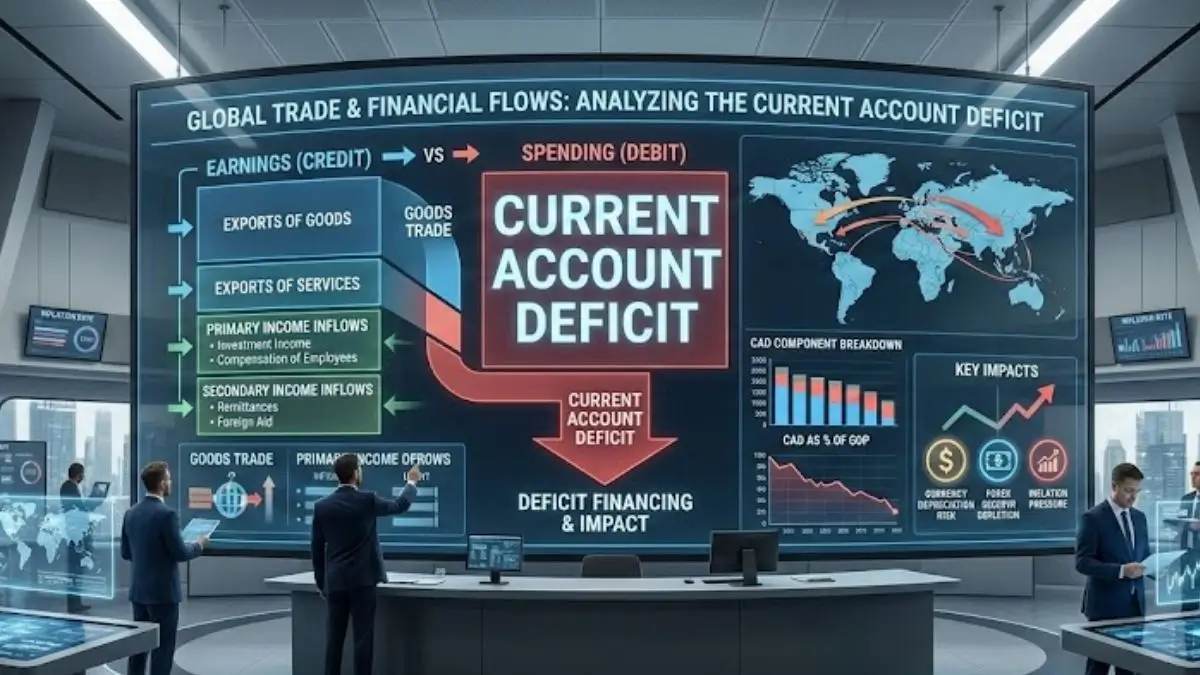
4. What are the main components of the current account?
The current account mainly includes:
- Trade in goods (exports and imports)
- Trade in services
- Primary income (investment income, interest, dividends)
- Secondary income (remittances and transfers)
5. Why is a lower Current Account Deficit considered positive for the economy?
A lower CAD indicates that a country is earning enough from exports and foreign inflows to cover its imports, which improves macroeconomic stability and reduces pressure on foreign exchange reserves.
6. What role do remittances play in reducing CAD?
Remittances from Indians working abroad bring foreign currency into the country, which helps offset the trade deficit and improve the current account balance.
7. How do services exports help India’s current account?
India is a global leader in IT and professional services exports. Earnings from these sectors generate large amounts of foreign exchange, helping to reduce the current account deficit.
8. What is the relationship between CAD and GDP?
The CAD is often measured as a percentage of GDP to assess sustainability. A CAD below 2–2.5% of GDP is generally considered manageable for a developing economy like India.
Some Important Current Affairs Links