





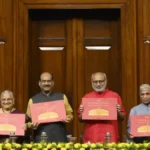


Cashless Ayurveda insurance coverage begins as AIIA signs MoU with General Insurance Council, enabling insured patients to access Ayurvedic treatment and boosting Ayush healthcare integration.
AIIA Signs Landmark MoU with General Insurance Council to Enable Cashless Ayurveda Treatment Across India
In a major milestone for the Indian health sector, the All India Institute of Ayurveda (AIIA) in New Delhi, functioning under the Ministry of Ayush, has signed a Common Empanelment Memorandum of Understanding (MoU) with the General Insurance Council (GIC). This historic agreement was formalized on 10 February 2026, marking the first time an Ayush institute has been empanelled with all major general insurance companies in the country.
Under this MoU, AIIA now becomes eligible to provide cashless treatment services for patients insured under any of the 32 insurance companies affiliated with the General Insurance Council. This significant development ensures that individuals seeking Ayurvedic care at AIIA can benefit from insurance coverage without having to make upfront payments for eligible treatment services.
What the MoU Means for Patients and Policyholders
Prior to this initiative, Ayurvedic treatments often required out-of-pocket expenditure for patients, with reimbursement claims filed later — a process that was sometimes cumbersome and time-consuming. With the empanelment now in place, patients visiting AIIA can access treatment on a cashless basis, meaning insurance claims will be directly settled with the insurer by the institute. This is expected to make Ayurvedic treatment more accessible, economical, and patient-friendly.
During the signing ceremony, Prof. (Vaidya) P. K. Prajapati, Director of AIIA, highlighted that this step would significantly improve patient trust and acceptance of Ayurveda services across the country. He emphasized that the alliance between AIIA and general insurers would encourage more people to opt for traditional healthcare solutions backed by financial protection.
Ayush Insurance Awareness and Support Services
Alongside the MoU, the Ministry of Ayush also launched a dedicated Ayush Health Insurance Helpline. This helpline is designed to assist beneficiaries with queries related to insurance coverage, claims, and procedures. It aims to support patients in understanding their insurance benefits and to simplify the cashless treatment process.
This initiative not only represents a major stride in mainstreaming Ayurvedic healthcare but also reflects a broader push by the government to integrate traditional systems of medicine into the modern healthcare insurance framework. It is likely to encourage other Ayush institutions to seek similar partnerships with insurance providers, widening the scope of insured Ayurvedic services in India.

Why This News Is Important for Exam Aspirants
Significance in Healthcare Integration and Public Policy
The signing of the MoU between the All India Institute of Ayurveda (AIIA) and the General Insurance Council marks a policy breakthrough in India’s healthcare sector. Traditionally, mainstream health insurance in India has focused on modern allopathic treatments, often excluding alternative systems like Ayurveda from comprehensive coverage.
This development is highly relevant for students preparing for government exams such as UPSC Civil Services, State PSCs, Banking, SSC, Railways, and Defence because it reflects a strategic government initiative to integrate traditional medicine with formal healthcare infrastructure and financial mechanisms. Such integration directly supports two important themes that frequently appear in competitive exams: 1) Government healthcare policy reforms and 2) Promotion of Ayush systems under national health goals.
The initiative also exemplifies how the Indian state works with industry bodies (like the General Insurance Council) to execute reforms aimed at enhancing healthcare accessibility and affordability for citizens. Aspirants preparing for policy-oriented questions should understand the broader implications:
- How insurance inclusion can promote preventative and alternative healthcare
- The role of public-private partnerships in expanding healthcare coverage
- Government strategies to build trust and infrastructure for Ayush healthcare
Understanding this news equips aspirants with insights into India’s evolving health insurance landscape, a topic that comes up under Static + Current Affairs in healthcare, economic policy, and governance sections of competitive exams.
Historical Context: Evolution of Ayurveda and Insurance in India
Ayurveda’s Journey into Mainstream Healthcare
Ayurveda, one of India’s oldest traditional healthcare systems, has been officially recognized by the Government of India through the Ministry of Ayush, established in 2014 (initially as the Department of Ayush). Over the past decade, sustained efforts have been made to integrate Ayurveda, Yoga, Unani, Siddha, and Homeopathy (AYUSH) into the national health framework.
Despite its growing popularity, insurance coverage for Ayurvedic treatments has historically lagged behind allopathic medicine. While some policies offered limited Ayush coverage, these were often restricted to in-patient care (IPD) and excluded outpatient services (OPD), leading to significant out-of-pocket expenses for patients.
The current MoU between AIIA and the General Insurance Council represents a first-of-its-kind institutional alignment between an Ayush institute and the mainstream insurance ecosystem. It builds on earlier government efforts to expand health insurance coverage and promote traditional medicine as a viable, insured healthcare option.
This milestone is especially important in the context of public healthcare reforms that aim to provide universal health coverage and include traditional systems within that ambit—a topic often tested in examinations under social policy and healthcare governance.
Key Takeaways from AIIA–GIC MoU on Cashless Ayurveda Treatment
| S.No. | Key Takeaway |
|---|---|
| 1 | AIIA signed a MoU with the General Insurance Council to provide cashless Ayurveda treatment. |
| 2 | The empanelment covers 32 general insurance companies under the GIC. |
| 3 | Patients visiting AIIA can avail eligible Ayurvedic treatment on a cashless basis. |
| 4 | A dedicated Ayush Health Insurance Helpline was launched to assist beneficiaries. |
| 5 | This move supports the government’s goal to integrate Ayush with mainstream health insurance and enhance affordability. |
FAQs for Exam Preparation
Q1. What is the main objective of the MoU between All India Institute of Ayurveda and the General Insurance Council?
The main objective is to enable cashless Ayurvedic treatment for insured patients, integrating Ayurveda into the mainstream health insurance ecosystem and reducing out-of-pocket healthcare expenses.
Q2. Under which ministry does AIIA function?
AIIA functions under the Ministry of Ayush, which promotes traditional systems of medicine such as Ayurveda, Yoga, Unani, Siddha, and Homeopathy.
Q3. How does this MoU benefit patients seeking Ayurvedic treatment?
Patients can avail cashless treatment at AIIA if they are insured under participating companies. This simplifies the claim process and makes Ayurveda more affordable and accessible.
Q4. Why is this development important for India’s healthcare system?
It promotes integration of traditional medicine with modern insurance frameworks, supporting universal health coverage and strengthening public trust in Ayush systems.
Q5. How is this news relevant for competitive exams?
It relates to government healthcare reforms, public policy, Ayush promotion, and insurance sector developments—topics frequently asked in UPSC, State PSC, SSC, banking, and defence exams.
Q6. What broader impact can this initiative have on Ayush institutions?
It may encourage other Ayush hospitals to collaborate with insurers, expanding insured traditional healthcare services across India.
Some Important Current Affairs Links