
August 2026 rule changes include LPG price revision, Railway Tatkal booking updates, CKYC 2.0 rollout, banking changes, and ITR deadline details. Read this complete current affairs article with FAQs, MCQs, key takeaways, and exam-oriented analysis for UPSC, SSC, Banking, Railways, Defence, PCS, and IAS aspirants.
Introduction
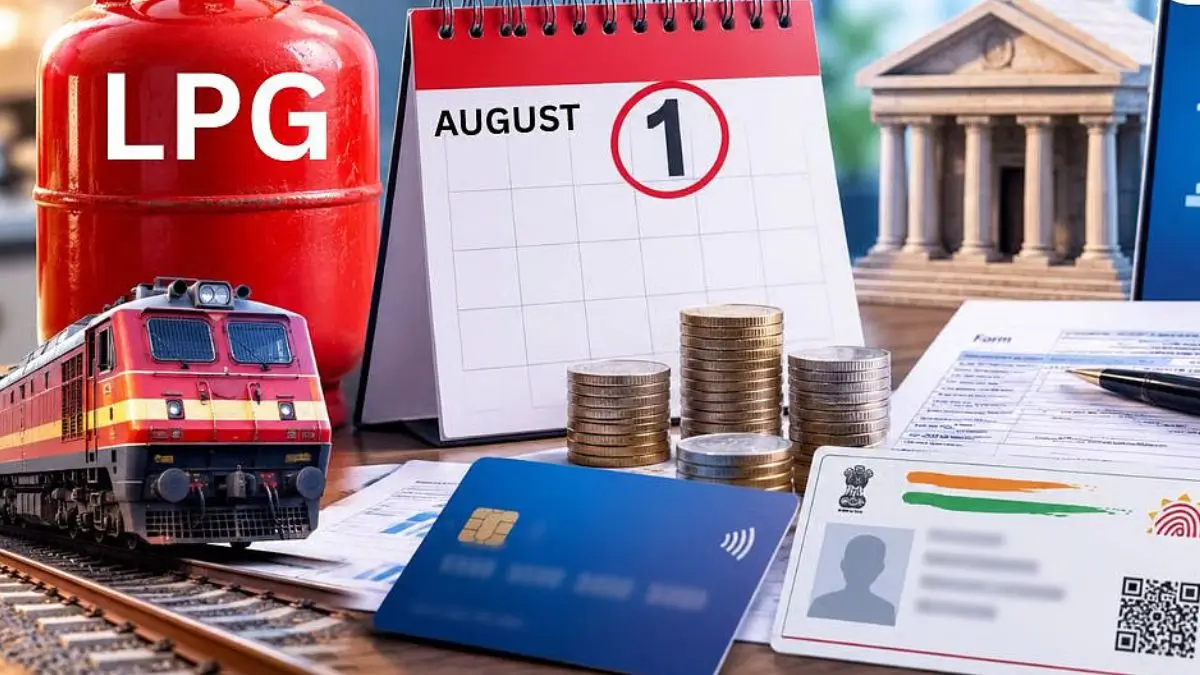
Several important financial and administrative rule changes are scheduled to take effect from 1 August 2026, affecting millions of citizens across India. These changes cover LPG cylinder prices, Railway Tatkal ticket booking, Income Tax Return (ITR) filing, banking services, and the implementation of CKYC 2.0. Together, these reforms aim to improve transparency, strengthen digital governance, enhance customer security, and simplify public services. They are also highly relevant for aspirants preparing for competitive examinations such as UPSC, State PSCs, SSC, Banking, Railways, Defence, and other government recruitment exams.
LPG Cylinder Prices to be Revised
As is customary on the first day of every month, public sector oil marketing companies will revise the prices of domestic and commercial LPG cylinders based on international fuel prices and other market factors. Any increase or decrease in LPG prices directly impacts household budgets as well as commercial establishments such as restaurants and small businesses.
Candidates preparing for government exams should remember that LPG prices in India are revised periodically by oil marketing companies based on global crude oil prices, exchange rates, and domestic policy decisions.
Railway Tatkal Ticket Booking Rules Simplified
Indian Railways has introduced a simplified Tatkal booking process from 1 August 2026 to reduce congestion at reservation counters. Under the revised arrangement, passengers will receive booking tokens in a streamlined manner, eliminating unnecessary waiting and improving queue management.
The reform aims to provide a smoother ticket booking experience, reduce crowding at railway reservation centres, and enhance passenger convenience during peak demand periods. Since Indian Railways remains one of the world’s largest public transport systems, such operational reforms frequently appear in competitive examinations.
Income Tax Return Deadline and Compliance
Taxpayers must remain cautious regarding the Income Tax Return (ITR) filing deadline. Delayed filing may attract penalties ranging from ₹1,000 to ₹5,000, depending on eligibility and applicable provisions.
The government continues to encourage timely tax compliance through digital filing systems. Questions related to ITR deadlines, tax administration, and digital governance are commonly asked in banking and civil service examinations.
Banking and Credit Card Rule Changes
Many banks periodically revise their credit card reward programmes, service charges, interest rates, and fixed deposit policies at the beginning of a month. Customers should carefully review communications from their respective banks to understand any revisions affecting their accounts.
Additionally, the Reserve Bank of India’s Monetary Policy Committee (MPC) meeting beginning in early August may influence future lending rates, EMIs, and deposit interest rates depending on policy decisions. Banking awareness sections in competitive examinations frequently include questions on such regulatory developments.
CKYC 2.0 to Strengthen Customer Verification
A major financial sector reform is the rollout of CKYC 2.0 (Central Know Your Customer). The upgraded system introduces stronger digital verification mechanisms, Aadhaar-linked customer authentication with consent, improved fraud prevention measures, and enhanced protection of customer information.
The objective is to create a unified and secure KYC framework across banks, insurance companies, mutual funds, and other regulated financial institutions. CKYC 2.0 supports India’s broader Digital India and financial inclusion initiatives by making customer verification more efficient and secure.
Significance for Government Examination Aspirants
These rule changes demonstrate India’s ongoing efforts toward digital governance, financial sector reforms, improved public service delivery, and stronger consumer protection. Aspirants should understand not only the factual changes but also their objectives and implications, as questions may appear in General Awareness, Economy, Current Affairs, Banking Awareness, and Governance sections of competitive examinations.

Why this News is Important
Important for Banking and Economy
The rule changes highlight the government’s continuous efforts to modernize India’s financial ecosystem. Reforms like CKYC 2.0, periodic banking updates, and improved tax compliance strengthen transparency, reduce fraud, and improve customer convenience. These developments are significant for candidates appearing in banking examinations, where current financial regulations are frequently tested.
Relevant for Current Affairs and Governance
Changes in LPG pricing, Railway Tatkal booking, and tax administration demonstrate how government policies directly affect citizens’ daily lives. Understanding these reforms helps candidates answer questions on governance, public administration, digital transformation, and economic policy.
Frequently Asked in Competitive Exams
Government examinations regularly include questions on:
- Financial sector reforms
- Digital India initiatives
- Railway reforms
- Tax administration
- Banking regulations
- Consumer protection
- Public service delivery
Studying these developments enables aspirants to connect current events with static concepts in economics, governance, and public administration.
Historical Context
Evolution of Monthly LPG Price Revisions
India has followed a system of periodic LPG price revisions by oil marketing companies to reflect international crude oil prices and domestic economic conditions. This pricing mechanism promotes market-based adjustments while balancing consumer interests.
Growth of Digital Banking and KYC
The Reserve Bank of India and financial regulators have progressively strengthened Know Your Customer (KYC) norms to prevent money laundering, identity theft, and financial fraud. CKYC was introduced to create a centralized customer database, and CKYC 2.0 represents the next phase of this digital transformation with enhanced security and interoperability.
Modernisation of Railway Services
Indian Railways has undertaken several reforms over the years, including online reservations, e-ticketing, dynamic pricing, and improvements to Tatkal booking. The latest simplification aims to reduce crowding and improve passenger convenience.
Key Takeaways from “August 1, 2026 Rule Changes”
| S. No. | Key Takeaway |
|---|---|
| 1 | LPG cylinder prices are scheduled for revision from 1 August 2026. |
| 2 | Indian Railways has simplified the Tatkal ticket booking process to improve passenger convenience. |
| 3 | Delayed Income Tax Return filing may attract penalties under applicable tax rules. |
| 4 | Banks may revise credit card benefits, service charges, and deposit-related policies at the beginning of August. |
| 5 | CKYC 2.0 introduces a more secure and unified digital customer verification system across financial institutions. |
FAQs: Frequently Asked Questions (FAQs)
1. What are the major rule changes effective from August 1, 2026?
The major changes include revisions in LPG cylinder prices, new Railway Tatkal booking rules, banking and credit card updates, Income Tax Return (ITR) filing deadline-related provisions, and the rollout of CKYC 2.0.
2. Why are LPG cylinder prices revised every month?
LPG prices are revised by Oil Marketing Companies (OMCs) on the first day of every month based on international crude oil prices, exchange rates, transportation costs, and other market factors.
3. What is the objective of the new Railway Tatkal booking rules?
The revised Tatkal booking system aims to improve transparency, reduce misuse by agents and bots, enhance passenger convenience, and make ticket booking more secure and efficient.
4. What is CKYC 2.0?
CKYC 2.0 (Central Know Your Customer 2.0) is an upgraded centralized KYC system that enhances digital customer verification, improves data security, and simplifies KYC compliance across financial institutions.
5. Which organization manages the Central KYC Registry?
The Central Registry of Securitisation Asset Reconstruction and Security Interest of India (CERSAI) manages the Central KYC Registry under the supervision of the Government of India.
6. Why is CKYC important for banking exams?
CKYC is an important topic because it relates to financial regulation, digital banking, anti-money laundering (AML), customer verification, and financial inclusion—all frequently asked in banking and insurance examinations.
7. What happens if taxpayers fail to file their Income Tax Return within the prescribed deadline?
Late filing may result in penalties, interest on unpaid tax (if applicable), and restrictions on carrying forward certain losses, depending on the provisions of the Income Tax Act.
8. Which competitive exams can include questions on these rule changes?
Questions may appear in UPSC, State PSC, SSC CGL, SSC CHSL, Banking (IBPS, SBI, RBI), Railways (RRB), Defence (NDA, CDS, AFCAT), Insurance (LIC, NIACL), and other government recruitment examinations.
9. Why are monthly banking rule changes important?
Banks periodically revise service charges, credit card benefits, interest rates, and other customer policies. Such changes are important from both a financial awareness and examination perspective.
10. Which ministry is responsible for the administration of Income Tax in India?
The Ministry of Finance, through the Central Board of Direct Taxes (CBDT) under the Department of Revenue, administers the Income Tax system in India.
Some Important Current Affairs Links