




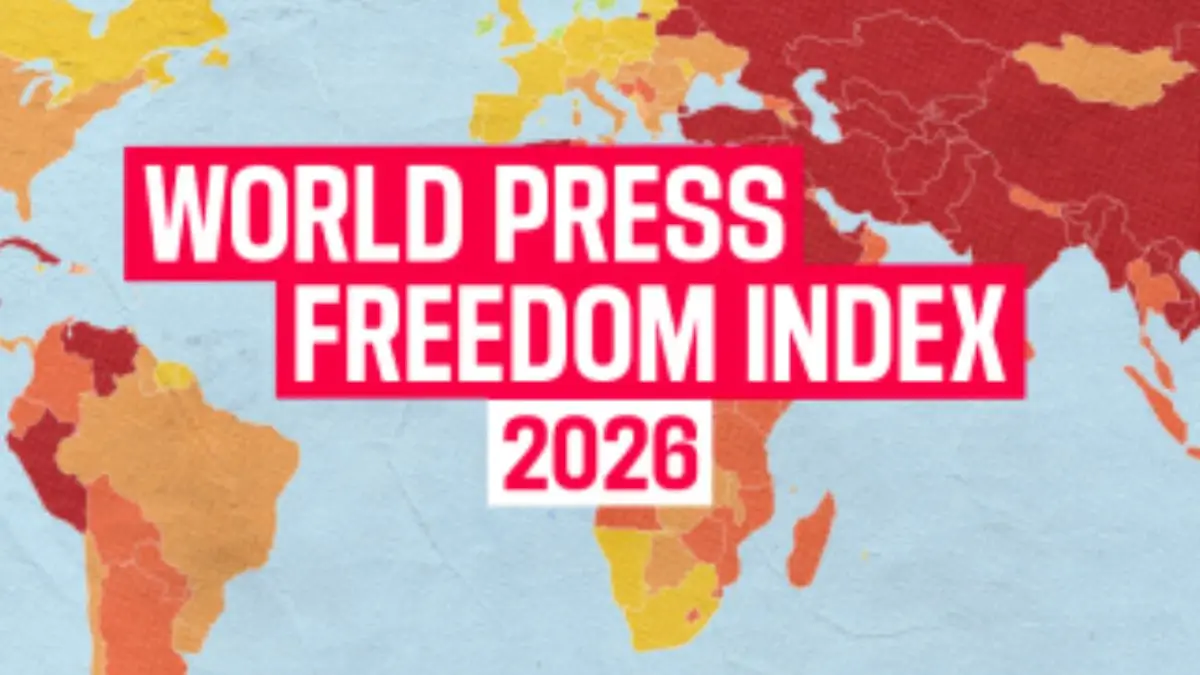
World Press Freedom Index 2026 report highlights global press freedom decline at record low, published by RSF. Know key findings, causes, rankings, and exam relevance for UPSC and competitive exams.
World Press Freedom Index 2026 Reveals Alarming Decline
The World Press Freedom Index 2026, released by Reporters Without Borders (RSF), has highlighted a disturbing global trend—press freedom has fallen to its lowest level in the last 25 years. The report evaluates 180 countries and shows that more than half of them now fall into the “difficult” or “very serious” categories for media freedom, reflecting a growing crisis for journalism worldwide.
⚖️ Increasing Legal and Political Pressure on Media
According to the RSF report, the decline is mainly driven by increasing misuse of national security laws, political interference, and legal restrictions targeting journalists. The legal environment for journalism has deteriorated the most, making it increasingly difficult for reporters to work independently and safely in many countries.
📉 Sharp Decline in Global Press Freedom Scores
The average global score for press freedom has never been so low since the index was first published. The report states that journalism is facing “systematic pressure,” including economic instability of media houses and growing hostility from political authorities, which has contributed to the steady decline over the years.
🌐 Regional Trends and Global Ranking Changes
The report also highlights major regional shifts. While countries like Norway continue to rank at the top for press freedom, several countries, including those in the Americas and Asia, have seen significant drops in rankings. In contrast, authoritarian environments continue to restrict media operations, making journalism increasingly dangerous in conflict zones.
⚠️ Journalism Under Global Threat
RSF warns that journalism is being “criminalised worldwide,” with journalists facing imprisonment, censorship, harassment, and even violence. The shrinking space for free media is considered a major threat to democracy and transparency across the world.

📌 Why this News is Important
🧑🎓 Relevance for Government Exam Aspirants
This news is highly important for students preparing for UPSC, State PSCs, SSC, Banking, Railways, Defence, and other competitive exams because it directly relates to international organizations, global governance, and human rights issues. Questions based on press freedom, democracy index, and media rights are frequently asked in current affairs sections.
🏛️ Link with Democracy and Governance
Press freedom is considered the fourth pillar of democracy, along with the legislature, executive, and judiciary. A decline in press freedom indicates weakening democratic values, lack of transparency, and reduced accountability of governments.
🌍 Global Significance
The report highlights rising authoritarian trends across countries, making it an important topic for understanding global political developments. It also reflects how laws, politics, and economic pressures can influence media independence.
📚 Exam Utility
For exams like UPSC CSE, CDS, CAPF, Banking PO, and SSC CGL, this topic helps in Essay writing, GS Paper-II (Governance), and International Relations sections.
🕰️ Historical Context
The World Press Freedom Index is published annually by Reporters Without Borders (RSF) and has been tracking global press conditions since 2002. It evaluates countries based on political, legal, economic, sociocultural, and safety indicators for journalists.
Over the past two decades, the index has shown a gradual but steady decline in global media freedom, driven by increasing censorship laws, political interference, and attacks on journalists. Earlier reports showed a relatively higher percentage of countries with “good” press freedom, but in 2026, this number has fallen to below 1% of the global population living in free media environments.
Historically, democratic countries were considered safe havens for journalism, but recent trends show that even established democracies are facing challenges like SLAPP lawsuits, digital surveillance, and economic pressure on media organizations.
📊 Key Takeaways from “World Press Freedom Index 2026 Report”
| S.No | Key Takeaway |
|---|---|
| 1 | Global press freedom has reached its lowest level in 25 years according to RSF 2026 report. |
| 2 | More than 50% of countries fall under “difficult” or “very serious” press freedom categories. |
| 3 | Legal restrictions and misuse of national security laws are the biggest reasons for decline. |
| 4 | Journalism is increasingly facing criminalisation, censorship, and threats worldwide. |
| 5 | Press freedom is shrinking even in democratic nations, affecting global media independence. |
FAQs (Frequently Asked Questions)
1. What is the World Press Freedom Index?
The World Press Freedom Index is an annual report published by Reporters Without Borders (RSF) that ranks countries based on the level of media freedom, safety of journalists, and independence of press institutions.
2. Which organization releases the Press Freedom Index?
The index is released by Reporters Without Borders (RSF), an international non-profit organization working to promote and defend press freedom worldwide.
3. Why has global press freedom declined in 2026?
According to the report, the decline is due to increased political interference, misuse of national security laws, economic pressure on media, censorship, and rising threats against journalists.
4. Which country ranks highest in press freedom?
Nordic countries like Norway consistently rank at the top due to strong democratic institutions, legal protections, and independent media systems.
5. Why is press freedom important for democracy?
Press freedom ensures transparency, accountability of governments, informed citizens, and protection of democratic values by enabling free flow of information.
6. How is this report important for competitive exams?
It is important for UPSC, SSC, Banking, Railways, and State PSC exams as it covers international organizations, governance, human rights, and current global indices.
Some Important Current Affairs Links