









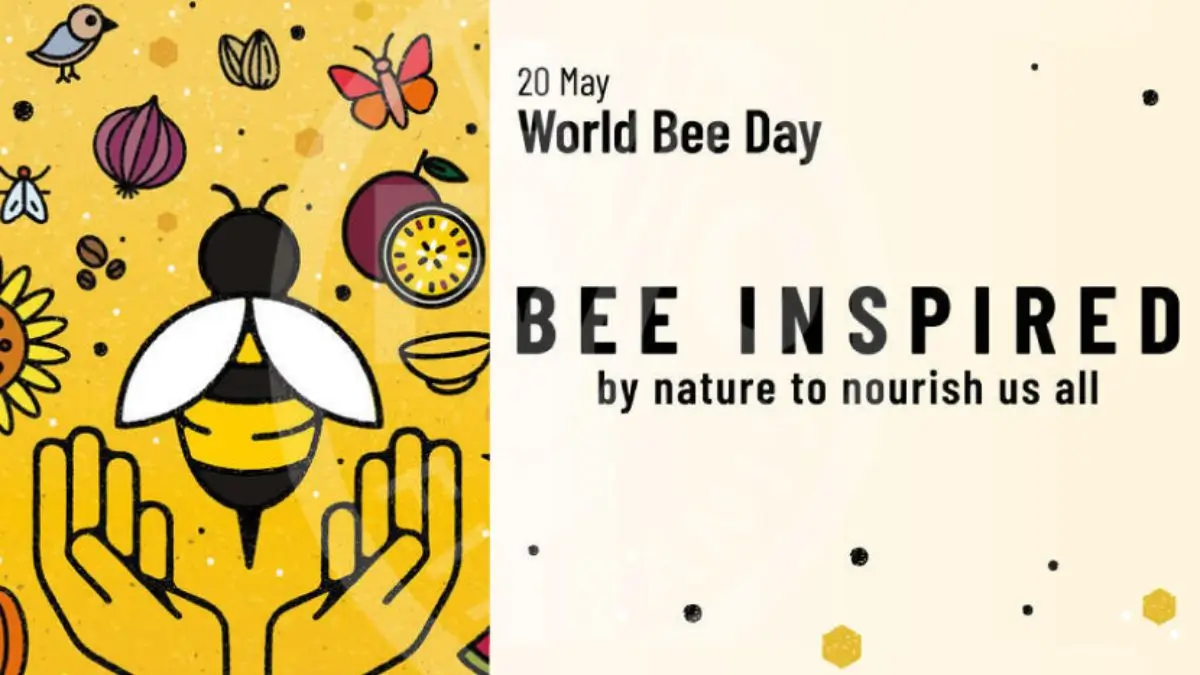
World Bee Day 2026 theme significance highlights the role of bees in agriculture, food security, and biodiversity. Learn history, importance, and key facts for UPSC and competitive exams.
World Bee Day 2026 Theme: Bee Together for People and the Planet
The official theme for World Bee Day 2026 is:
👉 “Bee together for people and the planet – A partnership that sustains us all”
This theme highlights the long-standing relationship between humans and bees. It emphasizes:
- The interdependence between agriculture and pollination
- The importance of sustainable beekeeping practices
- Integration of traditional knowledge with modern technology
- The role of women, youth, and rural communities in beekeeping
The theme also aligns with global sustainability goals such as food security, biodiversity conservation, and climate resilience.
🌼 Importance of World Bee Day in Modern Times
World Bee Day is not just symbolic; it is a critical reminder of ecological challenges.
Bees contribute to:
- Nearly 75% of global crop pollination
- Improved agricultural productivity and food quality
- Maintenance of biodiversity and natural ecosystems
However, bee populations are rapidly declining due to:
- Climate change
- Excessive pesticide use
- Habitat destruction
- Pollution and invasive species
The day encourages global action to protect pollinators, ensuring sustainable agriculture and ecosystem stability.
📜 History and Background of World Bee Day
World Bee Day has a strong international background:
- Proposed by Slovenia to the United Nations
- Supported by Apimondia (International Federation of Beekeepers’ Associations)
- Officially declared by the United Nations General Assembly in 2017
- First observed globally in 2018
The date 20 May was chosen to honor Anton Janša (1734–1773), a pioneer of modern beekeeping from Slovenia, who is considered one of the founders of scientific apiculture.
Since then, World Bee Day has become a global platform for environmental awareness and sustainable agriculture advocacy.
🌏 Why Bees Matter for the Environment and Economy
Bees are among the most important pollinators on Earth. Their role extends far beyond honey production.
Key contributions of bees:
- Pollination of food crops and wild plants
- Supporting global food security
- Enhancing agricultural income for farmers
- Maintaining ecological balance in natural habitats
In addition, bees contribute significantly to rural livelihoods through honey production and beekeeping industries, making them economically important for developing countries.

📌 Why This News is Important
🌍 Environmental and Agricultural Significance
World Bee Day 2026 is highly relevant for environmental studies and competitive examinations because it highlights the critical role of pollinators in sustaining life on Earth. Bees are responsible for a large share of global crop pollination, making them essential for food production systems. Their decline directly threatens agricultural output, biodiversity, and nutrition security.
🌱 Policy and Global Awareness Perspective
The observance also reflects global policy focus on biodiversity conservation and sustainable development goals (SDGs). Governments and international organizations are increasingly focusing on protecting pollinators through eco-friendly farming practices, reduced pesticide use, and habitat restoration initiatives.
📚 Exam Relevance
For aspirants of UPSC, SSC, Banking, Railways, and State PSC exams, this topic is important under Environment, Ecology, Current Affairs, and International Days sections. Questions may be asked about the theme, date, significance, and historical background of World Bee Day.
🌼 Social and Economic Importance
The day also highlights the role of beekeeping in rural livelihoods, especially for women and farmers. It promotes sustainable agriculture, making it an important topic for socio-economic development understanding in exams.
📜 Historical Context
World Bee Day was established by the United Nations in 2017 following a proposal from Slovenia, with support from Apimondia, the global federation of beekeepers. The initiative aimed to raise awareness about declining bee populations and their importance in maintaining ecosystems.
The date 20 May was chosen to honor Anton Janša, a pioneer of modern beekeeping techniques. He played a key role in developing scientific apiculture practices in the 18th century.
Since its first observance in 2018, World Bee Day has become a global environmental awareness event promoting pollinator conservation and sustainable agriculture practices worldwide.
📊 Key Takeaways from World Bee Day 2026
| S.No | Key Takeaway |
|---|---|
| 1 | World Bee Day is observed every year on 20 May globally |
| 2 | 2026 theme: “Bee together for people and the planet” |
| 3 | Bees play a crucial role in pollinating crops and ensuring food security |
| 4 | The day was officially declared by the UN in 2017 and first observed in 2018 |
| 5 | It highlights threats to bees like pesticides, climate change, and habitat loss |
Frequently Asked Questions (FAQs) on World Bee Day 2026
1. What is World Bee Day and why is it celebrated?
World Bee Day is observed on 20 May every year to raise awareness about the importance of bees and other pollinators in maintaining biodiversity, food security, and ecological balance.
2. Why is 20 May chosen as World Bee Day?
The date 20 May marks the birth anniversary of Anton Janša, a pioneer of modern beekeeping from Slovenia, who contributed significantly to scientific apiculture.
3. Who declared World Bee Day as an international observance?
The United Nations General Assembly (UNGA) officially declared World Bee Day in 2017, and it was first observed globally in 2018.
4. What is the main importance of bees for humans?
Bees are vital for pollination of crops, supporting food production, biodiversity, and agricultural economies. Around 75% of global crops depend on pollinators to some extent.
5. What are the major threats to bee populations?
Key threats include climate change, pesticide use, habitat destruction, pollution, and invasive species, all of which contribute to declining bee populations worldwide.
6. How does World Bee Day help farmers?
It promotes awareness about sustainable farming practices and beekeeping, which improve crop yield and provide additional income through honey production.
7. What is the theme of World Bee Day 2026?
The theme is “Bee together for people and the planet – A partnership that sustains us all.”
Some Important Current Affairs Links