


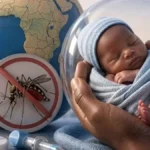





WHO infant malaria drug approval 2026 marks a historic breakthrough as the World Health Organization approves the first-ever malaria treatment specifically designed for newborns and infants, improving global child health and malaria control efforts.
WHO Approves First-Ever Infant-Specific Malaria Drug on World Malaria Day 2026
🧪 WHO’s Historic Approval of Infant-Specific Malaria Drug
The World Health Organization (WHO) has achieved a major breakthrough in global child healthcare by approving the first-ever malaria treatment specifically designed for newborns and young infants. This milestone was announced around World Malaria Day 2026, marking a significant step in addressing one of the most vulnerable groups affected by malaria.
The newly approved drug is a special formulation of artemether-lumefantrine, designed for infants weighing between 2 to 5 kilograms. Earlier, infants were treated using medicines made for older children, which often led to incorrect dosing and higher risks of toxicity.
This approval is especially important for malaria-endemic regions in Africa, where millions of newborns are at risk every year. The drug is expected to improve treatment accuracy, safety, and survival rates among infants suffering from malaria.
🌍 Closing a Critical Treatment Gap in Global Health
For decades, doctors have struggled with a major gap in malaria treatment for newborns. Since no dedicated medicine existed, healthcare workers had to rely on scaled-down doses of pediatric drugs, which were not medically ideal.
WHO’s approval now enables international agencies and governments to procure and distribute an infant-safe antimalarial medicine, ensuring better healthcare delivery in rural and high-risk regions.
This development also supports WHO’s broader mission of eliminating malaria, especially among children under five years, who account for a large proportion of malaria deaths globally.
⚕️ Strengthening Global Malaria Control Efforts
This drug approval is part of a larger global push that includes vaccines, diagnostic improvements, and preventive measures such as mosquito nets. WHO emphasized that innovation in treatment and diagnosis is essential, especially as malaria parasites are becoming more resistant in some regions.
The approval also aligns with the global campaign theme for 2026:
“Driven to End Malaria: Now We Can. Now We Must.”

📌 Why this News is Important
🧒 Protection of Most Vulnerable Population
Infants are among the highest-risk groups for malaria-related deaths. This new drug directly targets newborns who previously lacked safe treatment options, making it a landmark in pediatric healthcare.
🌍 Global Health Equity
The approval ensures that low-income and malaria-prone countries gain access to modern, safe medicines. It reduces dependency on unsuitable adult or child formulations and improves treatment fairness worldwide.
🧪 Advancement in Medical Innovation
The development shows how medical science is evolving toward age-specific precision medicine, especially for infectious diseases affecting developing nations.
🏥 Strengthening Health Systems
The drug allows governments and UN agencies to streamline procurement and treatment protocols, improving public health response in malaria outbreaks.
🎯 Contribution to SDG Goals
It supports Sustainable Development Goal (SDG 3) — ensuring healthy lives and promoting well-being for all ages, especially children.
📚 Historical Context
Malaria has been one of the world’s deadliest diseases for centuries, especially in tropical and subtropical regions. Historically, children under five years have borne the highest burden of the disease.
Over the last two decades, global efforts by WHO, governments, and health organizations have significantly reduced malaria deaths through mosquito nets, artemisinin-based combination therapies (ACTs), and vaccines.
However, a major gap remained: no dedicated malaria treatment for newborn infants weighing under 5 kg. This forced doctors to use modified adult or child doses, which were not always safe or effective.
The 2026 WHO approval builds on earlier breakthroughs such as malaria vaccines and improved diagnostics, representing a shift toward comprehensive malaria elimination strategies that include even the youngest patients.
📊 Key Takeaways from “WHO Infant Malaria Drug Approval 2026”
| S.No | Key Takeaway |
|---|---|
| 1 | WHO approved the first malaria drug specifically designed for newborns and infants in 2026 |
| 2 | The drug is a special formulation of artemether-lumefantrine for babies weighing 2–5 kg |
| 3 | It addresses previous risks of dosing errors from using child/adult malaria medicines |
| 4 | The approval helps close a long-standing treatment gap affecting millions of newborns annually |
| 5 | It strengthens global malaria elimination efforts alongside vaccines and preventive tools |
FAQs – WHO Infant Malaria Drug Approval 2026
1. What is the major announcement made by WHO in 2026?
WHO approved the first-ever malaria drug specifically designed for newborns and infants, marking a major milestone in pediatric healthcare.
2. Which drug has been approved for infants?
The approved formulation is a pediatric-adapted version of artemether-lumefantrine, suitable for babies weighing around 2–5 kg.
3. Why was a separate malaria drug needed for infants?
Previously, infants were treated with scaled-down doses of child or adult medicines, which increased risks of overdose, underdose, and toxicity.
4. Who will benefit most from this approval?
Newborns and young infants in malaria-endemic regions, especially in Sub-Saharan Africa, will benefit the most.
5. How does this decision support global health goals?
It supports SDG 3 (Good Health and Well-being) and strengthens global efforts to eliminate malaria-related child deaths.
6. Is malaria still a major global health issue?
Yes, malaria continues to cause hundreds of thousands of deaths annually, with young children being the most vulnerable group.
Some Important Current Affairs Links




