







NASA TRACERS Mission 2025 launched via SpaceX to explore Earth’s polar cusp and magnetic reconnection—critical for understanding space weather and protecting satellites and infrastructure. Know its objectives, significance, and exam relevance.
NASA’s TRACERS Mission: Probing Earth’s Magnetic Shield Against Space Storms
Mission Overview and Launch Details
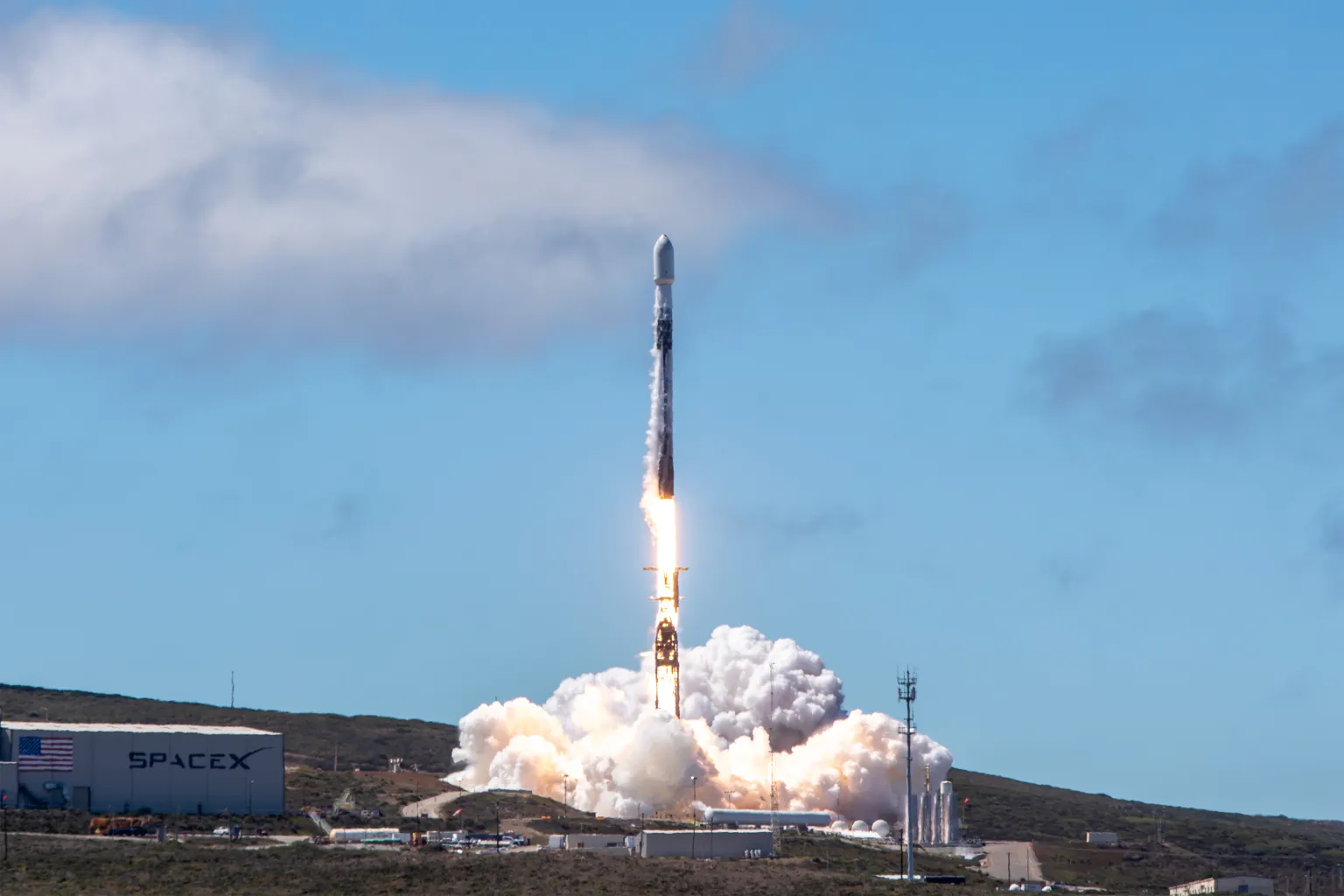
NASA’s TRACERS mission—short for Tandem Reconnection and Cusp Electrodynamics Reconnaissance Satellites—successfully launched on July 23, 2025, at 2:13 p.m. EDT (11:13 a.m. PDT) aboard a SpaceX Falcon 9 rocket from Vandenberg Space Force Base in California The payload included the twin TRACERS satellites and auxiliary mini-satellites: Athena EPIC, PExT, and REAL
Within three hours of deployment, controllers established contact with both spacecraft. Over the next four weeks, they will undergo commissioning—system checks and calibration—before commencing their science operations
Scientific Aim: Understanding Magnetic Reconnection
The TRACERS mission is designed to investigate the process of magnetic reconnection, where Earth’s magnetic field lines realign and connect with the Sun’s solar wind. This energetic interaction occurs primarily in the polar cusp regions—funnels near Earth’s poles—and plays a critical role in events like auroras and disruptions to satellites, GPS systems, and power grids
Twin Satellites in Tandem for High‑Resolution Data
The mission features two nearly identical satellites flying one behind the other, separated by just 10 to 120 seconds, along the same orbital path. This tandem formation allows scientists to distinguish between spatial and temporal variations in magnetic reconnection events, enabling more detailed measurements of how reconnection evolves
Mission Duration and Data Collection Goals
TRACERS is slated for a 12-month prime mission, during which the satellites are expected to collect data on approximately 3,000 polar cusp crossings. Their low Earth orbit at ~360–600 km altitude will enable constant monitoring of the magnetopause where solar‑Earth interactions occur
Collaboration and Technology
Managed by the Southwest Research Institute in collaboration with the University of Iowa, TRACERS includes several scientific instruments: magnetometers, electron sensors, a high-frequency wave sensor, and the Analyzer for Cusp Ions (ACI) instrument built by SwRI. The satellite buses were constructed by Millennium Space Systems (a Boeing subsidiary)
Why This News Is Important for Exam Aspirants
Enhances Space Science Knowledge
TRACERS focuses on the vital phenomenon of magnetic reconnection—a fundamental concept in heliophysics and geophysics. Understanding it enriches candidates’ grasp of space‑Earth interactions, a topic increasingly appearing in UPSC/PSC and defense technical papers.
Real‑World Impact on Technology
The mission directly relates to contemporary issues: geomagnetic storms triggered by solar activity can disrupt satellite operations, GPS navigation, and national power grids. TRACERS data will inform better forecasting tools, which is critical for public and strategic infrastructure safeguarding.
Interdisciplinary Relevance
Questions involving Earth’s magnetosphere, space weather, industry-technology linkages, and international scientific cooperation are common in banking, railways, and teaching exams. TRACERS’ collaboration between NASA, SwRI, University of Iowa, Boeing, and SpaceX exemplifies real-world multi-agency coordination.
Current Affairs Value
Being a recent mission launched in July 2025, TRACERS is highly relevant for current affairs sections. Database knowledge of its launch timing, objectives, stakeholders, and budget ensures aspirants score in dynamic sections of competitive exams.
Historical Context: Background and Evolution
Origins in Solar‑Terrestrial Physics
Research on solar wind–magnetosphere interactions dates back to the 1960s, notably with the discovery of auroras and Van Allen radiation belts. Missions like the Magnetospheric Multiscale Mission (MMS) in 2015 pioneered the study of magnetic reconnection by flying four spacecraft in tetrahedral formation, laying the groundwork for TRACERS’ dual‑satellite tandem setup
Science Mission Timeline
NASA’s Small Explorer Program (SMEX) selected both TRACERS and PUNCH in June 2019. Initially planned for 2024, TRACERS was delayed slightly and launched mid‑2025, alongside PUNCH and the SPHEREx observatory missions from Vandenberg
Concept Legacy and PI Transition
The project was initiated by Craig Kletzing of the University of Iowa, who led the project until his death in 2023. The mission was carried forward by David Miles, maintaining continuity and honoring Kletzing’s long involvement in space physics missions
Key Takeaways from TRACERS Mission
| S.No. | Key Takeaway |
|---|---|
| 1 | TRACERS launched on July 23, 2025, via SpaceX Falcon 9 from Vandenberg Space Force Base. |
| 2 | The mission’s twin satellites will study magnetic reconnection in Earth’s polar cusp region, with ~3,000 cusp crossings over a year. |
| 3 | The tandem configuration (10–120 s separation) allows separation of time vs. space fluctuations in reconnection events. |
| 4 | Important instruments include the Analyzer for Cusp Ions (ACI), magnetometers, electron sensors, and wave sensors built by SwRI, University of Iowa, and Boeing/Millennium. |
| 5 | TRACERS is part of NASA’s SMEX program and complements missions like PUNCH, EZIE, and MMS to improve global space‑weather forecasting and protect infrastructure. |
FAQs: Frequently Asked Questions
1. What is NASA’s TRACERS mission?
TRACERS (Tandem Reconnection and Cusp Electrodynamics Reconnaissance Satellites) is a twin-satellite mission by NASA aimed at studying magnetic reconnection in Earth’s polar cusp region to understand space weather effects.
2. When was the TRACERS mission launched?
The mission was launched on July 23, 2025, from Vandenberg Space Force Base, California, aboard a SpaceX Falcon 9 rocket.
3. What is magnetic reconnection and why is it important?
Magnetic reconnection is a process where Earth’s magnetic field lines merge with solar wind lines, releasing energy. It can lead to geomagnetic storms affecting satellites, communication systems, and power grids.
4. How many cusp crossings are expected during the TRACERS mission?
The TRACERS satellites are expected to record about 3,000 polar cusp crossings during their one-year prime mission.
5. Which organizations are involved in the TRACERS mission?
NASA leads the mission, with significant contributions from Southwest Research Institute (SwRI), University of Iowa, and Millennium Space Systems (a Boeing subsidiary).
6. How does TRACERS help protect infrastructure?
By improving understanding of magnetic reconnection and space weather, TRACERS can aid in better forecasting of geomagnetic storms, which helps protect satellites, aviation routes, and power grids.
7. What is the altitude range of the TRACERS satellites?
TRACERS orbits in low Earth orbit at an altitude of approximately 360–600 kilometers.
8. What instruments are carried on the TRACERS satellites?
They include magnetometers, electron sensors, wave sensors, and the Analyzer for Cusp Ions (ACI) instrument.
9. What is the significance of the satellite’s tandem flight configuration?
The satellites fly with a short time gap (10–120 seconds), allowing scientists to distinguish between temporal and spatial variations in reconnection events.
10. How is this mission relevant to government exam aspirants?
It covers crucial topics like Earth’s magnetosphere, space weather, satellite missions, and inter-agency collaboration—key areas in UPSC, SSC, teaching, and defence exam syllabi.
Some Important Current Affairs Links