







NASA SpaceX Crew-11 mission successfully launches four astronauts to ISS, highlights international cooperation and space science goals. Know crew, objectives, and relevance for government exams.
SpaceX Launches NASA’s Crew‑11 Mission to the International Space Station 🌌
Mission Launch and Crew Composition
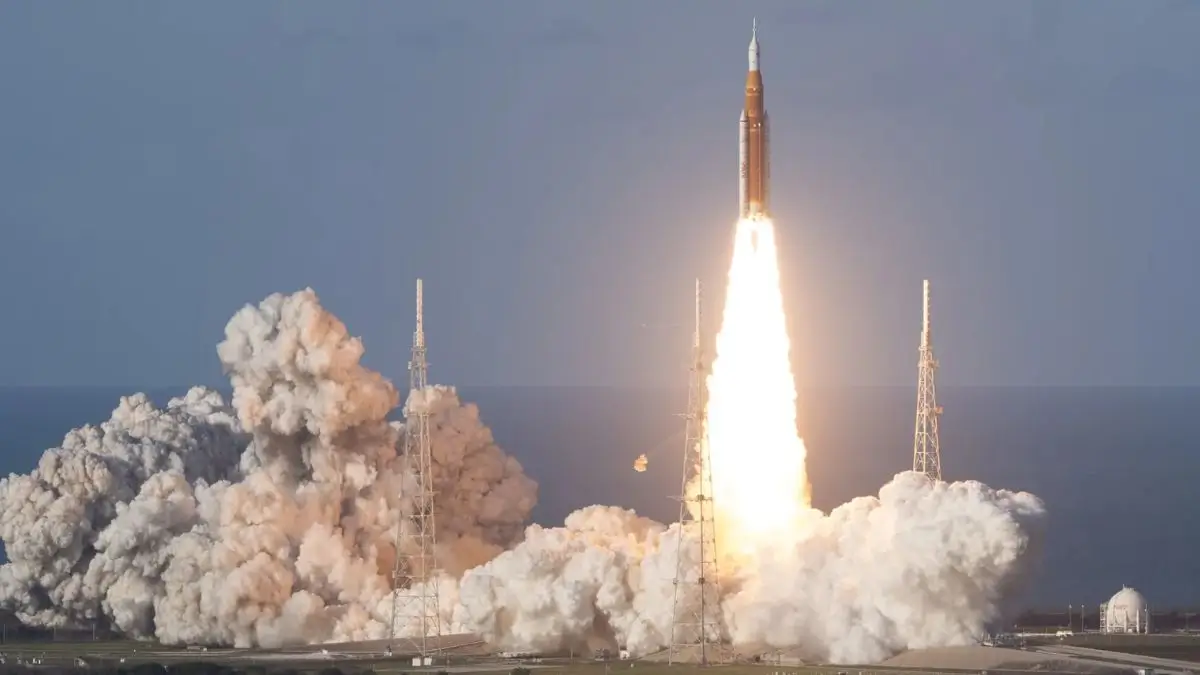
On August 1, 2025, at 11:43 a.m. EDT, a SpaceX Falcon 9 Block 5 rocket carrying the Crew Dragon Endeavour successfully lifted off from Launch Complex 39A at NASA’s Kennedy Space Center, Florida The four-person international crew includes NASA astronauts Zena Cardman and Michael “Mike” Fincke, JAXA’s Kimiya Yui, and Roscosmos cosmonaut Oleg Platonov—launching aboard a reused spacecraft to continue NASA’s Commercial Crew Program
Launch Conditions and Execution
The launch, previously delayed due to inclement weather, ultimately succeeded by “threading the clouds,” demonstrating precise timing under dynamic conditions. The Falcon 9’s nine Merlin engines powered the capsule through stormy skies shortly after a successful terminal countdown
Rapid Docking to ISS
After launch, the Crew Dragon performed a swift autonomous orbital insertion, docking at the ISS’s Harmony module approximately 15 hours later, at 2:26 a.m. EDT on August 2 Hatch opening and a formal welcome ceremony followed soon after docking.
Mission Duration & Objectives
Initially planned as a six-month mission, NASA may extend Crew‑11’s stay up to eight months to better align with Russian crew rotations and mitigate schedule mismatches Onboard experiments will include biomedical research, Earth observation, and simulated lunar landing training to support future Artemis lunar missions
Highlight of International and Commercial Collaboration
This mission underscores the strength of international cooperation—involving U.S., Japanese, and Russian partners—and the success of NASA’s public-private partnership with SpaceX, which emphasizes reusability, cost-efficiency, and sustained U.S. leadership in low Earth orbit operations

Why This News is Important
Advancing India‑Related Civil Services Aspirations
For Civil Services aspirants, the Crew-11 mission highlights key themes of international cooperation, technology diplomacy, and global scientific collaboration. India’s future participation in space alliances may be shaped by such multilateral efforts.
Relevance for Defence & Strategic Studies
For Defence exam candidates, Crew-11 reflects strategic space policy directions. Continued bilateral and multilateral partnerships in space remain crucial despite geopolitical tensions—Russia’s ongoing cooperation aboard the ISS even as it partners with China on lunar exploration marks a nuanced evolution in space strategy
Value for Teaching, Banking, Railways & Police Exams
- Banking & Railway examites: missions like Crew‑11 often drive innovation in satellite technology, weather forecasting, and communications—benefiting financial markets and railway operations.
- Teaching aspirants: the mission is a strong case study in STEM education, innovation, and the impact of private sector collaboration—valuable for geography, science, and current affairs topics.
- Police aspirants: understanding international technological cooperation aids in preparing for policy-related interviews or general studies segments.
Historical Context
Origins of NASA’s Commercial Crew Program
The Commercial Crew Program (CCP) was launched in 2011 to return crewed launches to U.S. soil and to foster private-sector space transport capabilities SpaceX began operational service in 2020 and has since flown multiple missions using Crew Dragon and Falcon 9.
Legacy of the Dragon Endeavour Capsule
The Crew Dragon Endeavour (serial C206) previously served on Demo‑2 in 2020, Crew‑2, Crew‑6, Crew‑8, and Axiom‑1 missions. It holds records for longest time in orbit by an American crewed spacecraft, around 235 days as of 2024
Evolution of Crew‑11 Crew Assignments
Crew-11 included astronauts reassigned from earlier programs due to Boeing Starliner delays. NASA astronauts Zena Cardman and Mike Fincke, and others originally set for Boeing flights, were reallocated to Crew‑11 missions as Starliner certification extended
Key Takeaways from Crew‑11 Mission
| S. No. | Key Takeaway |
|---|---|
| 1 | Launch Date & Time: Crew‑11 lifted off on August 1, 2025 at 11:43 a.m. EDT via Falcon 9 from Kennedy Space Center. |
| 2 | Crew Composition: Four internationally trained crew members — Cardman (NASA), Fincke (NASA), Yui (JAXA), Platonov (Roscosmos). |
| 3 | Rapid Docking: Docked to ISS just 15 hours later, showcasing efficient Falcon 9/Dragon capability. |
| 4 | Possible Extended Mission Duration: NASA may extend stay from six to eight months to optimize rotation. |
| 5 | Mission Significance: Strengthens global scientific research, public‑private space collaboration, and contributes to future lunar/Artemis objectives. |
FAQs: Frequently Asked Questions
1. What is the NASA-SpaceX Crew-11 Mission?
Crew-11 is a collaborative mission between NASA and SpaceX under the Commercial Crew Program, transporting four astronauts to the International Space Station (ISS) aboard the Crew Dragon Endeavour spacecraft.
2. Who are the astronauts in the Crew-11 mission?
The crew includes NASA astronauts Zena Cardman and Mike Fincke, JAXA astronaut Kimiya Yui, and Roscosmos cosmonaut Oleg Platonov.
3. When was the Crew-11 mission launched?
The launch occurred on August 1, 2025, at 11:43 a.m. EDT from Kennedy Space Center, Florida.
4. What rocket was used for the launch?
SpaceX’s Falcon 9 Block 5 rocket was used to launch the Crew Dragon spacecraft.
5. Why is the Crew-11 mission significant?
It exemplifies international cooperation, efficient reuse of space hardware, and supports scientific research on the ISS, which contributes to long-term space exploration goals.
6. What is the Crew Dragon Endeavour spacecraft?
It is a reusable crew vehicle developed by SpaceX and has supported several NASA missions since 2020.
7. How long will the Crew-11 astronauts stay at the ISS?
The planned duration is six months, but NASA may extend it to eight months to align with other crew rotations.
8. What are some objectives of Crew-11?
Key goals include biomedical research, Earth observation, space technology testing, and preparation for lunar missions under NASA’s Artemis program.
9. What does this mission mean for India or ISRO?
Though India is not directly involved, it demonstrates the scope of future international partnerships for Gaganyaan and Chandrayaan missions.
10. How does this relate to upcoming competitive exams?
It is relevant to General Studies, Science and Technology, International Relations, and Current Affairs sections of exams like UPSC, SSC, Banking, Railways, and Defence.
Some Important Current Affairs Links