




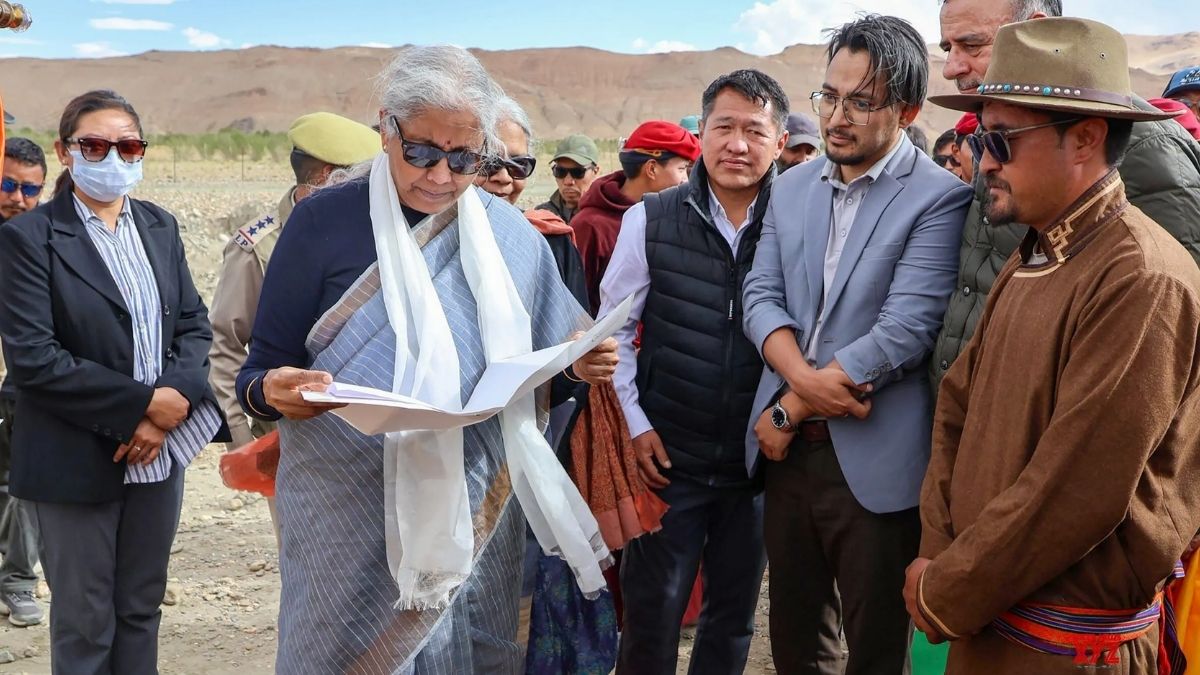
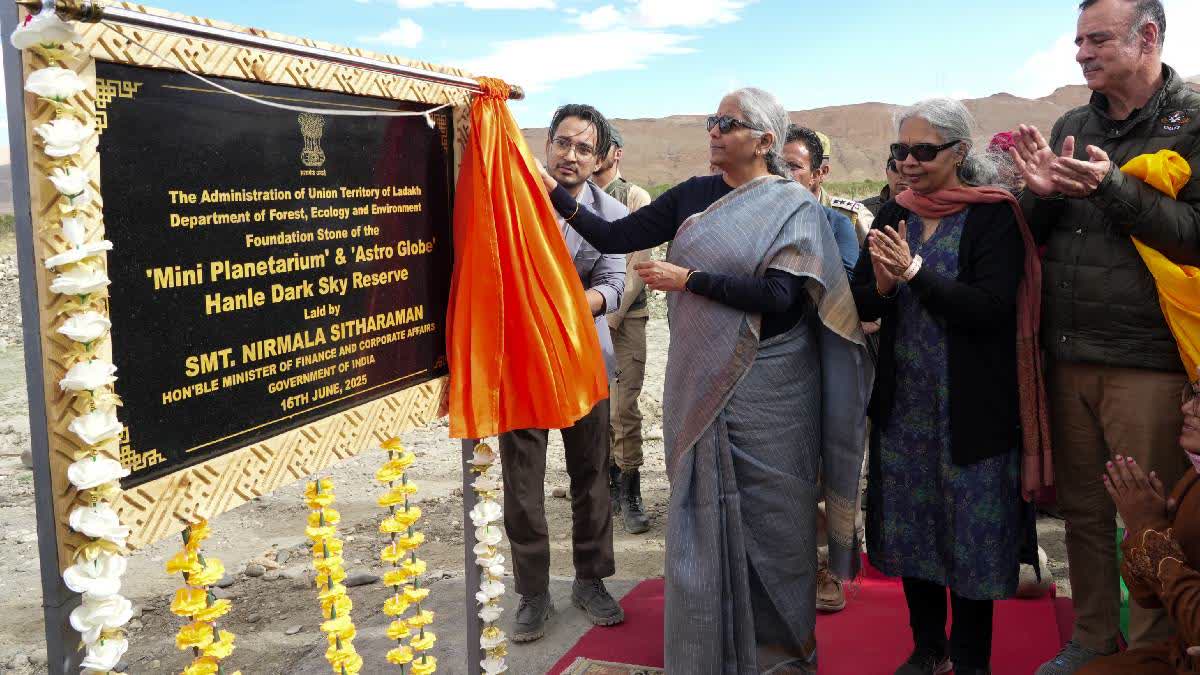
Hanle Dark Sky Reserve in Ladakh gets a boost as FM Nirmala Sitharaman lays foundation for a Mini Planetarium and Astro-Globe, promoting STEM education and astronomy tourism in India.
Introduction: Boosting Astrotourism in India
Union Finance Minister Nirmala Sitharaman has laid the foundation stone for a Mini Planetarium and Astro-Globe at the Hanle Dark Sky Reserve in Ladakh. This initiative marks a significant step in promoting science education, astrotourism, and astronomical research in India. Situated in the high-altitude Himalayan region, Hanle is one of the world’s highest-located observatories, already hosting the Indian Astronomical Observatory operated by the Indian Institute of Astrophysics (IIA).
Significance of the Hanle Dark Sky Reserve
Hanle Dark Sky Reserve is India’s first officially designated dark sky reserve and among the world’s highest astronomical observation sites. The site provides pristine sky visibility, minimal light pollution, and unique terrain, making it ideal for astronomy enthusiasts, researchers, and tourists alike. The new planetarium and Astro-Globe will strengthen its global positioning as a hub of scientific and educational tourism.
Objectives of the Mini Planetarium and Astro-Globe Project
The central objective behind this development is to make astronomy accessible to the public, especially students from remote and tribal areas. These structures aim to provide interactive experiences related to celestial phenomena, space, and scientific knowledge. The facilities will include educational exhibits, night sky shows, and telescopic observation decks, providing hands-on learning to boost STEM interest among students.
Collaboration Among Institutions
The project is a collaborative effort involving the Indian Institute of Astrophysics (IIA), Ladakh Autonomous Hill Development Council (LAHDC), and the Ministry of Finance. The funding and strategic backing from the Government of India underscore the Centre’s commitment to advancing science and education through infrastructure development in border and remote areas.
Benefits to Local Communities and Tourism
Besides educational advantages, this initiative is expected to bring economic benefits to the local community. The Hanle region, with its unique high-altitude terrain and minimal atmospheric pollution, is likely to attract a global crowd of astronomers, students, and tourists. This, in turn, will encourage sustainable ecotourism, create employment opportunities, and promote cultural exchange in the region.
India’s Expanding Scientific Infrastructure
This foundation stone laying is part of India’s broader strategy to build state-of-the-art scientific infrastructure in underdeveloped regions. Such infrastructure development promotes inclusive education, aligns with the National Education Policy (NEP) 2020, and reflects India’s rising commitment to global scientific standards.
Why This News Is Important
Promotes Science Literacy and STEM Education
The Hanle Dark Sky Reserve development aims to bridge the educational gap in remote areas by providing students with exposure to astronomy and space science. Government exam aspirants, especially those targeting roles in education and science administration, must note the emphasis on STEM education in rural India.
Highlights India’s Commitment to Scientific Research
This initiative represents India’s strategic push toward becoming a global player in scientific innovation. For aspirants preparing for exams like UPSC or State PCS, such developments showcase India’s evolving science and tech diplomacy, which is crucial for Mains and Interview stages.
Boosts Ladakh’s Socio-Economic Development
By integrating scientific infrastructure with tourism, the government is adopting a multi-dimensional developmental approach. This is especially relevant for exam topics under regional development, border area security, and sustainable tourism.
Aligns with National Education Policy (NEP) 2020
This development is aligned with NEP 2020’s vision of experiential learning and practical science exposure, a key theme for aspirants preparing for education-sector posts.
Enhances India’s Global Scientific Presence
The establishment of a planetarium in one of the world’s most unique locations reinforces India’s reputation in space and astronomical research, crucial for aspirants following India’s space policy and international collaborations.
Historical Context: India’s Journey in Astronomy and Dark Sky Reserves
India has a long-standing tradition of astronomical exploration, from the observatories of Maharaja Jai Singh in the 18th century to modern institutions like ISRO and IIA. The Indian Astronomical Observatory (IAO) at Hanle was established in 2001 and is one of the world’s highest sites for optical, infrared, and gamma-ray telescopes.
The concept of Dark Sky Reserves originated internationally to protect natural night skies from light pollution, aiding both research and tourism. India’s declaration of Hanle as the first such reserve in 2022 marked a milestone in environmental conservation and scientific engagement. The current project is an extension of this initiative, aiming to democratize access to the night sky and involve local communities in science-based livelihoods.
Key Takeaways from “FM Sitharaman Lays Foundation for Mini Planetarium and Astro-Globe at Hanle Dark Sky Reserve”
| S.No | Key Takeaway |
|---|---|
| 1 | Finance Minister Nirmala Sitharaman laid the foundation for a Mini Planetarium and Astro-Globe at Hanle Dark Sky Reserve in Ladakh. |
| 2 | Hanle is India’s first designated Dark Sky Reserve and one of the world’s highest astronomy sites. |
| 3 | The project promotes science education, astrotourism, and will include exhibits, telescopic decks, and night sky shows. |
| 4 | It is a joint effort by the Indian Institute of Astrophysics (IIA), LAHDC, and the Ministry of Finance. |
| 5 | The initiative supports STEM education, sustainable tourism, and aligns with the NEP 2020 objectives. |
FAQs: Frequently Asked Questions
Q1. What is the Hanle Dark Sky Reserve?
Answer: The Hanle Dark Sky Reserve is India’s first officially designated dark sky reserve located in Ladakh. It is known for its minimal light pollution and high altitude, making it ideal for astronomical research and astrotourism.
Q2. Who laid the foundation for the Mini Planetarium and Astro-Globe at Hanle?
Answer: Union Finance Minister Nirmala Sitharaman laid the foundation stone for the Mini Planetarium and Astro-Globe at Hanle Dark Sky Reserve.
Q3. What are the objectives of building the Mini Planetarium and Astro-Globe?
Answer: The main objectives include promoting astronomy education, enhancing STEM learning among students, encouraging astrotourism, and providing hands-on exposure to celestial phenomena.
Q4. Which institutions are involved in the development of the Hanle planetarium project?
Answer: The project is a collaborative initiative by the Indian Institute of Astrophysics (IIA), Ladakh Autonomous Hill Development Council (LAHDC), and the Ministry of Finance.
Q5. How does this initiative align with the National Education Policy (NEP) 2020?
Answer: The initiative promotes experiential and inquiry-based learning in science and technology, directly aligning with NEP 2020’s focus on practical STEM education.
Some Important Current Affairs Links


Some Important Current Affairs Links


