








EPFO officer Vivekanand Gupta selected for World Bank–Milken PFAM Program 2025. Learn about EPFO’s role, PFAM significance, and key takeaways for government exam preparation.
EPFO Officer Joins Prestigious World Bank–Milken PFAM Program
Shri Vivekanand Gupta’s Landmark Selection
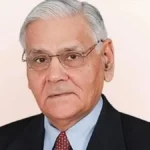
On 15 September 2025, the Employees’ Provident Fund Organisation (EPFO) confirmed that Shri Vivekanand Gupta, Regional Provident Fund Commissioner, has been selected for the 2025–26 Public Financial Asset Management (PFAM) Program, jointly run by the World Bank and the Milken Institute. This marks a major milestone: Shri Gupta is both the first-ever representative from EPFO and the only participant from India in the current PFAM cohort.
About the PFAM Program
The PFAM Program is a high-calibre global initiative designed for senior professionals who work with large public financial assets — including central banks, sovereign wealth funds, and major pension or provident funds. It aims to deepen participants’ expertise in investment governance, strategic asset allocation, risk management, financial policy, and international best practices. The 2025-26 cohort includes participants from 13 countries, with representatives from 11 central banks, 3 sovereign wealth funds, and 2 pension funds.
Role of PDUNASS in Facilitating Selection
The nomination of Shri Gupta was put forward by EPFO’s training and capacity-building arm, the Pandit Deendayal Upadhyay National Academy of Social Security (PDUNASS). Through its rigorous internal selection mechanism, PDUNASS identified him as the fitting candidate. This underscores EPFO’s increasing focus on international benchmarking, institutional training, and governance enhancement.
Implications for EPFO’s Governance & Investment Strategy
EPFO manages a massive social security corpus, often cited as being over ₹25 lakh crore. With an officer in PFAM, EPFO has the opportunity to assimilate modern practices in public asset management, improve accountability, refine risk frameworks, and possibly optimize returns for retiree savings. By aligning its governance structures with global norms, EPFO can increase transparency, boost trust among stakeholders (including millions of contributors), and better navigate challenges posed by market volatility.
Global Recognition & India’s Participation in Capacity Building
The inclusion of Shri Gupta in PFAM also reflects India’s growing engagement with global capacity-building platforms in finance and governance. It signals that Indian social security institutions are being seen as worthy participants in elite international programs. Such participation helps build institutional prestige and opens up avenues for learning, collaboration, and reforms. It may also contribute to policy innovations domestically.

Why This News is Important
Boost to Institutional Credibility
For students preparing for government exams (teachers, police, banking, railways, defence, civil services), this news is relevant because it shows how Indian institutions like EPFO are being globally recognised. The fact that Shri Vivekanand Gupta is the first from EPFO, and the only Indian in this PFAM cohort, enhances EPFO’s credibility and reflects positively on the Indian administrative machinery. It indicates that civil servants working in social security and public finance are now participating in international programs.
Relevance for Social Security, Pension & Public Finance Syllabus
In exams like UPSC, SSC, state PSCs etc., questions are often asked about pension reforms, social security schemes, government financial management, and governance of public institutions. This development offers material for these areas — understanding how public provident/pension fund bodies operate, challenges of managing large funds, and how international best practices can be adopted.
Learning & Governance Opportunity
Shri Gupta’s participation may lead to adoption of better governance practices within EPFO, greater transparency, improved financial returns, and stronger accountability. For students, this showcases the role of training, policy diffusion, and global exposure in improving public systems. It also underlines the significance of capacity building programs, which are increasingly relevant in modern public administration.
Motivation & Standards for Aspirants
From an aspirant’s perspective (especially for those targeting civil services, finance wings of the government, or managerial roles in public institutions), this sets a standard: continuous learning, international exposure, and specialised skill sets are increasingly required. It underscores that merely administrative or rules-based work may not be enough; being versed in strategic financial governance and asset management is becoming important.
Historical Context
EPFO & its Role in India’s Social Security Landscape
The Employees’ Provident Fund Organisation (EPFO), under the Ministry of Labour & Employment, is one of India’s largest social security bodies. It administers provident fund, pension, and insurance schemes of the organized sector. With a vast number of contributors and pensioners, its corpus has grown substantially over years to a significant portion of India’s public financial assets.
Growth of Global Financial Capacity Building Programs
Over the past few decades, there has been a rise in international collaborations and programs (by institutions such as the World Bank, IMF, OECD, etc.) aimed at enhancing capacities of public institutions in areas such as asset management, investment governance, financial regulation, and policy-making. Such programs aim to export best practices, strengthen institutional frameworks, and align emerging economies with global standards.
Milken Institute & its Track Record
The Milken Institute is a prominent U.S. think-tank known for its focus on financial markets, public policy, and innovation. Together with partners like the World Bank, it has conducted several programs for senior leaders in government finance and public asset management. These aim to address increasingly complex challenges of investment risk, transparency, ESG (environmental, social, governance) norms, etc.
PDUNASS & EPFO’s Efforts to Modernize
Pandit Deendayal Upadhyay National Academy of Social Security (PDUNASS) is EPFO’s training arm. Over recent years, it has been instrumental in upskilling EPFO officials, researching policy innovations, and promoting better governance in the social security sphere. This selection of an EPFO officer into PFAM is a continuation of ongoing efforts by EPFO to align with international best practices.
Key Takeaways from EPFO Officer’s PFAM Selection
| S.No | Key Takeaway |
|---|---|
| 1 | Shri Vivekanand Gupta is the first EPFO representative and only Indian in the PFAM 2025-26 cohort. |
| 2 | PFAM (Public Financial Asset Management) is a joint initiative by the World Bank and the Milken Institute, aimed at senior professionals managing large public funds. |
| 3 | EPFO has a massive corpus (~ ₹25 lakh crore), which increases the stakes of asset management, governance, and investment efficiency. |
| 4 | PDUNASS played a crucial role by selecting and nominating Shri Gupta, signalling EPFO’s focus on capacity building and international benchmarking. |
| 5 | This selection may lead to improved investment governance, enhanced transparency, and better alignment of EPFO’s practices with global standards. |
FAQs: Frequently Asked Questions
1. What is the PFAM Program?
The Public Financial Asset Management (PFAM) Program is an international training initiative jointly conducted by the World Bank and the Milken Institute. It focuses on governance, risk management, strategic asset allocation, and investment of large public funds like pensions and provident funds.
2. Who from India was selected for the PFAM 2025–26 Program?
Shri Vivekanand Gupta, Regional Provident Fund Commissioner at EPFO, was selected. He is the first officer from EPFO and the only participant from India in this cohort.
3. What is the significance of EPFO participating in PFAM?
EPFO manages a massive corpus (~₹25 lakh crore). Participation in PFAM helps it adopt global best practices in asset management, governance, and transparency, improving efficiency and policy alignment.
4. Which institution nominated Shri Vivekanand Gupta for PFAM?
The nomination came from Pandit Deendayal Upadhyay National Academy of Social Security (PDUNASS), EPFO’s training and capacity-building arm.
5. How does this news help exam aspirants?
This news is relevant for government exam aspirants because it relates to social security systems, public finance management, and government capacity-building — topics often asked in UPSC, SSC, state PSCs, banking, and civil services exams.
6. How many countries are represented in the 2025–26 PFAM cohort?
Participants from 13 countries, including central banks, sovereign wealth funds, and pension funds, are included in the PFAM 2025–26 program.
7. What are the potential outcomes of EPFO’s participation in PFAM?
Improved investment strategies, stronger governance, enhanced transparency, adoption of international best practices, and better policy implementation.
Some Important Current Affairs Links