




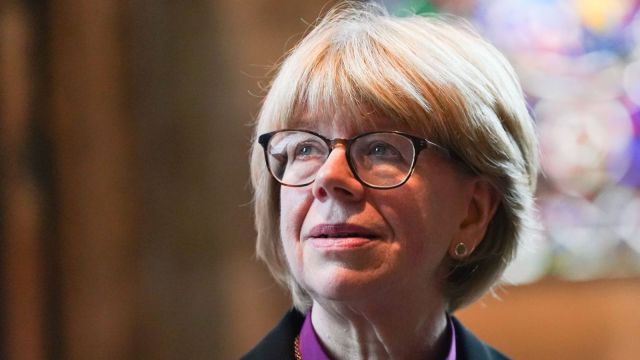
Dame Sarah Mullally Appointment News — Learn how the former Chief Nursing Officer became the first woman Archbishop of Canterbury, marking a historic milestone for gender equality and leadership reform in the Church of England.
Dame Sarah Mullally’s Trailblazing Appointment
A Historic Appointment in the Church of England
In a landmark decision for the Church of England (CofE), Dame Sarah Mullally has been appointed as the new Archbishop of Canterbury-designate — thereby becoming the first woman to ever hold this prestigious post. The announcement signals not only a significant moment for the church’s internal governance, but also a broader cultural shift in one of the world’s most historic Christian institutions.
What makes this appointment even more noteworthy is Dame Sarah’s atypical path to the archbishopric: she spent over three decades in the UK’s National Health Service (NHS), eventually becoming England’s youngest-ever Chief Nursing Officer in 1999, before feeling a vocational calling and moving into ordained ministry.
From Health Service to High Church Leadership
Dame Sarah’s career trajectory reflects a blend of public service and faith-based leadership. After her NHS tenure, she was ordained in 2006. In 2018, she became the first woman to serve as Bishop of London, which is the third highest diocesan post in the CofE.
Her appointment as Archbishop follows the earlier resignation of Justin Welby (the prior Archbishop) amid a safeguarding scandal. The replacement process involved nomination, review by the Prime Minister (Keir Starmer), and formal approval by King Charles III. Officially, Dame Sarah will take office in January 2026, after the confirmation of her election and a formal enthronement at Canterbury Cathedral.
Breaking New Ground in Church Inclusion
Her appointment carries great symbolic weight. The Church of England only permitted women to be ordained as priests in 1994, and the first female bishops came about in 2014. In effect, appointing a woman as Archbishop of Canterbury marks a major step toward gender equality in one of the most senior ecclesiastical offices in Anglican Christianity.
Dame Sarah herself acknowledged the significance, noting that young women often see her as “a symbol of what’s possible.” The broader Anglican Communion (including global branches of the Anglican Church) is taking note of this development, especially given its historic ties to colonial-era church structures and evolving debates around modernity, inclusion, and institutional reform.
Vision, Challenges & Forward Agenda
Dame Sarah has already outlined key priorities: strengthening the church’s safeguarding systems (especially given earlier abuse scandals), rebuilding public trust, tackling declining attendance in congregations, and advancing ethical advocacy on issues such as assisted dying — which she firmly opposes. She has also expressed support for inclusivity initiatives; for instance, the 2023 decision to allow priests to bless same-sex couples she described as “a moment of hope.”
Of course, resistance remains. A conservative Anglican group, the Global Fellowship of Confessing Anglicans, criticised her appointment, citing doctrinal beliefs that episcopacy should remain male-only. How Dame Sarah navigates these fault-lines — tradition vs reform, global vs local Anglican priorities, institutional culture vs public expectation — will be watched closely.
Broader Implications & Reflective Outlook
Beyond the Church of England, this appointment sends a message to public institutions — including in countries like India — about how long-standing structures adapt to gender, leadership and representation reforms. For government exam aspirants (teachers, civil services, banking etc.), the relevance lies not only in the event’s news value but in understanding how institutions evolve, leadership dynamics change, and inclusion becomes part of public discourse.
In summary, Dame Sarah Mullally’s ascension is both a historic milestone and a signal of institutional transformation. Her leadership may well define the next chapter of Anglican identity, and by extension, offers lessons for governance, reform and inclusive leadership across sectors.

Why this News is Important
Institutional Shift and Gender Representation
At its core, this appointment marks a historic institutional shift in the Church of England — an institution closely intertwined with Britain’s monarchy, state and global Anglican network. The elevation of Dame Sarah Mullally as the first woman to lead the Church sends a strong message about gender representation at the highest leadership levels.
Broader Reflections for Public Service and Governance
For students preparing for government exams (civil services, teaching, banking, defence), this news offers a case study in how public institutions and long-standing organisations can evolve. The event highlights themes of leadership, reform, safeguarding, and inclusion — key themes often examined in governance, ethics and current affairs.
Global and Comparative Implications
Furthermore, the Church of England’s move can be interpreted in a global context — many religious, educational and governance institutions worldwide are grappling with modernization, inclusion and accountability. Understanding such transitions is useful for aspirants analysing institutional change, policy frameworks or even societal trends.
Relevance to Exam-Oriented Current Affairs
From an exam standpoint, the news adds value because it intersects with several broad themes: gender equality (linked to UN SDG-5), institutional reform, leadership in public/broad-public institutions, and the interaction between state and church (relevant in India’s secular governance discourse). Recognising the key players (Dame Sarah Mullally, King Charles III, etc.), the timeline (since 1994 priests, since 2014 bishops) and the significance enhances a candidate’s preparedness for questions on appointments, current affairs, and reform in organisations.
Historical Context
The Church of England and Leadership Structure
The Church of England was established in the 16th century during the English Reformation under Henry VIII, separating from papal authority and becoming the “established” church in England. The Archbishop of Canterbury has historically been the senior bishop and principal leader of the Church of England and symbolic head of the worldwide Anglican Communion.
Women’s Ordination Progression
Within the Church of England, women were only permitted to be ordained as priests starting in 1994. The first female bishops were consecrated in 2014, after much debate and internal struggle. Dame Sarah’s forthcoming appointment as Archbishop in 2026 thus marks another major milestone in that progressive timeline.
Safeguarding and Institutional Trust
In recent years, the Church has faced safeguarding scandals (including clergy abuse) that have eroded public trust and required institutional reform. The vacancy of the Archbishop role following Justin Welby’s resignation (as per the source) underscores the need for renewed leadership and accountability.
Global Anglican Influence
The Anglican Communion spans many countries (including the Church of India, Church of Pakistan, etc). The decisions made in the Church of England often ripple globally, influencing attitudes and policies in affiliated churches. The appointment of a woman to the highest role could influence these affiliated institutions, provoke debate and serve as a benchmark for change in other jurisdictions.
Key Takeaways from Dame Sarah Mullally’s Appointment
| S. No | Key Takeaway |
|---|---|
| 1 | Dame Sarah Mullally becomes the first woman to be appointed Archbishop of Canterbury in the Church of England. |
| 2 | Her background includes over 35 years in the NHS, becoming England’s youngest-ever Chief Nursing Officer in 1999, and later moving into ordained ministry (priest in 2006) and bishopric (2018). |
| 3 | The appointment comes after a vacancy due to the previous Archbishop’s resignation amidst a safeguarding scandal; official approval involved the PM and King. |
| 4 | Key priorities for Dame Sarah include safeguarding reform within the Church, rebuilding public trust, addressing declining attendance, and supporting inclusive initiatives (e.g., same-sex couple blessings). |
| 5 | While her appointment marks progress in gender inclusion (women priests since 1994, women bishops since 2014) it also faces opposition from conservative groups within the Anglican Communion who maintain male-only episcopacy doctrine. |
Frequently Asked Questions (FAQs)
1. Who is Dame Sarah Mullally?
Dame Sarah Mullally is a former Chief Nursing Officer of England and the current Bishop of London, recently appointed as the first woman Archbishop of Canterbury in the Church of England.
2. Why is Dame Sarah Mullally’s appointment historically significant?
It is historically significant because she becomes the first woman in history to lead the Church of England, marking a major milestone in gender equality within the Anglican Communion.
3. What positions has Dame Sarah held before becoming Archbishop?
She served as England’s youngest Chief Nursing Officer in 1999, was ordained as a priest in 2006, and became the Bishop of London in 2018 before her current appointment.
4. When will Dame Sarah officially take office as Archbishop of Canterbury?
Her enthronement is scheduled for January 2026 after the formal confirmation of her election.
5. Who did Dame Sarah Mullally succeed as Archbishop of Canterbury?
She succeeds Justin Welby, who resigned following safeguarding controversies in the Church of England.
6. What are some challenges Dame Sarah is expected to face?
She will need to strengthen safeguarding measures, rebuild institutional trust, address declining church attendance, and manage doctrinal divisions within the Anglican Communion.
7. When were women first ordained as priests and bishops in the Church of England?
Women were first ordained as priests in 1994 and as bishops in 2014, setting the stage for her eventual appointment.
8. What is the Church of England’s global influence?
The Church of England is the mother church of the worldwide Anglican Communion, which has over 85 million members across more than 165 countries.
9. What broader lessons does this event offer for government exam aspirants?
It reflects leadership reform, institutional accountability, and gender inclusion — all relevant to governance, ethics, and public administration topics.
10. Who formally approves the Archbishop of Canterbury’s appointment?
The appointment is approved by the British Prime Minister and officially confirmed by the monarch (currently King Charles III).
Some Important Current Affairs Links




