




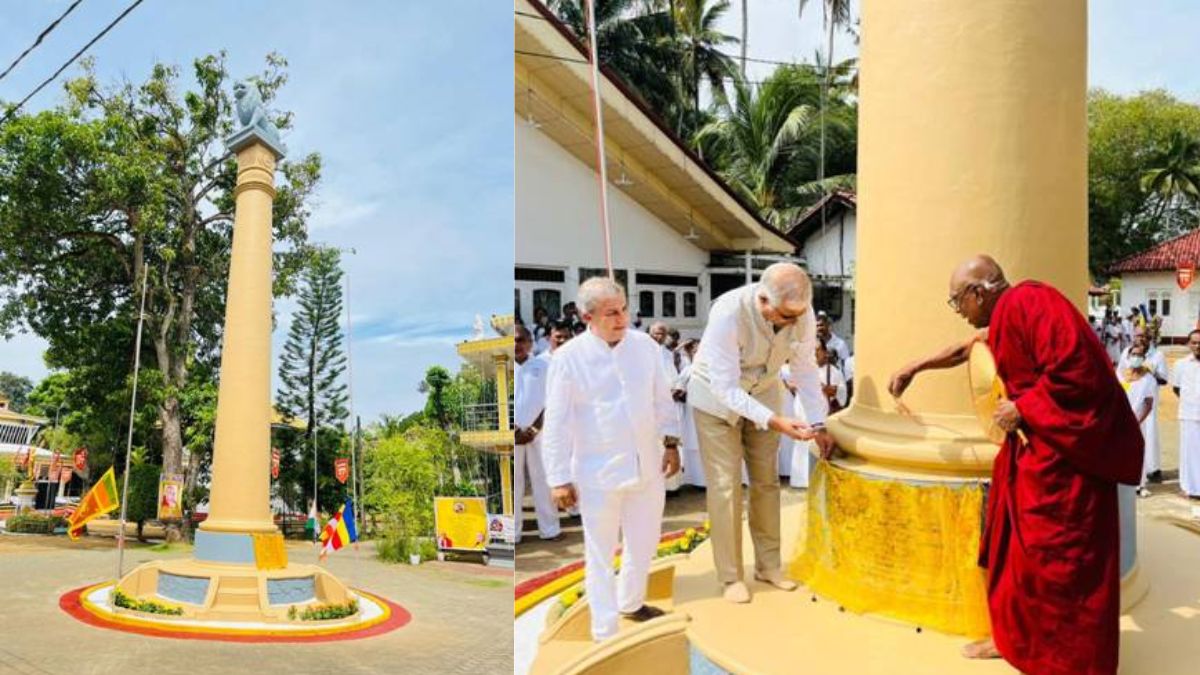
Ashoka Pillar replica unveiled at Waskaduwa Sri Lanka on 21 July 2025, symbolizing India–Sri Lanka Buddhist ties. A major step in cultural diplomacy and heritage preservation.
Replica of the Ashoka Pillar Unveiled in Waskaduwa, Sri Lanka
Unveiling of Ashoka Pillar Replica
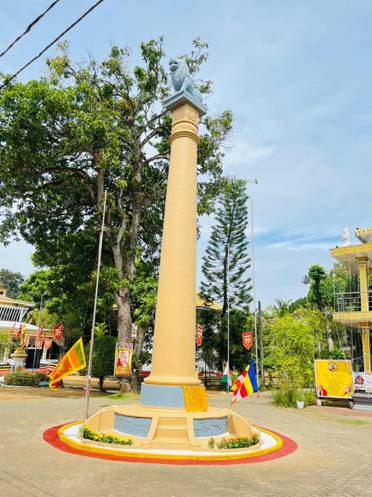
On 21 July 2025, at the Waskaduwa Sri Subhuthi Viharaya in the Kalutara district of Sri Lanka, a significant cultural milestone was reached with the unveiling of a replica of the Ashoka Pillar The Indian High Commissioner to Sri Lanka, Santosh Jha, served as the chief guest at the event, joined by senior monks and dignitaries, including the head of the temple, Waskaduwe Mahindawansa Mahanayaka Thero, and representatives of the International Buddhist Confederation
Cultural and Diplomatic Significance
This replica serves as a symbol of the enduring cultural and spiritual ties between India and Sri Lanka. It honours the legacy of Emperor Ashoka, who played a pivotal role in spreading Buddhism to Sri Lanka during the 3rd century BCE. The Pillar reflects centuries-old values of nonviolence, ethical governance, and shared Buddhist heritage
Sponsorship and Foundation
The project was fully sponsored by Kyabje Ling Rinpoche, a revered spiritual leader of Tibetan Buddhism. The foundation stone was laid on 28 January 2024 by Indian officials and leaders of the International Buddhist Confederation, including Shartse Khensur Jangchup Choeden Rinpoche
Site Significance
Waskaduwa Sri Subhuthi Viharaya was chosen thoughtfully for housing the replica, as it contains authentic relics of the Buddha from Kapilavastu. Its chief monk, Mahindawansa Thero, has a deep appreciation for India’s historical contributions and support
India’s Buddhist Diplomacy Initiative
This initiative aligns with India’s broader diplomatic strategy. In September 2020, India announced USD 15 million in special grants to promote Buddhist linkages in Sri Lanka. A key project under this grant is providing free solar electrification to nearly 10,000 Buddhist temples and monastic colleges (Pirivenas) across Sri Lanka
Symbolism and Legacy
The replica signifies both civilisational continuity and enduring respect for Emperor Ashoka’s role in introducing Buddhism to Sri Lanka through his children, Arhat Mahinda Thero and Arhat Sangamitta Therani. It reaffirms the spiritual and diplomatic bridge between the two nations
B) Why This News Is Important
Reinforcing Cultural Diplomacy
This event highlights India’s use of soft diplomacy through cultural heritage, strengthening ties with Sri Lanka. The Ashoka Pillar replica embodies shared historical values, demonstrating India’s non-political influence.
Relevance for Government Exams
For students preparing for exams in civil services, defence, banking, railways, government diplomacy and inter-country cultural projects are frequent topics. This news succinctly illustrates how culture is leveraged in modern international relations.
Understanding Historical Continuity
Emperor Ashoka’s legacy remains alive through this monument, connecting ancient Buddhist propagation with contemporary South Asian geopolitics. It provides a clear example of how past events shape current diplomatic frameworks—an important concept in history and polity sections.
C) Historical Context
Ashoka’s Mission and Buddhism in Sri Lanka
During the 3rd century BCE, Emperor Ashoka embraced Buddhism and dispatched his son, Mahinda Thero, and daughter, Sangamitta Therani, to Sri Lanka. They founded the Buddhist Sangha (order) there, introducing the teachings and forming the foundation of Theravada Buddhism on the island.
Ashokan Pillars: Symbolism and Reach
Ashoka erected inscribed stone pillars across the Indian subcontinent to promote dharmic principles—ethics, nonviolence, social welfare, and the Buddhist Dhamma. These pillars symbolised moral governance and Ashoka’s dedication to public welfare.
Modern Revival of Heritage Diplomacy
In recent decades, India has launched heritage diplomacy initiatives—granting funds, building replicas, and restoring Buddhist monuments—to enhance cultural ties with Buddhist majority neighbors, particularly Sri Lanka, Bhutan, Nepal, and Myanmar.
D) Key Takeaways from Ashoka Pillar Replica News
| S. No. | Key Takeaway |
|---|---|
| 1. | The Ashoka Pillar replica was unveiled on 21 July 2025 at Waskaduwa Sri Subhuthi Viharaya in Sri Lanka. |
| 2. | The initiative was part of India’s cultural diplomacy and soft power outreach to strengthen historical ties. |
| 3. | It honours Emperor Ashoka, whose children Mahinda and Sangamitta introduced Buddhism to Sri Lanka. |
| 4. | The project was sponsored by Kyabje Ling Rinpoche, with the foundation stone laid in January 2024. |
| 5. | India has been supporting Sri Lankan temples via a USD 15 million grant for solar electrification. |
Frequently Asked Questions (FAQs)
1. What was unveiled in Waskaduwa, Sri Lanka recently?
A replica of the Ashoka Pillar was unveiled at the Sri Subhuthi Viharaya in Waskaduwa, Kalutara district, Sri Lanka, on 21 July 2025.
2. Who was the chief guest at the unveiling ceremony of the Ashoka Pillar replica?
The Indian High Commissioner to Sri Lanka, Santosh Jha, attended as the chief guest.
3. What is the historical significance of the Ashoka Pillar?
The Ashoka Pillars were constructed by Emperor Ashoka during the Mauryan Empire to propagate Dhamma (Buddhist teachings) and signify ethical governance.
4. Who sponsored the construction of the Ashoka Pillar replica?
It was fully sponsored by Kyabje Ling Rinpoche, a senior Tibetan Buddhist spiritual leader.
5. Why is Waskaduwa Sri Subhuthi Viharaya a significant location?
It houses Buddha relics from Kapilavastu and is led by a respected monk, Waskaduwe Mahindawansa Mahanayaka Thero, making it an important spiritual site.
6. How does this unveiling contribute to India–Sri Lanka relations?
It strengthens India’s cultural diplomacy and reflects a shared Buddhist heritage between the two nations.
7. What larger initiative does this project align with?
It is part of India’s USD 15 million Buddhist grant to Sri Lanka, aimed at promoting religious and cultural linkages, including solar electrification of 10,000 temples.
8. Who were Ashoka’s children involved in spreading Buddhism to Sri Lanka?
Arhat Mahinda Thero and Arhat Sangamitta Therani were sent by Emperor Ashoka to Sri Lanka to spread Buddhism.
9. What is the significance of the Ashoka Pillar’s design?
The pillar’s four-lion capital represents power, courage, and the spread of dharma, and is the inspiration for India’s national emblem.
10. Is the unveiling of the Ashoka Pillar replica relevant to competitive exams?
Yes, it is highly relevant for UPSC, State PSCs, SSC, Defence, Teaching, and Banking exams under topics like India’s cultural diplomacy, Buddhism, and international relations.
Some Important Current Affairs Links




