








Bharat Taxi Maharashtra Launch marks a major cooperative mobility initiative promoting driver ownership, employment generation, affordable transport, and inclusive growth. Learn its features, objectives, exam relevance, historical background, FAQs, MCQs, and key takeaways for UPSC, SSC, Banking, Railways, Defence, and State PSC exams.
Introduction
The launch of Bharat Taxi in Maharashtra marks a significant step toward strengthening India’s cooperative movement while transforming the ride-hailing sector. The initiative aims to provide a driver-centric, transparent, and affordable mobility platform that differs from conventional app-based taxi aggregators. Under this model, taxi drivers are not merely service providers but also shareholders and stakeholders in the cooperative, allowing them to benefit directly from the platform’s growth.
The initiative aligns with the Government of India’s vision of “Sahkar Se Samriddhi” (Prosperity through Cooperation) and is expected to generate employment opportunities, particularly for youth, women, and local residents across Maharashtra. The launch also reflects the government’s broader effort to promote cooperative institutions in emerging sectors such as digital transportation.
What is Bharat Taxi?
Bharat Taxi is a cooperative-based ride-hailing platform established under the Multi-State Cooperative Societies Act, 2002. Unlike private cab aggregators that charge significant commissions from drivers, Bharat Taxi follows a cooperative ownership model where drivers—known as “Sarathis”—become members and shareholders of the organization.
The platform seeks to create a fair ecosystem by reducing intermediary costs, ensuring transparent fare structures, and distributing benefits among participating drivers rather than concentrating profits with a corporate entity.
Maharashtra Expansion
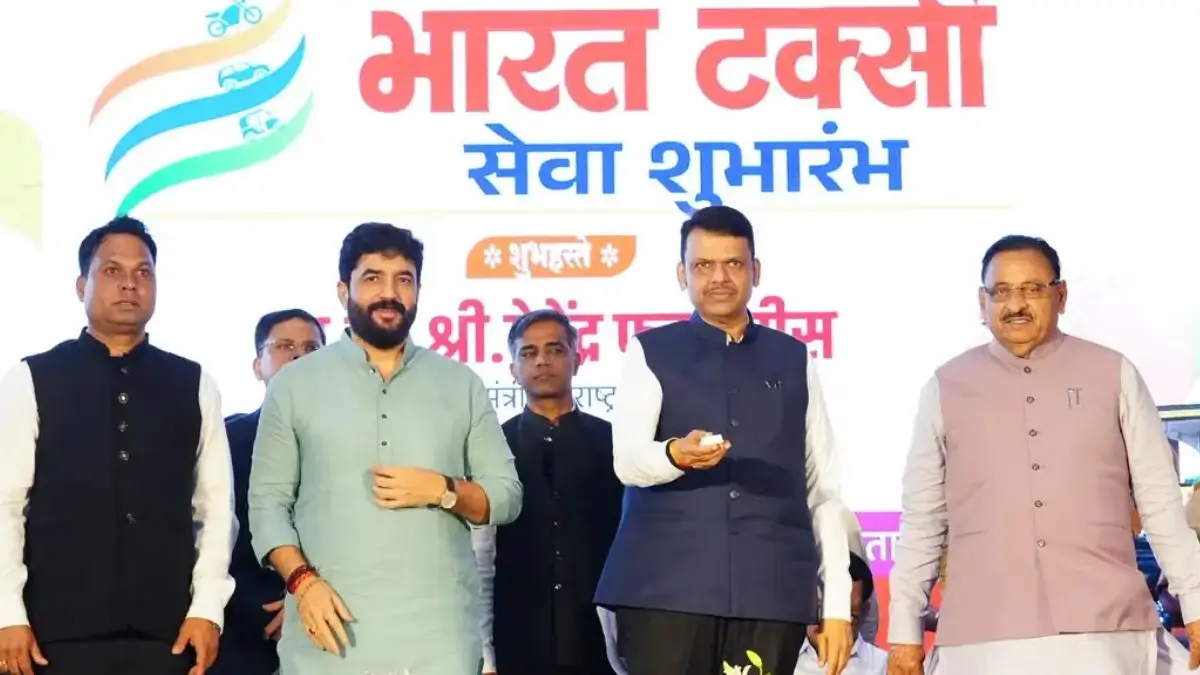
The Maharashtra launch expands Bharat Taxi beyond its earlier operations in Delhi-NCR and Gujarat. During the launch, Union Minister of State for Cooperation Murlidhar Mohol emphasized that the initiative would create large-scale employment and self-employment opportunities while strengthening the cooperative economy.
The government has encouraged youth and women to participate as Sarathis, highlighting that cooperative ownership can provide long-term financial security alongside regular earnings.
Key Features of Bharat Taxi
Some notable features include:
- Cooperative ownership model for drivers.
- Drivers become shareholders in the organization.
- Transparent pricing without hidden charges.
- Reduced or zero commission burden compared to conventional aggregators.
- Focus on affordable transportation for passengers.
- Digital booking through a dedicated mobile application.
- Promotion of employment and entrepreneurship.
These features are intended to improve both passenger experience and driver welfare.
Employment and Economic Impact
One of the primary objectives of Bharat Taxi is employment generation. The initiative encourages unemployed youth, women entrepreneurs, and existing taxi operators to join the cooperative.
By reducing commission costs and giving drivers ownership rights, Bharat Taxi seeks to increase their income and financial stability. The expansion is also expected to support local economies by promoting cooperative entrepreneurship and inclusive growth.
Importance for Government Exam Aspirants
The launch is important from the perspective of UPSC, State PSC, SSC, Banking, Railways, Defence, and other competitive examinations because it covers multiple themes:
- Cooperative movement in India.
- Digital public infrastructure.
- Employment generation.
- Gig economy reforms.
- Inclusive economic development.
- Urban mobility and transport reforms.
- Government initiatives promoting self-employment.
Questions related to cooperative societies, economic reforms, digital governance, and employment schemes frequently appear in competitive examinations.

Why This News is Important
Strengthening the Cooperative Sector
The Maharashtra launch demonstrates the government’s commitment to expanding cooperative institutions beyond agriculture and dairy into digital service sectors. This diversification reflects an evolving cooperative economy and showcases new opportunities for community-owned enterprises.
Driver Welfare and Inclusive Growth
Traditional ride-hailing platforms often face criticism over high commissions and driver earnings. Bharat Taxi attempts to address these concerns by allowing drivers to become shareholders, thereby linking their income with the platform’s success.
This approach supports financial inclusion, entrepreneurship, and long-term economic empowerment, making it a notable public policy initiative.
Employment Generation
The scheme aims to generate direct and indirect employment for thousands of youth and women. It also supports self-employment by lowering barriers for individuals wishing to join the transport sector.
Exam Relevance
This development connects with several important syllabus areas:
- Cooperative movement
- Government policies
- Inclusive development
- Gig economy
- Urban transport
- Digital governance
- Employment generation
- Sustainable economic models
These topics are highly relevant for UPSC, State PSCs, Banking, SSC, Railways, and other competitive examinations.
Historical Context
Evolution of India’s Cooperative Movement
India’s cooperative movement dates back to the Cooperative Credit Societies Act of 1904, which aimed to improve rural credit access. After Independence, cooperatives expanded into dairy, agriculture, banking, fertilizer distribution, and housing.
Successful institutions such as Amul demonstrated the potential of cooperative ownership in improving incomes and empowering producers.
Rise of App-Based Mobility
Over the last decade, companies like Ola and Uber transformed urban transportation. However, concerns regarding high commission charges, driver welfare, and pricing transparency led policymakers to explore cooperative alternatives.
Emergence of Bharat Taxi
Bharat Taxi was established in 2025 and officially launched in early 2026 as a cooperative ride-hailing platform supported by national cooperative institutions. Following its initial rollout in Delhi-NCR and Gujarat, Maharashtra has become one of the major states to adopt this cooperative mobility model, with plans for wider expansion across India.
Key Takeaways from Bharat Taxi Launch in Maharashtra
| S. No. | Key Takeaway |
|---|---|
| 1 | Bharat Taxi operates on a cooperative ownership model where drivers become shareholders. |
| 2 | The initiative aims to generate employment and self-employment opportunities for youth and women. |
| 3 | Maharashtra is among the latest states to adopt the Bharat Taxi cooperative mobility model. |
| 4 | The initiative supports the government’s vision of “Sahkar Se Samriddhi” through cooperative-led development. |
| 5 | The scheme is important for exams covering cooperative movements, employment policies, digital governance, and urban mobility. |
FAQs: Bharat Taxi Launched in Maharashtra – Important Questions for Government Exams
1. What is Bharat Taxi?
Bharat Taxi is a cooperative-based ride-hailing platform that aims to provide affordable transportation while ensuring better income and ownership opportunities for taxi drivers through the cooperative model.
2. In which state was Bharat Taxi recently launched?
Bharat Taxi was recently launched in Maharashtra to expand cooperative mobility services and generate employment opportunities.
3. What is the main objective of Bharat Taxi?
The primary objective is to promote driver welfare, employment generation, affordable transportation, and cooperative ownership in the ride-hailing sector.
4. Under which Act is Bharat Taxi registered?
Bharat Taxi operates under the Multi-State Cooperative Societies Act, 2002.
5. What is meant by the cooperative model in Bharat Taxi?
Under the cooperative model, drivers become members and shareholders, enabling them to share in the profits and decision-making instead of working only as service providers.
6. Which government vision does Bharat Taxi support?
The initiative supports the Government of India’s vision of “Sahkar Se Samriddhi” (Prosperity through Cooperation).
7. Why is Bharat Taxi important for competitive examinations?
The initiative covers important topics such as:
- Cooperative Movement
- Employment Generation
- Gig Economy
- Digital Governance
- Urban Mobility
- Inclusive Growth
These topics are frequently asked in UPSC, State PSC, SSC, Banking, Railways, and Defence examinations.
8. What benefits does Bharat Taxi offer drivers?
Some major benefits include:
- Cooperative ownership
- Better earnings
- Reduced commission burden
- Financial security
- Transparent operations
9. Which sectors can benefit from the Bharat Taxi initiative?
The initiative is expected to benefit:
- Urban transport
- Cooperative sector
- Digital economy
- Self-employment
- Women entrepreneurship
- Youth employment
10. Which competitive exams can include questions on this topic?
Questions related to Bharat Taxi may appear in:
Teaching Eligibility Exams
UPSC Civil Services
State PSC Exams
SSC CGL & CHSL
Banking Exams (IBPS, SBI, RBI)
Railways (RRB)
Defence Exams (CDS, NDA, AFCAT)
Some Important Current Affairs Links