


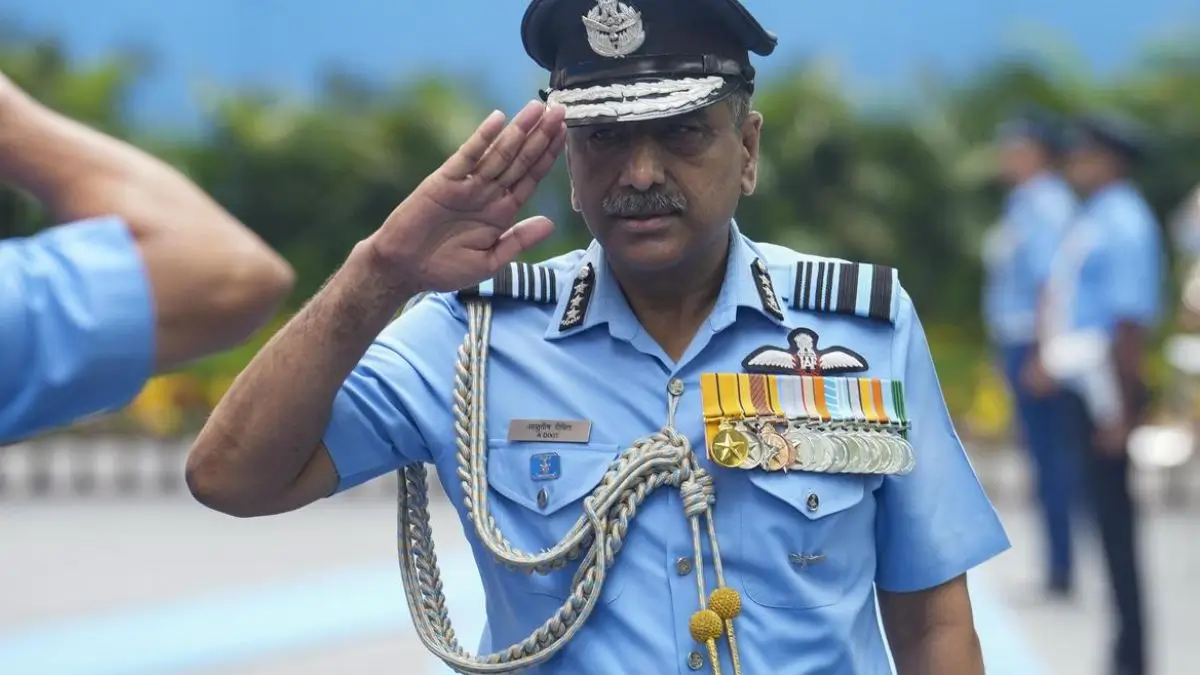
Air Marshal Ashutosh Dixit appointment as Vice Chief of Air Staff 2026 explained with career highlights, responsibilities, military honours, historical background, MCQs, FAQs, and key facts for UPSC, SSC, Banking, Railways, Defence, Police, AFCAT, CDS, NDA and State PSC exams.
Introduction
Air Marshal Ashutosh Dixit has assumed charge as the 51st Vice Chief of the Air Staff (VCAS) of the Indian Air Force (IAF), marking an important leadership transition in India’s defence establishment. He succeeded Air Marshal Nagesh Kapoor, who retired after nearly four decades of distinguished service. The appointment places one of the IAF’s most experienced fighter pilots and defence strategists in the second-highest position of the Air Force. Air Marshal Dixit officially took charge on 1 July 2026 and brings extensive operational, command, testing, and strategic planning experience to the role.
Who is Air Marshal Ashutosh Dixit?
Air Marshal Ashutosh Dixit was commissioned into the fighter stream of the Indian Air Force on 6 December 1986. An alumnus of the National Defence Academy (NDA), he is a Qualified Flying Instructor and an Experimental Test Pilot. Throughout his distinguished military career spanning nearly four decades, he has accumulated more than 3,300 flying hours on over 20 different aircraft, including the Mirage-2000, MiG-21, Jaguar, Hawk, and Tejas.
Extensive Operational and Command Experience
During his service, Air Marshal Dixit has commanded frontline fighter squadrons, operational air bases, and major Air Force commands. He led No. 9 Squadron during its transition to Mirage-2000 aircraft and later commanded important operational bases in both the western and southern sectors. His leadership has contributed significantly to enhancing India’s air combat preparedness and operational capabilities.
Role Before Becoming Vice Chief
Before assuming the appointment of Vice Chief of the Air Staff, Air Marshal Dixit served as the Chief of Integrated Defence Staff (CISC). In this position, he played a major role in strengthening jointness among the Army, Navy, and Air Force. He was actively involved in defence reforms, integrated military planning, joint doctrines, and India’s long-term defence modernisation initiatives, including Vision 2047.
Importance of the Vice Chief of the Air Staff
The Vice Chief of the Air Staff is the second-highest-ranking officer in the Indian Air Force after the Chief of the Air Staff. The Vice Chief is responsible for overseeing operational readiness, force modernisation, strategic planning, personnel management, and capability development. The position plays a crucial role in ensuring that the Indian Air Force remains prepared to address emerging security challenges.
Decorations and Honours
Air Marshal Dixit’s exceptional service has earned him several prestigious military decorations, including:
- Param Vishisht Seva Medal (PVSM)
- Ati Vishisht Seva Medal (AVSM)
- Vayu Sena Medal (VM)
- Vishisht Seva Medal (VSM)
These honours recognize his outstanding leadership, operational excellence, and contributions to national defence.
Focus Areas Under His Leadership
As Vice Chief of the Air Staff, Air Marshal Dixit is expected to focus on:
- Modernisation of the Indian Air Force
- Strengthening indigenous defence capabilities
- Integration of advanced technologies
- Enhancing joint military operations
- Improving operational preparedness
- Supporting the Aatmanirbhar Bharat initiative in defence manufacturing
These priorities align with India’s broader goal of building a technologically advanced and self-reliant military force.
Significance for India’s Defence
The appointment comes at a time when India is rapidly modernising its armed forces and expanding indigenous defence production. Air Marshal Dixit’s experience in operational flying, aircraft testing, procurement planning, and integrated military operations makes him well-suited to guide the Indian Air Force through future technological and strategic challenges.
His leadership is expected to strengthen India’s air power, improve interoperability among the armed forces, and accelerate ongoing defence reforms.

Why this News is Important
Important for Defence and Security Examinations
The appointment of Air Marshal Ashutosh Dixit is significant because questions related to appointments of senior defence officials frequently appear in UPSC, State PSC, CDS, NDA, AFCAT, CAPF, SSC, Banking, and other competitive examinations. Aspirants should remember the name of the new Vice Chief of the Air Staff, his predecessor, and his previous appointment.
Strengthening India’s Military Leadership
Leadership transitions in the armed forces directly influence military planning, modernization, and national security. Air Marshal Dixit’s extensive experience in fighter operations and integrated defence planning is expected to strengthen India’s defence preparedness and enhance the Indian Air Force’s operational capabilities.
Boost to Defence Reforms
His previous role as Chief of Integrated Defence Staff demonstrates India’s growing emphasis on jointness among the Army, Navy, and Air Force. Integrated operations have become increasingly important in modern warfare, making this appointment strategically significant.
Focus on Indigenous Defence Manufacturing
Air Marshal Dixit has been closely associated with modernization and indigenous capability development. His leadership supports India’s Aatmanirbhar Bharat initiative, encouraging greater use of domestically developed defence technologies and aircraft.
Exam Relevance
This development is relevant under topics such as:
- Defence Current Affairs
- Important Appointments
- Indian Air Force
- National Security
- Defence Modernisation
- Armed Forces Leadership
- Military Reforms
- Static GK on Defence Organisations
Historical Context
Evolution of the Vice Chief of the Air Staff
The office of the Vice Chief of the Air Staff was created to assist the Chief of the Air Staff in managing the rapidly expanding responsibilities of the Indian Air Force. Over the decades, the Vice Chief has played a vital role in operational planning, modernization, logistics, procurement, and strategic policy implementation.
Indian Air Force Modernisation
Since the 1999 Kargil War, the Indian Air Force has focused on strengthening air superiority through advanced fighter aircraft, network-centric warfare, indigenous platforms like Tejas, integrated air defence systems, and joint military operations. Recent reforms have also emphasized theatre commands and closer coordination among the three armed services.
Integrated Defence Staff
The Headquarters Integrated Defence Staff (HQ IDS), established after the Kargil Review Committee recommendations, was designed to improve coordination among the Army, Navy, and Air Force. Air Marshal Dixit’s previous role as Chief of Integrated Defence Staff reflects India’s continued commitment to integrated military planning and joint operational capability.
Key Takeaways from Air Marshal Ashutosh Dixit Becomes Vice Chief of the Air Staff
| S. No. | Key Takeaway |
|---|---|
| 1 | Air Marshal Ashutosh Dixit became the 51st Vice Chief of the Air Staff on 1 July 2026. |
| 2 | He succeeded Air Marshal Nagesh Kapoor, who retired after nearly 40 years of service. |
| 3 | Before this appointment, he served as the Chief of Integrated Defence Staff (CISC). |
| 4 | He is a distinguished fighter pilot, Qualified Flying Instructor, Experimental Test Pilot, and has logged over 3,300 flying hours on more than 20 aircraft types. |
| 5 | His appointment is expected to strengthen Indian Air Force modernisation, joint military integration, indigenous defence capability, and national security preparedness. |
Frequently Asked Questions (FAQs)
1. Who has been appointed as the Vice Chief of the Air Staff in 2026?
Air Marshal Ashutosh Dixit has been appointed as the 51st Vice Chief of the Air Staff (VCAS) of the Indian Air Force with effect from 1 July 2026.
2. Whom did Air Marshal Ashutosh Dixit succeed as Vice Chief of the Air Staff?
He succeeded Air Marshal Nagesh Kapoor, who retired after an illustrious career in the Indian Air Force.
3. What position did Air Marshal Ashutosh Dixit hold before becoming the Vice Chief of the Air Staff?
Before his appointment as VCAS, he served as the Chief of Integrated Defence Staff (CISC), where he was responsible for promoting jointness among the Army, Navy, and Air Force.
4. When was Air Marshal Ashutosh Dixit commissioned into the Indian Air Force?
He was commissioned into the fighter stream of the Indian Air Force on 6 December 1986.
5. How many flying hours has Air Marshal Ashutosh Dixit completed?
He has accumulated more than 3,300 flying hours on over 20 different types of aircraft, including Mirage-2000, Jaguar, MiG-21, Hawk, and Tejas.
6. What is the role of the Vice Chief of the Air Staff?
The Vice Chief of the Air Staff is the second-highest-ranking officer in the Indian Air Force and assists the Chief of the Air Staff in operational planning, modernization, administration, logistics, and capability development.
7. Which military honours have been conferred upon Air Marshal Ashutosh Dixit?
He has been awarded the Param Vishisht Seva Medal (PVSM), Ati Vishisht Seva Medal (AVSM), Vayu Sena Medal (VM), and Vishisht Seva Medal (VSM).
8. Why is this appointment important for competitive examinations?
Appointments of senior defence officials are frequently asked in UPSC, State PSCs, CDS, NDA, AFCAT, CAPF, SSC, Banking, Railways, Police, and other government recruitment examinations under Current Affairs and Defence sections.
9. What is the Headquarters Integrated Defence Staff (HQ IDS)?
HQ IDS is an organization that promotes coordination, joint planning, and integration among the Indian Army, Navy, and Air Force for efficient national defence.
10. Which exam topics are covered by this current affairs news?
This news is relevant for:
Static GK on Armed Forces
Defence Current Affairs
Important National Appointments
Indian Air Force
National Security
Military Leadership
Defence Modernisation
Some Important Current Affairs Links




