






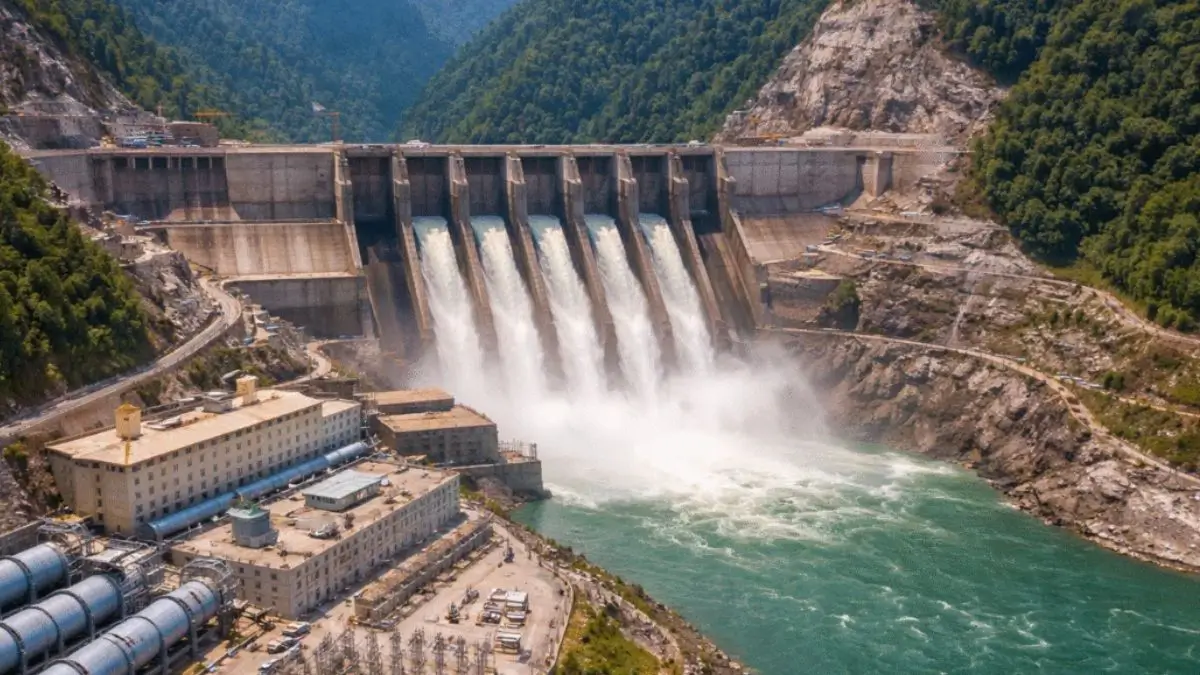
Kalai-II hydro electric project details, capacity, location, and benefits—learn about India’s ₹14,105 crore clean energy plan in Arunachal Pradesh for exams.
Kalai-II Hydro Electric Project: Cabinet Approves ₹14,105 Crore Clean Energy Initiative
Introduction to the Kalai-II Hydro Electric Project
The Government of India has taken a significant step toward strengthening renewable energy infrastructure by approving the Kalai-II Hydro Electric Project. The Cabinet Committee on Economic Affairs (CCEA), chaired by Prime Minister Narendra Modi, cleared an investment of ₹14,105.83 crore for this ambitious hydropower project.
The project will be developed in the Anjaw district of Arunachal Pradesh on the Lohit River and is expected to contribute significantly to India’s clean energy goals.
Project Features and Technical Specifications
The Kalai-II Hydro Electric Project is designed with an installed capacity of 1,200 MW. It will consist of six units of 190 MW each and one unit of 60 MW, making it a major power generation facility in Northeast India.
Once operational, the project is expected to generate approximately 4,852.95 million units (MU) of electricity annually. The estimated completion timeline is around 78 months, or approximately 6.5 years.
This project is particularly important as it will be the first major hydropower initiative in the Lohit Basin, unlocking the untapped potential of the region.
Implementation Strategy and Partnerships
The project will be executed through a joint venture between THDC India Limited and the Government of Arunachal Pradesh.
To support infrastructure development, the Central Government will provide ₹599.88 crore for roads, bridges, and transmission lines. Additionally, financial assistance of ₹750 crore will be provided to support the state’s equity share in the project.
This collaborative approach ensures both technical expertise and regional participation.
Role in Energy Security and Grid Stability
Hydropower plays a crucial role in ensuring energy stability, especially during peak demand periods. The Kalai-II project will contribute to grid balancing and enhance power availability across Northeast India.
Its flexible power generation capacity makes it ideal for managing fluctuations in electricity demand, thereby supporting India’s national grid.
Socio-Economic and Regional Development Impact
The project is expected to bring significant socio-economic benefits to the region. Infrastructure development, including around 29 km of roads and bridges, will improve connectivity in remote districts like Anjaw and Namsai.
Local communities will benefit from employment opportunities, compensation packages, and corporate social responsibility (CSR) initiatives. Additionally, Arunachal Pradesh will receive 12% free power and 1% allocation for the Local Area Development Fund (LADF).
Parallel Hydropower Developments
Alongside the Kalai-II project, the government has also approved the Kamala Hydro Electric Project, reflecting a broader push toward hydropower development in Northeast India. Together, these projects represent an investment of over ₹40,000 crore, highlighting India’s commitment to renewable energy expansion.

Why This News is Important
Boost to Renewable Energy Targets
India is aiming to significantly increase its renewable energy capacity to meet climate commitments. The Kalai-II project contributes directly to clean energy generation, reducing dependence on fossil fuels.
Strategic Importance of Northeast India
The Northeast region holds immense hydropower potential but remains underutilized. This project marks a strategic move to harness these resources, ensuring regional development and national energy security.
Energy Security and Grid Stability
Hydropower projects like Kalai-II are essential for managing peak electricity demand. They provide flexible energy output, which helps stabilize the national grid and ensures uninterrupted power supply.
Economic and Infrastructure Development
The project will boost infrastructure development in remote areas, improving connectivity and creating employment opportunities. This aligns with the government’s goal of inclusive regional growth.
Historical Context: Hydropower Development in Northeast India
Untapped Hydropower Potential
Northeast India, particularly Arunachal Pradesh, has long been identified as a hub of hydropower potential due to its river systems like the Brahmaputra and its tributaries. However, development has been slow due to geographical and infrastructural challenges.
Government Initiatives Over Time
Over the years, the Government of India has introduced several policies to promote renewable energy, including hydropower projects in Himalayan states. The focus has increased in recent years due to climate commitments and the need for sustainable energy.
Strategic and Border Significance
Arunachal Pradesh holds strategic importance due to its proximity to international borders. Infrastructure projects like Kalai-II not only support energy generation but also enhance connectivity and national security in the region.
Key Takeaways from This News
| S. No. | Key Takeaway |
|---|---|
| 1 | The Kalai-II Hydro Electric Project has been approved with an investment of ₹14,105.83 crore. |
| 2 | It will generate 1,200 MW of power and produce around 4,852.95 MU annually. |
| 3 | The project is located on the Lohit River in Arunachal Pradesh and is the first in the Lohit Basin. |
| 4 | It will be developed by THDC India Limited in partnership with the state government. |
| 5 | The project will boost renewable energy, regional development, and national grid stability. |
FAQs: Kalai-II Hydro Electric Project
1. What is the Kalai-II Hydro Electric Project?
The Kalai-II Hydro Electric Project is a 1,200 MW hydropower project approved by the Government of India with an investment of ₹14,105 crore. It will be developed in Arunachal Pradesh on the Lohit River.
2. Where is the Kalai-II project located?
The project is located in the Anjaw district of Arunachal Pradesh, a region with high hydropower potential.
3. Which organizations are involved in the project?
The project will be implemented by THDC India Limited in partnership with the Government of Arunachal Pradesh.
4. What is the expected power generation capacity?
The project will generate around 4,852.95 million units (MU) of electricity annually.
5. Why is the Kalai-II project important for India?
It contributes to renewable energy goals, enhances energy security, improves grid stability, and promotes regional development in Northeast India.
6. What financial assistance is provided by the Central Government?
The Centre will provide ₹599.88 crore for infrastructure and ₹750 crore to support the state’s equity share.
7. What benefits will Arunachal Pradesh receive?
The state will receive 12% free power and 1% for the Local Area Development Fund (LADF).
8. What is the estimated completion timeline?
The project is expected to be completed within approximately 78 months (6.5 years).
9. Why is hydropower significant for grid stability?
Hydropower provides flexible electricity generation, helping manage peak demand and stabilize the grid.
10. Which river is associated with this project?
The Kalai-II project is being developed on the Lohit River, a major tributary of the Brahmaputra.
Some Important Current Affairs Links




