







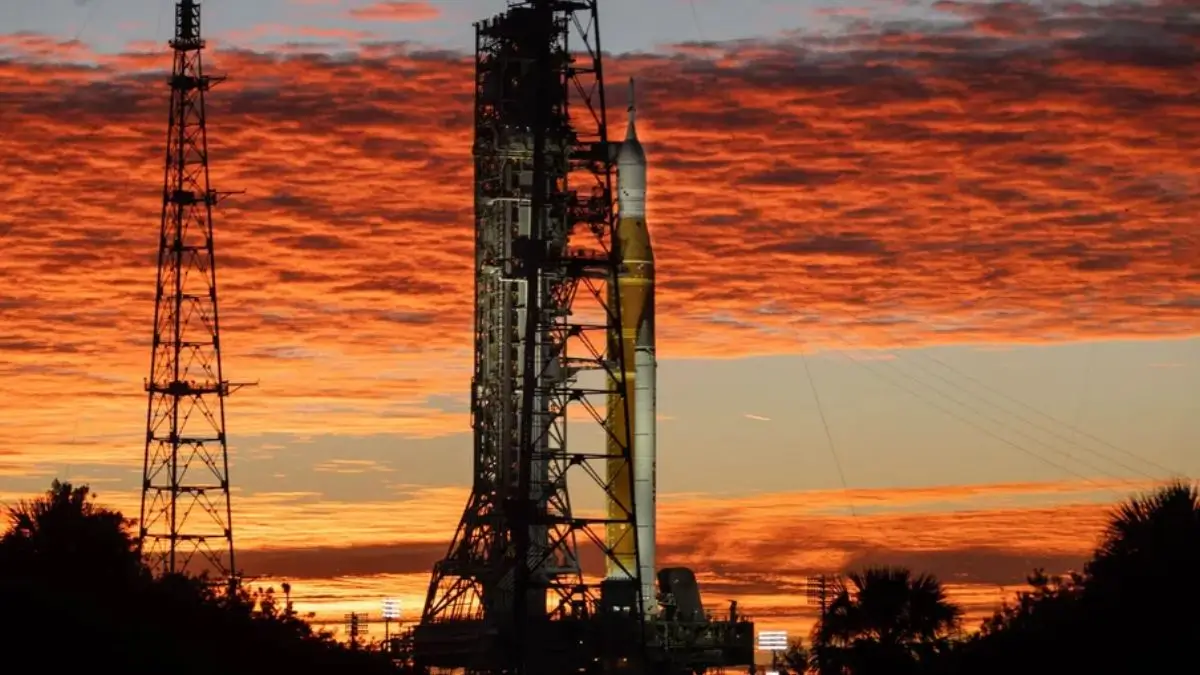
Artemis 2 mission April 2026 launch marks NASA’s return to deep space after 50 years. Know key facts, crew, objectives, and exam-relevant insights.
NASA’s Artemis 2 Mission Set for April 2026: Humans Return to Deep Space
Introduction to Artemis 2 Mission
The NASA is preparing for a historic milestone with its Artemis 2 mission, scheduled for launch in April 2026. This mission will mark the first time in over 50 years that humans travel beyond low Earth orbit toward the Moon, reviving deep-space exploration after the Apollo era.
Artemis 2 is part of the larger Artemis program, which aims to establish a sustainable human presence on the Moon and eventually enable missions to Mars.
Mission Objectives and Significance
The Artemis 2 mission is designed as a crewed lunar flyby, meaning astronauts will orbit the Moon without landing on its surface. The primary goal is to test critical deep-space systems, including life-support, navigation, and communication technologies.
This mission will validate the performance of the Orion spacecraft and the Space Launch System (SLS) rocket, ensuring they are ready for future lunar landing missions.
Crew Members of Artemis 2
The mission will carry four astronauts:
- Reid Wiseman (Commander)
- Victor Glover (Pilot)
- Christina Koch (Mission Specialist)
- Jeremy Hansen (Mission Specialist, Canada)
This crew represents diversity and international collaboration. Notably, Christina Koch will become the first woman, and Victor Glover the first Black astronaut, to travel around the Moon.
Mission Timeline and Duration
The Artemis 2 mission is expected to last approximately 10 days.
It will follow a free-return trajectory, allowing the spacecraft to travel around the Moon and safely return to Earth without requiring major propulsion adjustments.
The earliest launch window is April 1, 2026, with backup dates extending into early April depending on conditions.
Technological Components Involved
The mission will rely on:
- Space Launch System (SLS): A super heavy-lift rocket capable of deep-space missions
- Orion Spacecraft: Designed for long-duration human spaceflight
- Advanced life-support and navigation systems
These technologies will be tested under real conditions with astronauts onboard for the first time.
Future Roadmap of Artemis Program
Artemis 2 is a stepping stone for upcoming missions:
- Artemis 3: Planned lunar landing mission
- Artemis 4: Establishing infrastructure for long-term Moon presence
The program ultimately aims to use the Moon as a base for Mars exploration.

Why This News is Important
Revival of Human Deep-Space Exploration
The Artemis 2 mission signals the return of humans to deep space after more than five decades, making it a landmark event in space exploration. Since the Apollo missions ended in 1972, human spaceflight has been limited to low Earth orbit. This mission breaks that barrier.
Technological and Scientific Advancement
Artemis 2 will test critical technologies required for future missions. Successful validation will ensure safer and more efficient deep-space travel, benefiting not only lunar missions but also interplanetary exploration.
Strategic Importance for Global Space Race
The mission strengthens the position of the United States in the global space race, especially amid increasing competition from countries like China and private players like SpaceX. It highlights international collaboration, with participation from Canada.
Inspiration for Future Generations
The mission is expected to inspire students and researchers worldwide, encouraging careers in science, technology, engineering, and mathematics (STEM), which are crucial for national development.
Historical Context
Apollo Missions and the Legacy
The last human mission to the Moon was Apollo 17 in 1972, marking the end of an era of lunar exploration. For decades, space missions focused primarily on Earth orbit and robotic exploration.
Shift to Artemis Program
Recognizing the need to return to the Moon, NASA launched the Artemis program in the 21st century. The program is named after Artemis, the twin sister of Apollo in Greek mythology, symbolizing a new chapter in lunar exploration.
Artemis 1 as a Precursor
In 2022, Artemis 1 successfully completed an uncrewed mission around the Moon, testing the Orion spacecraft and SLS rocket. Artemis 2 builds directly on this success by introducing a human crew.
Key Takeaways from This News
| S.No. | Key Takeaway |
|---|---|
| 1 | Artemis 2 will be the first crewed mission beyond low Earth orbit since 1972 |
| 2 | The mission is scheduled for April 2026 with a duration of about 10 days |
| 3 | It will carry four astronauts, including the first woman and first Black astronaut to orbit the Moon |
| 4 | The mission will test Orion spacecraft and SLS rocket systems for deep-space travel |
| 5 | Artemis 2 is a crucial step toward future Moon landings and Mars missions |
Frequently Asked Questions (FAQs)
1. What is Artemis 2 mission?
The NASA Artemis 2 mission is the first crewed lunar flyby mission under the Artemis program, scheduled for April 2026 to send humans beyond low Earth orbit.
2. How is Artemis 2 different from Artemis 1?
Artemis 1 was an uncrewed mission, while Artemis 2 will carry four astronauts, making it the first human deep-space mission since the Apollo era.
3. What is the main objective of Artemis 2?
The mission aims to test life-support systems, navigation, and communication technologies of the Orion spacecraft and Space Launch System in real conditions with astronauts onboard.
4. Who are the crew members of Artemis 2?
The crew includes:
- Reid Wiseman
- Victor Glover
- Christina Koch
- Jeremy Hansen
5. Why is Artemis 2 significant for exams?
It marks the return of humans to deep space after 50+ years, a key topic in science & technology current affairs for competitive exams.
6. What is a free-return trajectory?
It is a flight path that allows the spacecraft to circle the Moon and return to Earth without major propulsion adjustments, ensuring safety.
7. When was the last human Moon mission before Artemis 2?
The last mission was Apollo 17 in 1972.
8. What is the long-term goal of the Artemis program?
The Artemis program aims to establish a sustainable human presence on the Moon and prepare for human missions to Mars.
Some Important Current Affairs Links