







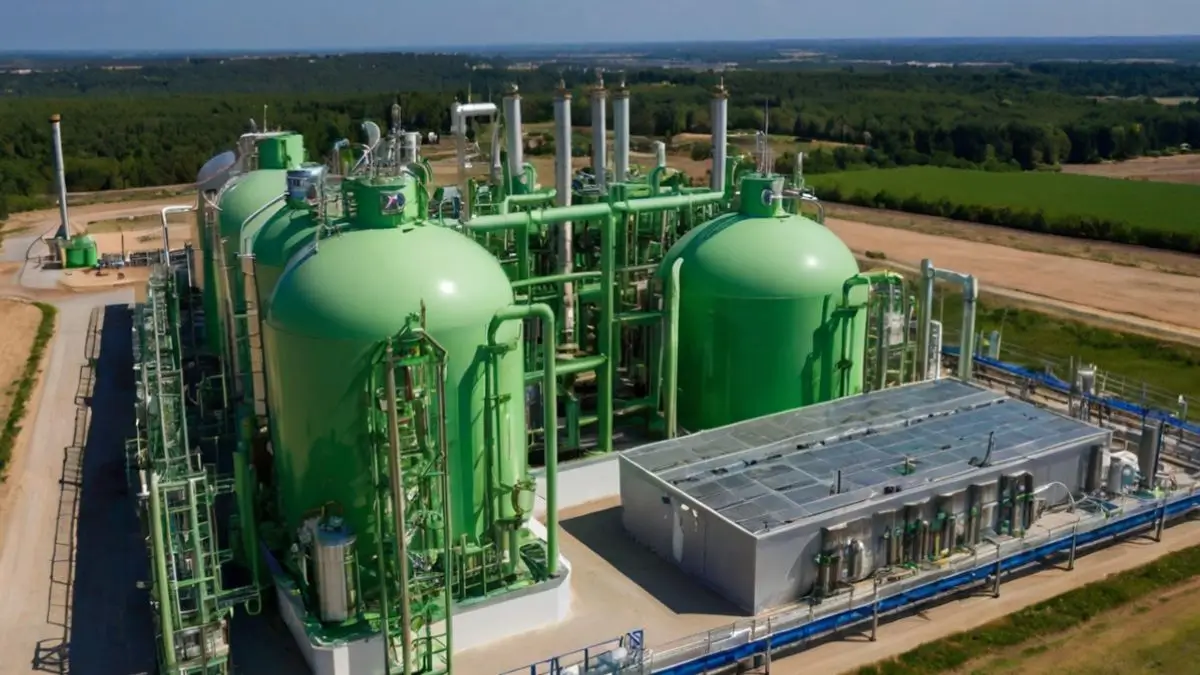
Green ammonia & green methanol standards in India under the National Green Hydrogen Mission promote low-carbon fuels, energy security, and sustainable industrial growth.
India Sets Green Ammonia & Green Methanol Standards under National Green Hydrogen Mission
India has taken a significant step in advancing clean energy and sustainable industrial fuels by notifying new standards for green ammonia and green methanol under the National Green Hydrogen Mission (NGHM). This move marks a pivotal milestone in India’s journey toward a low‑carbon future and stronger global competitiveness in emerging hydrogen markets.
The Government of India, through the Ministry of New and Renewable Energy (MNRE), has officially defined emission and production criteria that must be met for ammonia and methanol to qualify as “green” fuels. These standards ensure that these chemical fuels are produced using renewable energy sources, such as solar or wind, with strict limits on greenhouse gas emissions across the value chain — from hydrogen generation to storage and shipment.
Green ammonia is manufactured by combining green hydrogen (produced by renewable electricity through water electrolysis) with nitrogen, whereas green methanol is synthesized by combining green hydrogen with captured carbon dioxide. Both these fuels are crucial derivatives of green hydrogen and can substitute fossil‑based fuels in multiple sectors.
Under the newly notified framework, these standards act as a quality and verification mechanism, preventing misleading environmental claims in the market and ensuring that green fuels genuinely deliver carbon‑reduction benefits. This is vital for building trust among producers, investors and international trading partners.
Role of National Green Hydrogen Mission
The National Green Hydrogen Mission is India’s flagship initiative to make the country a global hub for green hydrogen production, utilization, and export. Launched with a strategic vision to reduce dependence on fossil fuels and strengthen energy security, the mission supports a transition to cleaner fuels across industries.
NGHM focuses on scaling up green hydrogen production capacity, developing infrastructure, and enabling regulatory frameworks to attract investment. By integrating derivatives like green ammonia and methanol, the mission aims to expand applications of green energy in sectors such as fertilisers, shipping, heavy industries and power generation.
Significance of Green Ammonia and Green Methanol
Green ammonia and green methanol offer sustainable alternatives to fossil‑fuel counterparts. Ammonia is widely used in fertiliser production, chemicals and as a hydrogen carrier, while methanol is an important fuel and feedstock for chemical industries.
Introducing clear standards for these fuels helps create a transparent and credible market. It enables industries to adopt greener production methods and supports India’s commitments to international climate goals by reducing carbon emissions and fostering growth in renewable energy sectors.
Overall, by setting these standards, India is strengthening its clean energy policy framework, boosting investor confidence, and building the capacity needed to compete in global green fuel markets.

Why This News is Important for Government Exams
Boosting India’s Clean Energy Ecosystem
The new standards for green ammonia and green methanol are crucial steps toward operationalising India’s National Green Hydrogen Mission, a high‑priority government initiative. These standards ensure that only fuels produced with minimal carbon emissions are recognised as “green,” reinforcing India’s commitment to sustainable growth and energy transition — a topic frequently tested in UPSC, SSC, and state PSC exams under environment and energy policies.
Sharp Focus on Climate Change Commitments
This news reflects India’s larger role in global climate change mitigation efforts. As the country strives to reduce its carbon footprint and meet international climate commitments, defining clear standards for low‑carbon fuels becomes indispensable. Exam questions often require understanding how policy actions align with targets like those under the Paris Agreement and national strategic missions like NGHM.
Industrial & Economic Implications
Green ammonia and methanol have broad applications in fertilisers, chemicals, shipping and energy sectors. By establishing standards, the Government is supporting industrial growth, creating new market opportunities, and attracting domestic and foreign investment. These economic implications are relevant for questions in the economics, infrastructure and industry sections of competitive exams.
Regulatory Framework Understanding
Competitive exams increasingly ask about governance mechanisms and regulatory frameworks. This news showcases how the government formulates standards — setting eligibility, emission thresholds and certification rules — which is useful for both objective‑type and descriptive answers.
Linkage with National Goals
The National Green Hydrogen Mission aligns with India’s Aatmanirbhar Bharat and renewable energy targets, integrating with national objectives like energy security, decarbonisation and global leadership in clean technologies — key themes often tested in GS papers.
Historical Context: India’s Push for Green Hydrogen and Its Derivatives
Evolution of the National Green Hydrogen Mission
The National Green Hydrogen Mission was approved by the Union Cabinet in 2023 with the goal of building a robust green hydrogen ecosystem in India. This initiative supports demand creation, production, usage and export of green hydrogen with a strategic outlay to scale up production capacity to at least 5 million metric tonnes per annum by 2030 and possibly up to 10 million metric tonnes with growing markets.
Green Hydrogen and Derivatives in Energy Transition
Green hydrogen is produced via electrolysis using renewable energy, unlike grey hydrogen which depends on fossil fuels. Recognising its potential in reducing carbon emissions, the mission promotes green hydrogen as a key pillar of India’s clean energy strategy. Its derivatives — green ammonia and green methanol — extend applications to fertilisers, shipping, chemicals and energy storage, enhancing the scope of decarbonisation.
Policy Framework and Implementation Milestones
Since its launch, the mission has rolled out incentive schemes for electrolyser manufacturing and green hydrogen production, awarded production capacities to multiple companies, and initiated pilot projects across sectors. This institutional groundwork has laid the foundation for the latest move to formalise standards for hydrogen derivatives.
Key Takeaways from “India Sets Green Ammonia & Green Methanol Standards Under National Green Hydrogen Mission”
| # | Key Takeaway |
|---|---|
| 1 | India has notified standards for green ammonia and green methanol under the National Green Hydrogen Mission. |
| 2 | These standards define criteria for production using renewable energy with strict emission thresholds. |
| 3 | Green ammonia and methanol are derivatives of green hydrogen and can reduce carbon emissions across industries. |
| 4 | The move is part of India’s strategy to become a global leader in clean fuels and boost investment confidence. |
| 5 | This development supports India’s climate goals, energy security and sustainable industrial growth. |
FAQs: Frequently Asked Questions on Green Ammonia & Green Methanol Standards
Q1: What are green ammonia and green methanol?
A1: Green ammonia is produced by combining green hydrogen (from renewable energy) with nitrogen, while green methanol is produced by combining green hydrogen with captured carbon dioxide. Both are environmentally friendly alternatives to fossil fuels.cite
Q2: Under which mission has India set these standards?
A2: India has set these standards under the National Green Hydrogen Mission (NGHM), which aims to promote green hydrogen production, usage, and export.cite
Q3: Why are these standards important?
A3: The standards ensure that green ammonia and methanol meet emission thresholds, are produced sustainably, and prevent misleading environmental claims, promoting clean energy adoption and international trade credibility.cite
Q4: Which sectors benefit from green ammonia and methanol?
A4: Key sectors include fertilisers, chemicals, shipping, power generation, and heavy industries where these fuels can replace fossil-based counterparts, reducing carbon emissions.cite
Q5: How does this initiative align with India’s climate goals?
A5: By promoting low-carbon fuels and renewable energy use, the standards contribute to India’s commitments under the Paris Agreement and help achieve carbon reduction targets, energy security, and sustainable industrial growth.cite
Q6: How does this impact government exams preparation?
A6: Questions on this topic can appear in Environment & Ecology, Science & Technology, Economy & Infrastructure, and Current Affairs sections of UPSC, SSC, PSCs, Banking, and Defence exams.cite
Some Important Current Affairs Links