







Jewar International Airport connectivity project approved with ₹3,630.77 crore investment. 31.42 km Greenfield corridor to Delhi–Mumbai Expressway ensures faster travel and regional development.
Cabinet Approves Greenfield Connectivity Project to Jewar International Airport
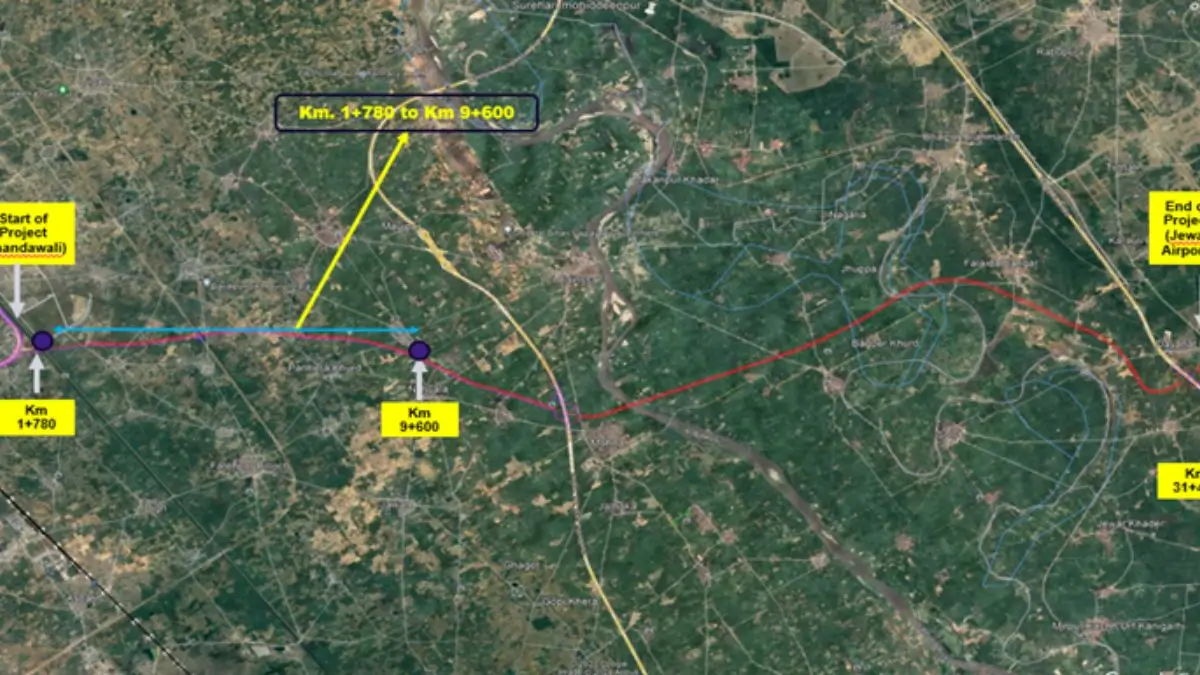
The Union Cabinet of India, chaired by Prime Minister Narendra Modi, recently approved a major infrastructure project aimed at enhancing connectivity to the upcoming Jewar International Airport. The Cabinet Committee on Economic Affairs (CCEA) sanctioned a revised total capital outlay of ₹3,630.77 crore for constructing a 31.42‑kilometer Greenfield connectivity corridor that will link the airport to the Delhi–Mumbai Expressway network. This decision marks a significant step in strengthening transport infrastructure in the National Capital Region (NCR) and surrounding states.
What Is the Greenfield Connectivity Project?
The Greenfield connectivity project involves the construction of a new access‑controlled road corridor spanning over 31 km. The corridor will link the Delhi–Mumbai Expressway spur from the DND–Faridabad–Ballabhgarh–Sohna route directly to the Jewar International Airport terminal in Gautam Buddha Nagar district of Uttar Pradesh. Importantly, about 11 km of this route will be elevated to ensure smooth and uninterrupted traffic flow, especially in urban and high‑density regions.
This infrastructure project will be executed under the Hybrid Annuity Mode (HAM), a public‑private partnership model where the government and private developers share the financial responsibilities. The HAM model aims to ensure timely delivery of infrastructure while mitigating fiscal strain on the government budget.
Strategic Integration with Transport Networks
The corridor will integrate with several major transport routes, including the Yamuna Expressway, Eastern Peripheral Expressway, and the Dedicated Freight Corridor (DFC). Seamless integration with these networks will greatly enhance both passenger and cargo connectivity across the NCR and beyond.
The project is expected to significantly reduce travel time and boost logistics efficiency, making it easier for businesses and passengers to access the airport from key cities like Delhi, Faridabad, Noida, and Greater Noida.
Economic and Regional Impact
Enhancing connectivity to Jewar International Airport is anticipated to catalyze regional development in Uttar Pradesh and neighboring states. This corridor is likely to attract investments, generate employment opportunities, and facilitate economic growth in the emerging airport city and industrial belts. The project is also expected to ease congestion at Delhi’s existing airports by improving access to India’s newest aviation hub.

Why This News Is Important for Government Exam Aspirants
Relevance to Infrastructure and Economic Policies
Infrastructure development is a key topic in current affairs for various government competitive exams including SSC, Banking, Railways, UPSC (IAS/IPS), Police, and Teaching Exams. The Cabinet’s approval of the Greenfield connectivity project reflects the government’s policy focus on economic development and regional integration. Aspirants must understand how such decisions impact national logistics, travel efficiency, and economic corridors.
Understanding Public Investment and Planning Models
The use of the Hybrid Annuity Mode (HAM) for project execution is especially relevant for questions in General Studies, Economics, and Governance sections of exams. HAM is an increasingly used model for highway and transport infrastructure projects in India, and knowing its features and benefits is useful for both prelims and mains level questions.
Strategic Geographical Importance
Jewar International Airport is poised to become one of the largest aviation hubs in Northern India, serving millions of passengers each year. Improved transport connectivity is critical not only for passenger convenience but also for economic development of Uttar Pradesh and the NCR. This news exemplifies how transport infrastructure contributes to larger national development goals, making it a valuable topic for aspirants.
Historical Context: Background of the Jewar Connectivity Project
Evolution of Jewar International Airport
The Jewar International Airport, also known as Noida International Airport, is a greenfield aviation project in the Gautam Buddha Nagar district of Uttar Pradesh. Initiated to reduce pressure on the existing Delhi airports and bolster air connectivity in North India, the project has witnessed incremental approvals over the past few years.
Transport Planning and Integration
Initial plans for connectivity focused on linking the airport to major expressway networks like the Yamuna Expressway. Over time, discussions evolved to include connections to the Delhi–Mumbai Expressway and other national transport corridors to ensure holistic integration of road, freight, and passenger networks.
Policy Focus on Regional Development
The decision to invest in Greenfield corridors aligns with the Bharatmala Pariyojana and broader national transport strategies aimed at enhancing connectivity and reducing logistics costs. Planned connectivity improvements are part of a larger vision to develop the NCR into a globally competitive region with efficient transport and trade links.
Key Takeaways from Greenfield Connectivity Approval
| Sr. No. | Key Takeaway |
|---|---|
| 1 | The Union Cabinet approved ₹3,630.77 crore for a Greenfield road link to Jewar International Airport. |
| 2 | A 31.42 km corridor will connect the Delhi–Mumbai Expressway spur with the airport. |
| 3 | Approximately 11 km of the link will be an elevated highway section. |
| 4 | The project will be implemented under the Hybrid Annuity Mode. |
| 5 | It will enhance multimodal connectivity across the National Capital Region (NCR). |
FAQs: Frequently Asked Questions
1. What is the Jewar International Airport connectivity project?
The project involves the construction of a 31.42 km Greenfield corridor linking the Delhi–Mumbai Expressway to the Jewar International Airport in Gautam Buddha Nagar, Uttar Pradesh, to improve access and reduce travel time.
2. How much investment has been approved for this project?
The Union Cabinet approved a total outlay of ₹3,630.77 crore for this connectivity corridor, including elevated sections and modern infrastructure.
3. What is the Hybrid Annuity Mode (HAM) used in this project?
HAM is a public-private partnership model where the government and private developers share project funding and risks. It ensures faster project execution and reduces the fiscal burden on the government.
4. Why is this project strategically important?
The corridor will integrate Jewar Airport with key highways like the Yamuna Expressway, Eastern Peripheral Expressway, and the Dedicated Freight Corridor, enhancing logistics, passenger travel, and regional economic growth.
5. How will this project impact regional development?
Improved connectivity is expected to boost industrial growth, attract investments, and create employment in the National Capital Region and surrounding areas, while reducing congestion at Delhi airports.
6. What is the significance of the elevated section in the corridor?
About 11 km of the corridor will be elevated to ensure smooth traffic flow in high-density areas, avoiding congestion and enhancing travel efficiency.
7. Which states will benefit from the connectivity corridor?
Primarily Uttar Pradesh and Delhi NCR, with spillover benefits to Haryana and Rajasthan due to improved expressway and airport access.
Some Important Current Affairs Links