





India’s first ring metro in Delhi launched by PM Modi. Learn key facts, Pink Line details, exam-important points, MCQs, and current affairs insights for UPSC, SSC, and banking exams.
India’s First Ring Metro Launched in Delhi by Narendra Modi
Introduction: Major Milestone in Delhi’s Urban Transport
India achieved a major milestone in public transportation when Prime Minister Narendra Modi inaugurated the country’s first fully operational Ring Metro in Delhi. The launch marks an important step in strengthening the capital’s urban transport system and improving connectivity across several parts of the city. The project is part of a broader infrastructure initiative aimed at enhancing mobility, reducing traffic congestion, and promoting sustainable transport in India’s rapidly growing urban centers.
Completion of the Pink Line Ring Metro
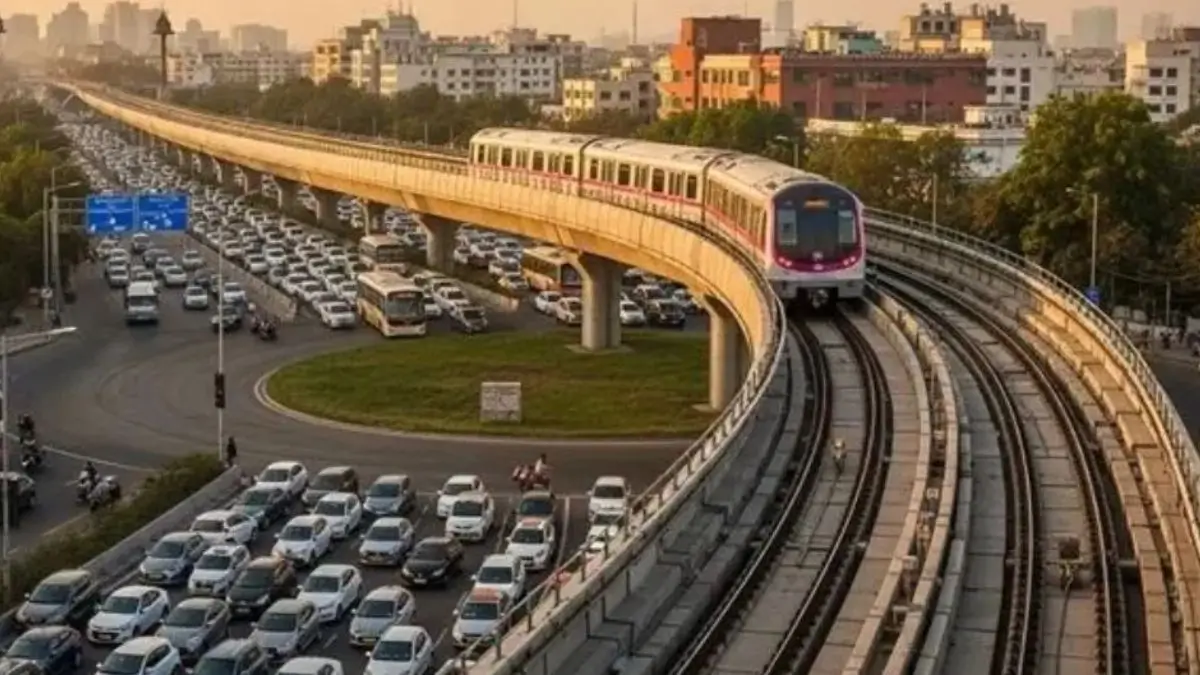
The new development was achieved after the inauguration of the Majlis Park–Maujpur-Babarpur corridor of the Delhi Metro’s Pink Line. This 12.3-kilometre stretch completed the Pink Line loop, transforming it into a circular metro route of around 71.56 km, making it the first operational Ring Metro network in the country. The circular design allows passengers to travel around Delhi without necessarily passing through central interchange stations.
Extension of the Magenta Line
Along with the Ring Metro launch, the Prime Minister also inaugurated another important metro corridor—the Deepali Chowk–Majlis Park extension of the Magenta Line, which is approximately 9.9 km long. This extension includes multiple stations and aims to improve metro connectivity in North and Northwest Delhi, bringing residential and commercial areas closer to the city’s main transit network.
Infrastructure Investment and Metro Expansion
The inauguration forms part of a larger infrastructure push worth over ₹18,300 crore focused on expanding the Delhi Metro network. The government also laid the foundation stones for three new corridors under the Delhi Metro Phase-V expansion, which together will cover about 16 km. These projects are expected to further strengthen public transport connectivity and make commuting more efficient for millions of residents.
Engineering Achievements and Connectivity Benefits
The project includes notable engineering features such as a new bridge across the Yamuna River and a double-decker viaduct carrying both a metro line and a road flyover. These developments are expected to reduce traffic congestion, shorten travel time, and improve access to areas in North and Northeast Delhi. Additionally, the circular metro line will connect several key metro routes and interchange stations, creating a more integrated transit system.
Impact on Delhi’s Urban Mobility
With the completion of the Pink Line ring corridor, the Delhi Metro network has expanded significantly, improving travel convenience for commuters. The Ring Metro allows passengers to travel around the city in a loop, reducing the need for multiple transfers and helping balance passenger load across the network. This initiative aligns with India’s broader goals of modernizing urban infrastructure and promoting environmentally friendly transportation solutions.

Why This News is Important
Significance for Urban Infrastructure
The launch of India’s first Ring Metro represents a major advancement in urban infrastructure. Circular metro systems are commonly used in major global cities because they allow passengers to travel between different parts of a city without entering the central transit hubs. By introducing such a system in Delhi, India is adopting modern transit planning strategies that can improve efficiency and reduce congestion in dense metropolitan areas.
Impact on Public Transportation
Public transport systems play a crucial role in reducing traffic congestion and environmental pollution. The Ring Metro is expected to reduce dependence on private vehicles by providing a fast and reliable transportation option. With better connectivity between North, Northeast, and other parts of Delhi, the project will benefit daily commuters, students, and office workers.
Importance for Government Exam Aspirants
For candidates preparing for government exams such as UPSC, SSC, Banking, Railways, and State PSC, this development is important because it highlights India’s progress in urban infrastructure and transportation planning. Questions in competitive exams often focus on newly launched infrastructure projects, metro expansions, and government initiatives related to sustainable urban development.
Historical Context: Development of Delhi Metro
The Delhi Metro project began operations in 2002, becoming India’s first large-scale modern metro rail system. Managed by the Delhi Metro Rail Corporation (DMRC), the network expanded rapidly through multiple phases to meet the growing transport needs of the National Capital Region. Over the years, several metro lines such as the Red, Yellow, Blue, and Violet Lines were introduced, connecting residential, commercial, and industrial zones across the city.
The Pink Line was developed as part of the later phases of the Delhi Metro expansion. Designed to run in a circular pattern along the city’s Inner Ring Road, the line connects numerous other metro corridors, making it one of the most strategically important routes in the network. With the completion of the Majlis Park–Maujpur corridor in 2026, the Pink Line became India’s first operational Ring Metro, marking a significant step in the evolution of urban transport in the country.
Key Takeaways from India’s First Ring Metro Launch
| S.No | Key Takeaway |
|---|---|
| 1 | Prime Minister Narendra Modi inaugurated India’s first fully operational Ring Metro in Delhi. |
| 2 | The project was completed with the inauguration of the 12.3 km Majlis Park–Maujpur-Babarpur corridor of the Pink Line. |
| 3 | The Pink Line now forms a 71.56 km circular metro route, creating the country’s first Ring Metro network. |
| 4 | The Deepali Chowk–Majlis Park extension of the Magenta Line was also inaugurated to improve connectivity in North Delhi. |
| 5 | The metro expansion is part of a broader infrastructure investment exceeding ₹18,300 crore aimed at improving public transport and reducing congestion. |
FAQs: Frequently Asked Questions
1. What is India’s first Ring Metro?
India’s first Ring Metro refers to a circular metro rail corridor developed in Delhi where trains run in a loop connecting different parts of the city. The ring system allows passengers to travel across multiple regions without passing through central stations, improving connectivity and reducing congestion.
2. Who inaugurated India’s first Ring Metro in Delhi?
India’s first Ring Metro was inaugurated by Narendra Modi, marking a significant milestone in the expansion of the national capital’s public transport infrastructure.
3. Which metro line forms the Ring Metro network in Delhi?
The Ring Metro network is formed by the Delhi Metro Pink Line, which became fully operational after the completion of the Majlis Park–Maujpur-Babarpur corridor.
4. What is the approximate length of the Delhi Ring Metro corridor?
The Pink Line circular corridor forms a loop of approximately 71.56 km, making it the first operational ring-style metro network in India.
5. Which organization manages the Delhi Metro system?
The metro system in the capital city is operated by the Delhi Metro Rail Corporation, which is responsible for planning, constructing, and managing the metro network.
6. Why are Ring Metro systems important for large cities?
Ring Metro systems improve urban mobility, reduce travel time, and distribute passenger load efficiently. They also decrease congestion in central metro stations because commuters can travel between different areas using the circular route.
7. When did Delhi Metro begin its operations?
The Delhi Metro started operations in 2002, becoming India’s first large-scale modern metro rail network.
8. Why is the Ring Metro launch important for government exam preparation?
The launch highlights urban infrastructure development, sustainable transport initiatives, and metro expansion projects, which are common topics in exams such as UPSC, SSC, Banking, Railways, and State PSC.
Some Important Current Affairs Links