




Agneevasthraa Indian Army MoU on advanced carbon materials explained in simple terms for competitive exam aspirants, covering defence indigenisation, key facts, FAQs and MCQs.
Agneevasthraa Signs MoU with Indian Army to Supply Advanced Carbon Fabrics & Composite Materials
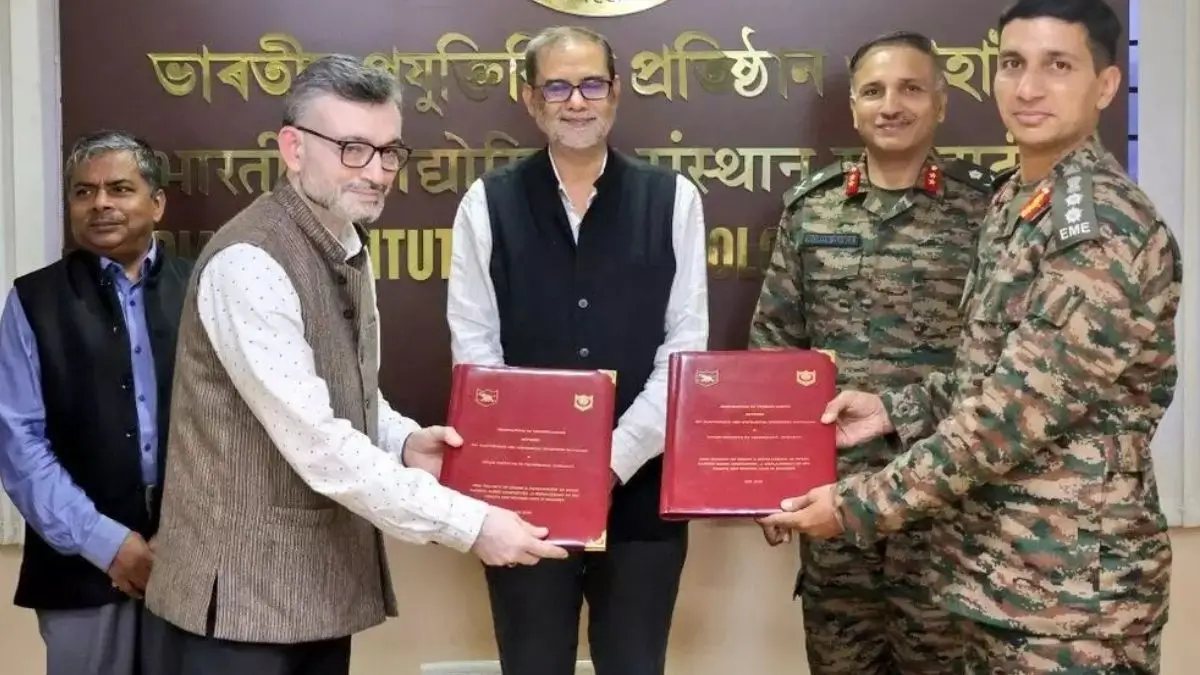
Agneevasthraa, an Indian company specialising in advanced carbon fabrics and composite materials, has signed a Memorandum of Understanding (MoU) with the Indian Army to supply high-performance materials for defence applications.
Under this collaboration, the company will design and manufacture advanced carbon fabrics and allied composite materials tailored for critical defence use, including armour systems, protective panels, structural components, and other high-value applications. These materials are known for their high strength-to-weight ratio, durability, thermal resistance and adaptability for demanding defence conditions.
Agneevasthraa has a strong legacy as a supplier to India’s strategic sectors, including the Indian Space Research Organisation (ISRO) and the Defence Research and Development Organisation (DRDO). Within its product portfolio, advanced carbon fabrics have been used in rocket components and other high-performance systems, demonstrating its capability to support critical national programmes.
This MoU marks a significant milestone for India’s defence manufacturing ecosystem and aligns with the broader national drive for enhanced indigenous capability under flagship initiatives such as Make in India and Aatmanirbhar Bharat. Defence materials like carbon fibre composites were traditionally imported due to technological complexity; this agreement signifies a shift towards self-reliance in strategic materials.
The collaboration reflects the Indian Army’s ongoing efforts to modernise its technological base, reduce dependence on foreign suppliers, and rapidly adopt advanced materials to augment operational efficiency across platforms — from protective gear to structural elements in defence systems.

📖 Why This News Is Important for Government Exam Aspirants
Strategic Defence Manufacturing & Atmanirbhar Bharat
This MoU represents an important development on the self-reliance front. India has historically imported advanced composite materials critical for defence and aerospace applications. With Agneevasthraa now partnering with the Indian Army, the nation reduces foreign dependency, retains valuable foreign exchange, and strengthens its strategic industrial base — an aspect frequently asked in questions on national initiatives and defence preparedness in competitive exams.
Intersection of Industry, Defence & Technology
Understanding how Indian companies and defence forces collaborate is key to topics like public-private partnerships, defence indigenisation, and technology adoption in the military — topics common in UPSC, SSC, Banking, and other exams’ General Awareness sections. This news exemplifies how private industry can contribute to national security priorities.
Material Science in Defence Context
Advanced carbon fabrics and composites are vital in modern defence technology. They are lighter and stronger than traditional materials, improving the performance of armour, vehicles and protective gear. Aspirants preparing for exams with technical components (such as engineering services, defence recruitment, etc.) should note this as an example of material science being integrated into defence solutions.
Government Policy Integration
This development also ties back to ongoing Government initiatives like Make in India and Atmanirbhar Bharat — recurring themes in current affairs sections. Aspirants should correlate such real-world agreements with policy objectives and strategic goals of the nation.
📜 Historical Context: Advanced Composites & Defence Indigenisation in India
Advanced carbon materials and composites have been strategic materials for modern defence systems globally. Historically, India relied on foreign suppliers for high-performance carbon fibre and composites, essential for lightweight armour, missile components, aircraft parts and satellite structures.
Over the past decade, Indian public and private entities have made strides in composite technologies. Organisations like ISRO began sourcing parts domestically – Agneevasthraa itself became an ISRO-qualified supplier in 2012, supplying carbon fabrics for rocket components.
Similarly, DRDO has been advancing composite research for aircraft stealth, ballistic protection and structural parts, recognising composites as critical for future military platforms.
The ongoing policy push under Make in India (launched in 2014) and Atmanirbhar Bharat (2020) has accelerated efforts to localise defence manufacturing. Strategic MoUs like this one reflect a broader shift in India’s defence industrial base — from importer to developer of high-end materials. This evolution is central to India’s aim to strengthen its supply chains, boost defence exports, and foster innovation ecosystems.
📊 Key Takeaways from “Agneevasthraa Signs MoU with Indian Army”
| S. No. | Key Takeaway |
|---|---|
| 1 | Agneevasthraa signed an MoU with the Indian Army for advanced carbon fabrics and composite material supply. |
| 2 | The agreement focuses on custom design and manufacturing of defence-grade high-performance materials. |
| 3 | These materials are lightweight, high-strength and used in armour systems, protective gear and structural components. |
| 4 | The MoU strengthens indigenous capabilities under Make in India and Aatmanirbhar Bharat initiatives. |
| 5 | Agneevasthraa has prior experience supplying ISRO and DRDO, showing expertise in strategic materials. |
FAQs: Exam-Focused Questions on Agneevasthraa–Indian Army MoU
Q1. What is the recent agreement signed between Agneevasthraa and the Indian Army?
The agreement is a Memorandum of Understanding (MoU) between Agneevasthraa and the Indian Army for supplying advanced carbon fabrics and composite materials for defence applications.
Q2. What are advanced carbon composite materials used for in defence?
These materials are used in armour systems, protective gear, lightweight structural components, and high-performance defence equipment because they offer high strength, low weight, and thermal resistance.
Q3. How does this MoU support India’s self-reliance goals?
The partnership supports indigenous defence production under initiatives like Make in India and Atmanirbhar Bharat, reducing dependence on imported strategic materials.
Q4. Which major Indian organisations has Agneevasthraa worked with earlier?
Agneevasthraa has supplied advanced materials to Indian Space Research Organisation and Defence Research and Development Organisation, demonstrating its expertise in high-technology sectors.
Q5. Why is this news important for competitive exams?
This development connects to exam topics such as defence indigenisation, public-private partnerships, technological innovation in defence, and government initiatives promoting domestic manufacturing.
Q6. What exam sections can include questions from this topic?
Questions may appear in General Awareness, Science & Technology, Defence Current Affairs, and Government Schemes sections of UPSC, SSC, Banking, Railways, and State PSC exams.
Q7. What is a Memorandum of Understanding (MoU)?
An MoU is a formal agreement between two or more parties outlining cooperation, responsibilities, and shared objectives without being a legally binding contract.
Some Important Current Affairs Links